
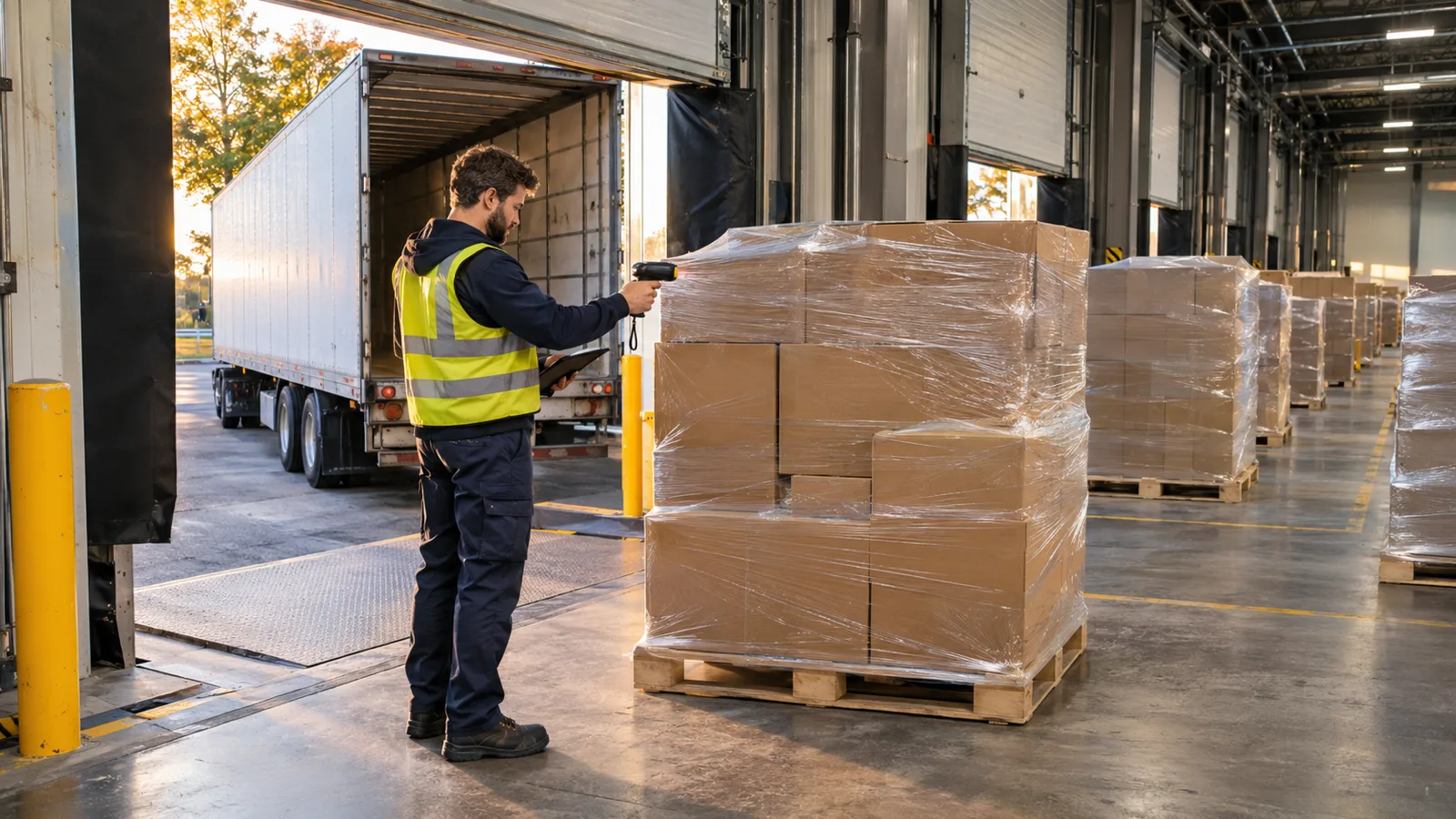
The purchase order comes through on a Thursday afternoon, and it is the one the sales team has been chasing for two years: a national retail chain wants your product in its stores from coast to coast. The celebration lasts until someone opens the vendor manual attached to the onboarding email. It runs to dozens of pages, with sections on carton labels, pallet heights, advance ship notices, delivery appointments and a table of chargebacks for getting any of it wrong.
That moment is familiar to many Canadian brands moving from direct sales or independent stores into large retail. Big-box retailers, national grocers, pharmacy chains and department stores all run distribution networks built for consistency. To keep their distribution centres moving, they expect suppliers to ship in a very specific way. Suppliers that follow the rules get paid in full. Suppliers that do not often find deductions taken from their invoices, sometimes long after the shipment was delivered.
This guide explains how vendor compliance and routing guides typically work in Canada, what the most common requirements look like, and how to build an operation that can meet them without turning every order into a fire drill. It also answers some of the questions brands ask most often in their first year of wholesale.
What a vendor compliance manual actually covers
Every retailer writes its own manual, so the details vary. Most cover the same broad areas:
- Order transmission. How purchase orders are sent, usually through EDI, and how quickly the supplier must acknowledge them.
- Product and packaging standards. Barcodes on each unit, case pack quantities, inner packs, carton strength and maximum carton weight.
- Carton labelling. Where the shipping label goes on each carton, what it must contain, and which barcode format it uses, often a GS1-128 serial shipping container code.
- Pallet standards. Pallet type and condition, maximum height and weight, stacking patterns, stretch wrap, corner boards and pallet labels.
- Advance ship notices. An electronic notice, usually EDI 856, sent before the truck arrives and listing exactly what is on each pallet and in each carton.
- Routing and transportation. Who books the freight, which carriers to use, how to request a pickup, and how to schedule delivery appointments.
- Invoicing. Invoice format and timing, usually EDI 810, and how it must match the purchase order and ASN.
- Chargebacks. The fees or deductions applied when any of the above is missed.
In Canada, retailers also expect products to meet federal labelling requirements before they arrive. Prepackaged consumer goods generally need bilingual English and French labelling under the Consumer Packaging and Labelling Act, textiles must meet the Textile Labelling Act, and food items must satisfy CFIA rules. A chain will not fix a non-compliant label for you, and products sold in Quebec face particular scrutiny on French-language requirements.
Routing guides: who moves the freight
The routing guide is the part of the manual that deals with transportation. It tells you how your goods get from your dock to the retailer's distribution centre. Canadian retailers generally use one of two models, and many use both depending on the supplier and lane.
Collect or retailer-managed freight
Under a collect arrangement, the retailer controls the freight. You prepare the shipment, then request a pickup through the retailer's transportation portal or its designated carrier. The retailer pays the carrier and usually builds that cost into the purchase price it negotiated with you. You must have the goods ready, labelled and documented on the pickup date. If the carrier arrives and the shipment is not ready, you may be charged for the failed pickup.
Prepaid or vendor-managed freight
Under a prepaid arrangement, you book and pay for the freight yourself, then deliver to the retailer's distribution centre within its appointment window. This gives you more control over carrier choice and cost, but you carry the risk of delays. Many retailers specify a list of approved carriers even for prepaid freight, and nearly all require a delivery appointment booked in advance. Missing an appointment can mean a refused load and a rebooking fee.
How the two compare
- Cost control: Collect hands it to the retailer. Prepaid keeps it with you, which can work in your favour if you ship consistent volume on lanes you know well.
- Admin load: Collect requires accurate portal bookings and readiness. Prepaid adds carrier booking, appointment scheduling and freight bill auditing.
- Risk: Under collect, late pickups are often the carrier's problem. Under prepaid, a late delivery is yours.
- Typical fit: Collect suits suppliers shipping full or large partial loads to major DCs. Prepaid often suits smaller suppliers or store-direct deliveries.
Canadian distribution geography
National chains in Canada often run one or more large distribution centres in the Greater Toronto Area, with additional facilities serving Quebec from the Montreal area, Western Canada from Calgary, Edmonton or the Lower Mainland, and sometimes Atlantic Canada from the Moncton or Halifax area. Some chains want everything delivered to a single national DC. Others split purchase orders by region, which means one order from the buyer can become three or four separate shipments to different provinces, each with its own appointment and paperwork.
Understanding where your purchase orders ship to affects where you hold inventory. If most of your wholesale volume goes to DCs in Ontario and Quebec, a warehouse along the Highway 401 corridor keeps transit times short. If a western chain becomes a major account, you may want stock closer to Calgary or Vancouver to reduce LTL freight costs and lead times. ShipCarte's distribution warehousing is built for this kind of B2B flow.
The most common chargebacks and how to avoid them
Retailers do not publish chargebacks to punish suppliers. They exist because a single non-compliant shipment can slow down a distribution centre receiving hundreds of trailers. Knowing what triggers them is the first step in preventing them.
Missing or inaccurate ASN
The ASN tells the DC what to expect before the truck arrives. If it is late, missing, or does not match what is physically on the pallet, receiving staff must handle the shipment manually. This is one of the most frequent compliance failures. The fix is a warehouse system that builds the ASN from actual scans at packing, not from the purchase order.
Label errors
Wrong label placement, unreadable barcodes, duplicate serial codes or labels for the wrong store all cause problems. Print labels from the same system that generates the ASN, verify scans at the pack station, and test new label formats with the retailer before your first live shipment.
Pallet problems
Overhanging cartons, pallets taller than the limit, broken pallets, or mixed SKUs on a pallet when the retailer wants single-SKU pallets can all lead to deductions. Train staff on each retailer's pallet build rules and photograph every outbound pallet before it is wrapped.
Late or early delivery
Retailers set ship windows with "do not ship before" and "cancel if not shipped by" dates. Arriving early can be as much of a problem as arriving late, because the DC has not planned space for your freight.
Fill rate shortfalls
Shipping fewer units than ordered hurts store availability. Some retailers penalise short shipments, and repeated shortfalls can affect your standing with the buyer. Good inventory management and honest order acknowledgements help here.
Building a compliant wholesale operation
Brands that handle retail compliance well tend to share a few habits.
They keep a retailer profile for each account that summarises labels, pallet rules, ASN timing, routing contacts and chargeback rates, so the warehouse team does not have to search a long PDF every time. They use EDI, either directly or through a provider, so purchase orders, ASNs and invoices flow without retyping. Our integrations page explains how ShipCarte connects to the systems suppliers already use.
They separate wholesale and direct-to-consumer workflows even when the inventory is shared. Picking a single unit for a web order and building a compliant retail pallet are different jobs. A warehouse that does both well will have distinct processes, pack stations and quality checks for each. Our overview of retail fulfillment describes how that works in practice.
They also audit their own deductions. Chargebacks sometimes arrive weeks after the shipment, buried in remittance advice. Reviewing them monthly shows patterns, and some deductions can be disputed with proof of compliance such as pallet photos, scan records and carrier delivery receipts.
Frequently asked questions
Do I need EDI to sell to Canadian retail chains?
Most large national chains require it for purchase orders, ASNs and invoices. Some smaller regional chains accept email or portal-based ordering. If you plan to grow in retail, it is worth setting up EDI capability early.
Can a 3PL handle vendor compliance for me?
Yes. A capable 3PL will receive your purchase orders, pick and pack to each retailer's standards, print compliant labels, generate ASNs, book freight or pickups according to the routing guide, and keep records that support chargeback disputes. You remain responsible for product labelling and pricing, but the physical compliance can be handled by the warehouse.
How are store-direct shipments different from DC shipments?
Some retailers ask suppliers to ship directly to individual stores, especially for slower-moving or bulky items. That usually means smaller shipments by parcel or LTL, store-specific labelling and more delivery points. It suits a supplier with good parcel and LTL rates across Canada.
How has the current situation affected retail shipments?
This spring, many retailers have shifted volume between store and online channels, and some have changed appointment windows or receiving procedures at their distribution centres. Check with each account for current instructions rather than relying on last year's manual.
Turning a big order into a lasting account
A national retail listing in Canada can transform a brand, but it rewards suppliers who ship accurately, on time and in the exact format the retailer expects. If you would like help building a compliant wholesale operation, ShipCarte supports brands across Canada with warehousing, retail fulfilment, EDI-connected order processing and freight. Request a quote to see how we can support your next purchase order.