
Most warehouse injuries do not come from dramatic accidents. They come from ordinary moments: a picker twisting to pull a heavy carton from a low shelf, a worker stepping backwards into the path of a reversing pallet jack, a patch of meltwater by the dock door in February, a box cutter used one too many times without a guard. Each one is small, and together they add up to lost time, workers' compensation claims, slower operations and people who go home hurt.
For small and growing operators, safety can feel like a compliance exercise that competes with getting orders out. In reality, a safe warehouse is usually a well-run warehouse. The same habits that prevent injuries, such as clear aisles, good lighting, organised storage and trained staff, also reduce errors and speed up work.
This guide covers the basics every warehouse operator in Canada should have in place. It is not legal advice, and requirements differ by province and territory, so always check the specific rules that apply to your site. But it will give you a solid foundation and a set of practical checks you can start using this week.
Who Sets the Rules
Occupational health and safety in Canada is mainly regulated by the provinces and territories. Each has its own legislation and enforcement body, for example WorkSafeBC in British Columbia, Alberta's OHS office, the Ministry of Labour in Ontario, CNESST in Quebec, and WorkSafeNB in New Brunswick. Businesses in federally regulated sectors, such as interprovincial trucking or rail, fall under Part II of the Canada Labour Code instead.
Despite the differences in detail, the systems share common principles. Employers have a general duty to take every reasonable precaution to protect workers. Supervisors must make sure workers follow safe procedures and know about the hazards they face. Workers must work safely, use the protective equipment required and report hazards. Provincial workers' compensation boards provide no-fault insurance for workplace injuries, funded by employer premiums.
The Three Basic Worker Rights
Across Canadian jurisdictions, workers generally have three core rights, and every warehouse manager should be able to explain them:
- The right to know about hazards in the workplace and how to protect themselves.
- The right to participate in health and safety, often through a joint committee or a representative.
- The right to refuse work they reasonably believe is dangerous, without facing reprisal.
Make sure new hires hear about these rights during orientation and that supervisors know how to handle a work refusal properly. A refusal that is handled badly can turn a safety concern into a much bigger problem.
Committees and Representatives
Most provinces require a joint health and safety committee once a workplace reaches a certain number of workers, and a health and safety representative in smaller workplaces. The thresholds and the rules for how committees operate vary, so check yours. Committees typically include worker and management members, meet regularly, inspect the workplace and make recommendations.
Even where a committee is not legally required, a regular safety meeting with floor staff is worth the time. Workers on the floor see hazards that managers miss, and asking for their input builds a culture where people speak up before someone gets hurt.
WHMIS and Hazardous Products
The Workplace Hazardous Materials Information System, updated as WHMIS 2015 to align with the Globally Harmonized System, applies to hazardous products used, stored or handled at work. In a warehouse, that might include cleaning chemicals, battery acid in the charging area, aerosols, adhesives, or hazardous goods stored for clients.
The core requirements are supplier labels on containers, safety data sheets that are readily available to workers, workplace labels when products are transferred to other containers, and worker education and training. Keep an up-to-date inventory of hazardous products on site and make sure safety data sheets are current.
Shipping hazardous goods is a separate matter. Packaging, marking and documenting dangerous goods for transport is governed by the federal Transportation of Dangerous Goods Regulations, which require their own training and certification for staff involved.
A Hazard-by-Hazard Checklist
The most useful safety tool for many small warehouses is a simple, regularly used checklist. Here are the main hazard areas and what to look for.
Manual handling and ergonomics
Musculoskeletal injuries from lifting, twisting, reaching and repetitive motion are among the most common warehouse injuries.
- Store heavy and fast-moving items between knee and shoulder height.
- Provide carts, lift tables and pallet jacks so workers are not carrying heavy loads.
- Set pack stations at an appropriate working height, ideally adjustable.
- Train workers in safe lifting and encourage team lifts for awkward items.
- Rotate repetitive tasks during a shift where possible.
Powered equipment and traffic
- Mark pedestrian walkways and crossing points clearly on the floor.
- Use mirrors at blind corners and the ends of aisles.
- Restrict equipment operation to trained and authorised workers.
- Require pre-shift inspections of forklifts and powered pallet jacks.
Our companion article on racking and forklift safety in Canada goes into these topics in more depth.
Slips, trips and falls
- Keep aisles clear of stretch wrap, cardboard and pallets.
- Clean up spills immediately and use signage while floors are wet.
- Place mats at dock doors and entrances during winter to manage snow and meltwater.
- Provide safe ladders or rolling stairs; never let workers climb racking.
- Maintain good lighting, especially in aisles and at docks.
Loading docks
- Use wheel chocks or vehicle restraints so trailers cannot move during loading.
- Inspect dock plates and levellers regularly.
- Keep dock edges clear and use barriers when doors are open without a trailer.
- In winter, check trailer floors for ice before equipment enters.
Temperature extremes
Warehouses in Canada see both extremes. In winter, workers near open dock doors or in unheated areas need appropriate clothing and warm-up breaks. In summer, many buildings without air conditioning get very hot, and heat stress becomes a real risk. Provide water, adjust work pace on hot days and train supervisors to recognise heat illness. Cold storage areas need their own procedures for exposure time and protective clothing.
Cutting tools and packing
- Supply safety knives with retractable or shielded blades.
- Provide proper blade disposal containers.
- Train workers to cut away from the body.
First Aid and Emergency Preparedness
Every province requires employers to provide first aid supplies and, depending on workplace size and hazards, trained first aid attendants. The specific contents of kits and the number of trained people vary, so look up the requirement for your province and check kits monthly. Other essentials include:
- A written emergency plan covering fire, medical emergencies and severe weather.
- Clearly marked and unobstructed exits.
- Fire extinguishers that are inspected and accessible.
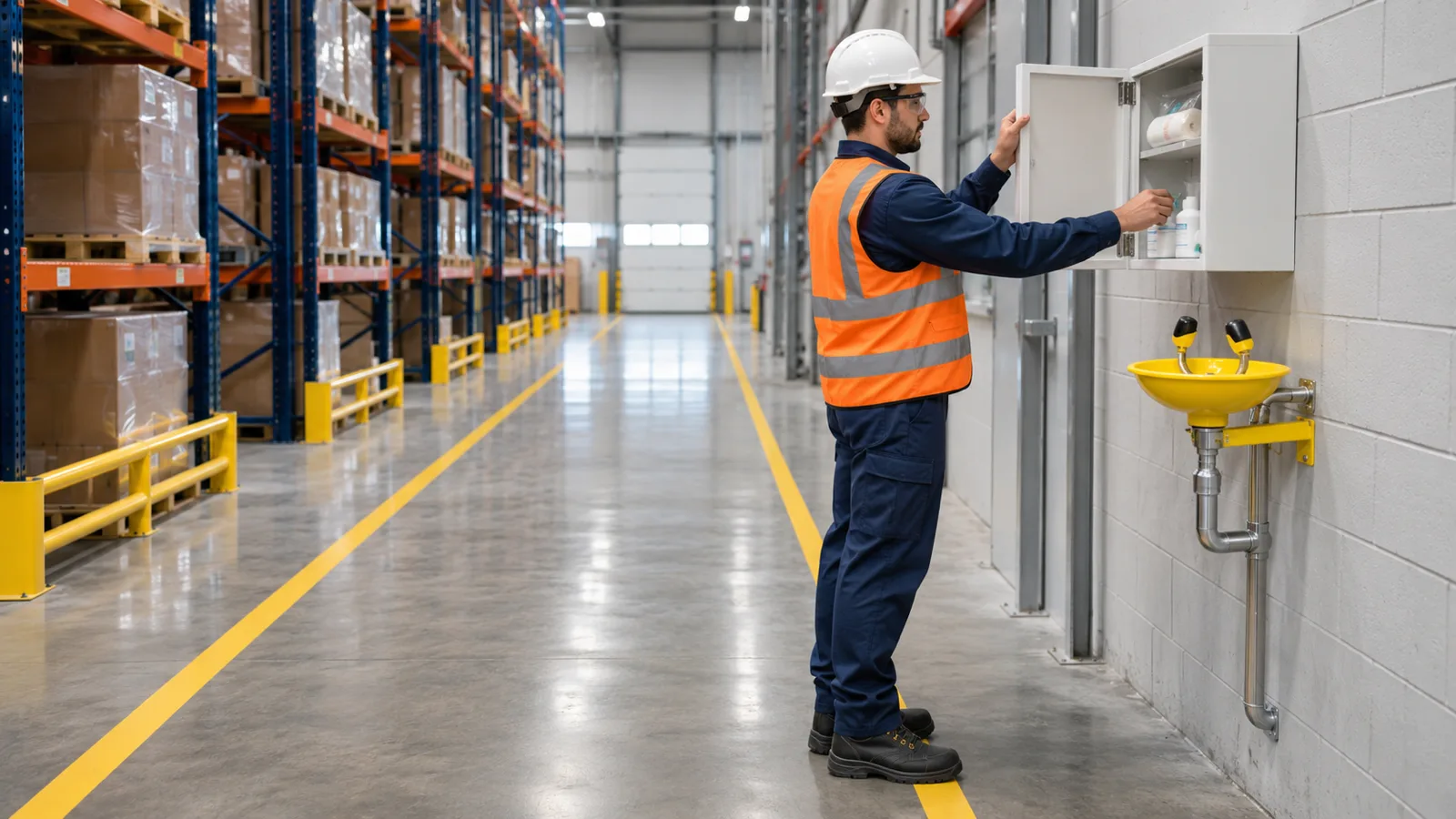
- Eyewash stations where chemicals or battery charging are present.
- Regular evacuation drills with a headcount process.
Reporting and Investigating Incidents
When someone is hurt, there are usually two obligations: report the injury to your provincial workers' compensation board within the required time, and notify the health and safety regulator for serious injuries or specified incidents. Timelines and thresholds vary, so make sure supervisors know what to do.
Beyond compliance, investigate every incident and near miss to find the root cause. Was the procedure unclear? Was the equipment faulty? Was the worker rushing because of an unrealistic target? A near miss is a free lesson, and the businesses that treat it seriously have fewer real injuries.
Adapting to the Pandemic
This spring, warehouses across Canada had to add new measures quickly to reduce the spread of COVID-19, following guidance from public health authorities and provincial safety regulators. Common steps have included health screening before shifts, physical distancing at workstations and in break rooms, staggered start and break times, more frequent cleaning of shared equipment and high-touch surfaces, and barriers or face coverings where distancing is difficult. Guidance continues to change, so assign someone to monitor updates from your province and adjust procedures as needed.
Frequently Asked Questions
How often should we inspect the warehouse?
Many operators do a quick daily walk-through by a supervisor and a more formal inspection monthly. If you have a joint committee, provincial rules may set how often members inspect the workplace.
Do temporary workers need the same training?
Yes. Temporary and seasonal workers face the same hazards as permanent staff, and often more, because they are less familiar with the site. Orientation, hazard training and supervision apply to everyone on the floor.
What records should we keep?
Training records, inspection reports, committee minutes, incident reports and equipment maintenance logs. These show that you are meeting your obligations and are essential if a regulator visits or an incident occurs.
Safety Is Part of Good Operations
A warehouse that is organised, well lit and run with clear procedures is safer and more productive at the same time. Good warehouse management technology supports this by reducing unnecessary travel and keeping stock where it belongs, while thoughtful layout keeps heavy items at safe heights. Many handling hazards begin the moment goods arrive, so it is worth reviewing how your put-away process works with safety in mind: where heavy cartons are slotted, how pallets are moved from the dock, and who is allowed to place stock on upper levels.
When you outsource to a 3PL, ask about their safety programme as part of your evaluation. A partner with strong safety practices is less likely to face disruptions, and it reflects how carefully they will handle your products. ShipCarte provides dedicated warehousing and distribution warehousing for businesses that want reliable operations without managing a building themselves.
Talk to Us About Your Warehousing Needs
Whether you are running your own space or looking for a partner to take it on, ShipCarte can help you think through storage, handling and fulfillment for businesses across Canada. Schedule a consultation to discuss your operation.