
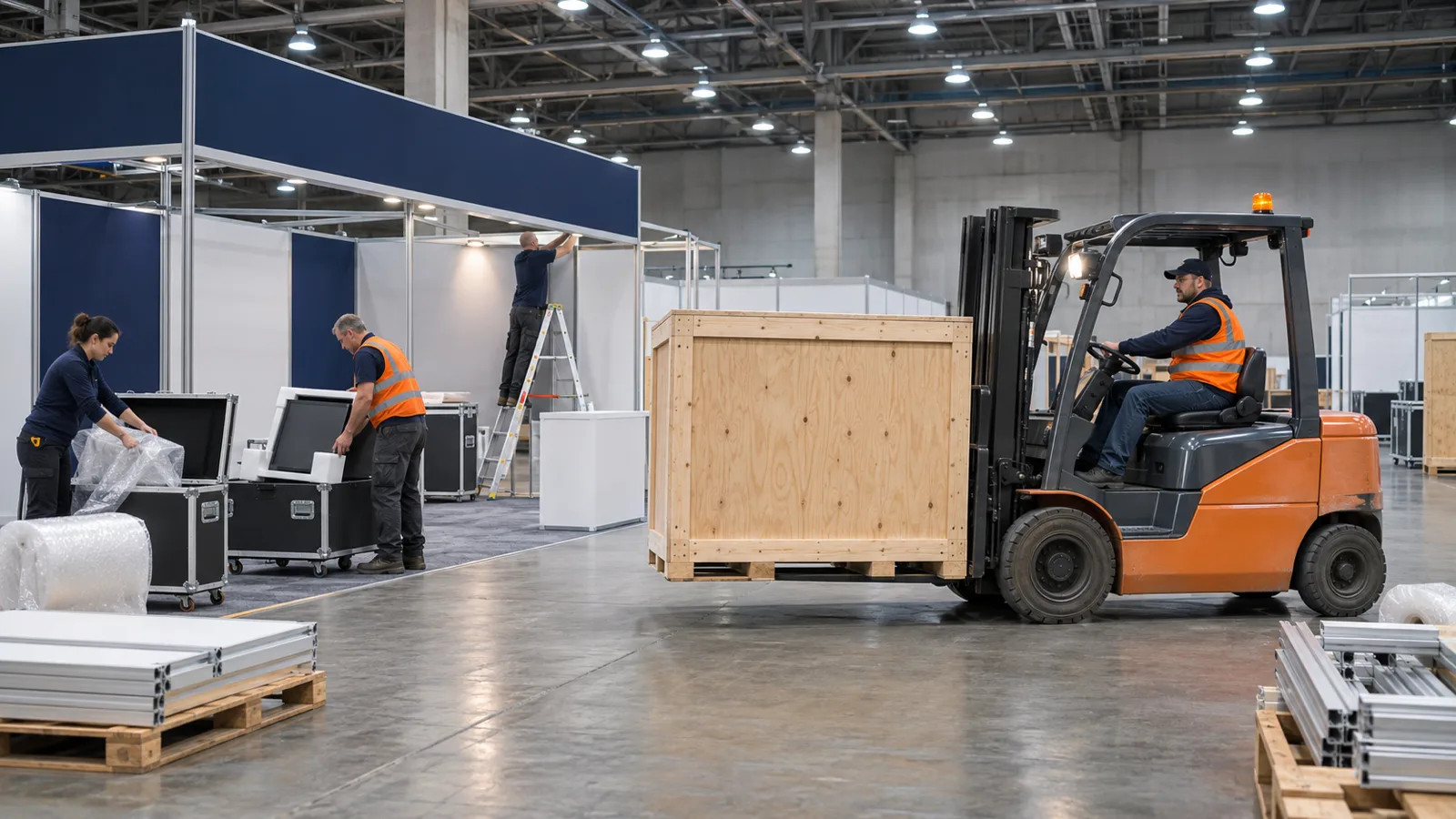
An equipment maker from the United States books space at a major industry show in Toronto. It plans to bring a working demonstration machine, a booth structure, a crate of brochures, some product samples for buyers, and boxes of branded pens to give away. The team assumes that because everything is going home after the show, nothing will be taxed. Two weeks before the event, its freight forwarder asks a question nobody has thought about: how are these goods entering Canada?
Exhibitors and event organisers face this question every season. Goods that cross into Canada for a trade show, conference or exhibition are imports, even if they will leave a few days later. Without the right arrangements, an exhibitor can end up paying full duty and taxes on a demonstration unit worth tens of thousands of dollars, or watching the booth sit at the border while the show opens without it.
The past year has seen most in-person events in Canada postponed or moved online because of the pandemic, and organisers are now planning for the return of live shows. When they come back, exhibitors who understand temporary import rules will have a smoother time. This guide explains the options, focusing on ATA Carnets and temporary admission, and gives you a planning timeline you can follow.
The principle: temporary goods can enter with relief
Canadian customs law recognises that some goods come into the country only for a short, specific purpose and then leave. Under the Customs Tariff, goods imported temporarily for certain purposes, including display at trade shows and exhibitions, use as professional equipment, and commercial samples, can enter with full or partial relief from duties and taxes, subject to conditions. The main conditions are that the goods are used only for the approved purpose, are not sold or given away in Canada, and are exported within the time allowed.
There are two common ways to use that relief: an ATA Carnet, or a temporary admission permit issued by the Canada Border Services Agency at the time of import.
ATA Carnets: a passport for goods
An ATA Carnet is an international customs document that lets goods enter participating countries temporarily without paying duties and taxes and without completing a full customs entry in each country. Canada accepts ATA Carnets for commercial samples, professional equipment, and goods for exhibitions and fairs. In Canada, carnets are issued by the Canadian Chamber of Commerce; exhibitors from other countries obtain theirs from the national issuing body in their own country.
How a carnet works in practice
- The exhibitor lists every item on the carnet's general list, with a description, quantity, weight, value and country of origin.
- The issuing body requires security, usually a bond or deposit, to cover potential duties and taxes if the goods are not re-exported.
- At each border crossing, customs officers validate the relevant voucher in the carnet: on export from the home country, on entry into Canada, on exit from Canada and on return home.
- Carnets are generally valid for up to one year, so the same document can cover several shows in several countries.
When a carnet makes sense
Carnets are most useful for exhibitors attending multiple events, especially across several countries, or for high-value goods where posting security at each border would be burdensome. They are also handy for professional equipment such as cameras or audiovisual gear used by production crews at events.
Temporary admission permits: the alternative
Exhibitors without a carnet can usually import goods temporarily by having a customs broker or the exhibitor request a temporary admission permit from the CBSA, commonly referred to by its form name, E29B. The permit lists the goods, the purpose, the place of use and the date by which they must be exported. The CBSA may require security, for example a cash deposit or bond, covering some or all of the duties and taxes that would otherwise apply. When the goods leave Canada, the permit is acquitted and the security released.
The permit route suits a single show in Canada, particularly when the exhibitor is working with the show's official customs broker. Many large events in Toronto, Montreal, Vancouver and Calgary appoint an official broker and freight forwarder precisely to handle these entries efficiently for exhibitors.
What qualifies, and what does not
Here is where exhibitors most often go wrong. Relief applies to goods that come in and go back out. Goods that stay in Canada are not temporary imports.
Usually eligible for temporary relief:
- Booth structures, display fixtures, lighting and flooring that will be shipped home.
- Demonstration machines and display products that will be re-exported.
- Audiovisual equipment, laptops and tools used to run the booth.
Usually not eligible, and treated as normal imports:
- Giveaways such as pens, bags and promotional items handed to visitors.
- Brochures and printed materials distributed at the show, although some printed advertising may qualify for specific relief, so confirm with your broker.
- Food and drink served at the booth.
- Any display item sold to a Canadian buyer during or after the show.
Consumables and giveaways need to be declared and accounted for, with duties and taxes paid. If they are regulated, such as food samples or cosmetics, Canadian regulatory requirements, including those from the CFIA or Health Canada, still apply.
Selling the display unit
It happens often: a Canadian buyer at the show wants the demonstration machine. If you sell goods that entered under a carnet or temporary permit, they are no longer temporary imports. You must account for them as a regular import, pay applicable duties and taxes, and close out the carnet or permit for that item. Plan for this before the show if sales of display goods are likely. Some exhibitors import demo units on a regular entry precisely because they expect to sell them.
A planning timeline for exhibitors
Eight to twelve weeks before the show
- Read the show's exhibitor manual for the official broker, forwarder and move-in schedule.
- Decide between a carnet and a temporary admission permit.
- Build a complete inventory list with descriptions, serial numbers, values and countries of origin.
Six weeks before
- Apply for the carnet, or brief the customs broker on the permit and security.
- Separate consumables and giveaways from temporary goods and arrange their import entry.
- Check regulatory requirements for any food, health or other regulated items.
Three to four weeks before
- Book freight to the show city or to an advance warehouse. Truck freight from the US typically crosses at major points such as Windsor-Detroit, Fort Erie-Buffalo, Lacolle or the Pacific Highway crossing near Surrey.
- Confirm delivery windows with the venue and any advance warehouse.
After the show
- Reconcile what is going home against what came in. Note anything sold, given away or damaged.
- Export the goods within the permitted time, and make sure the carnet voucher or permit is properly stamped and acquitted.
- Keep records so security deposits are released promptly.
Canadian exhibitors heading abroad
The same rules work in reverse. A Canadian company exhibiting in the United States, Europe or Asia can obtain an ATA Carnet from the Canadian Chamber of Commerce to take goods out and bring them back without paying duties abroad, and to document that the goods returning to Canada are the same ones that left. That last point avoids being charged Canadian duty on your own equipment when it comes home.
Logistics around the show
Customs is only one piece of exhibition logistics. Booth crates need storage between shows, demo units need careful handling, and literature and samples need to be packed and shipped to the venue on time. Many exhibitors use a warehouse near a major freight hub as a staging point: goods are received, checked against the carnet list, stored and delivered to the venue on the scheduled day. ShipCarte's warehousing services, kitting and assembly for sample packs, and LTL freight help exhibitors coordinate that flow.
For international legs, our cross-border shipping team works alongside your customs broker to get goods to the show and back. If you are also sending samples to buyers outside of the event, our guide to importing product samples into Canada covers the sample-specific rules. And for background on how international trade relies on warehousing, see warehousing services in international trade.
Frequently asked questions
Can I use a carnet for goods I plan to sell?
No. Carnets are for goods that will be re-exported. Goods intended for sale should be imported on a regular entry.
What happens if a carnet item is lost or stolen?
Report it promptly and document the loss. Duties and taxes may become payable on goods not re-exported, and the issuing body may draw on the security.
Do I need a customs broker if I have a carnet?
Not necessarily, but many exhibitors use one or rely on the show's official forwarder to present the carnet at the border and coordinate delivery to the venue.
Plan your next Canadian show with confidence
When live events return, exhibitors who prepare the paperwork early will spend their time selling instead of chasing shipments. ShipCarte supports exhibitors and brands across Canada with freight, staging and warehousing around trade shows. Request a quote to plan your event logistics.