
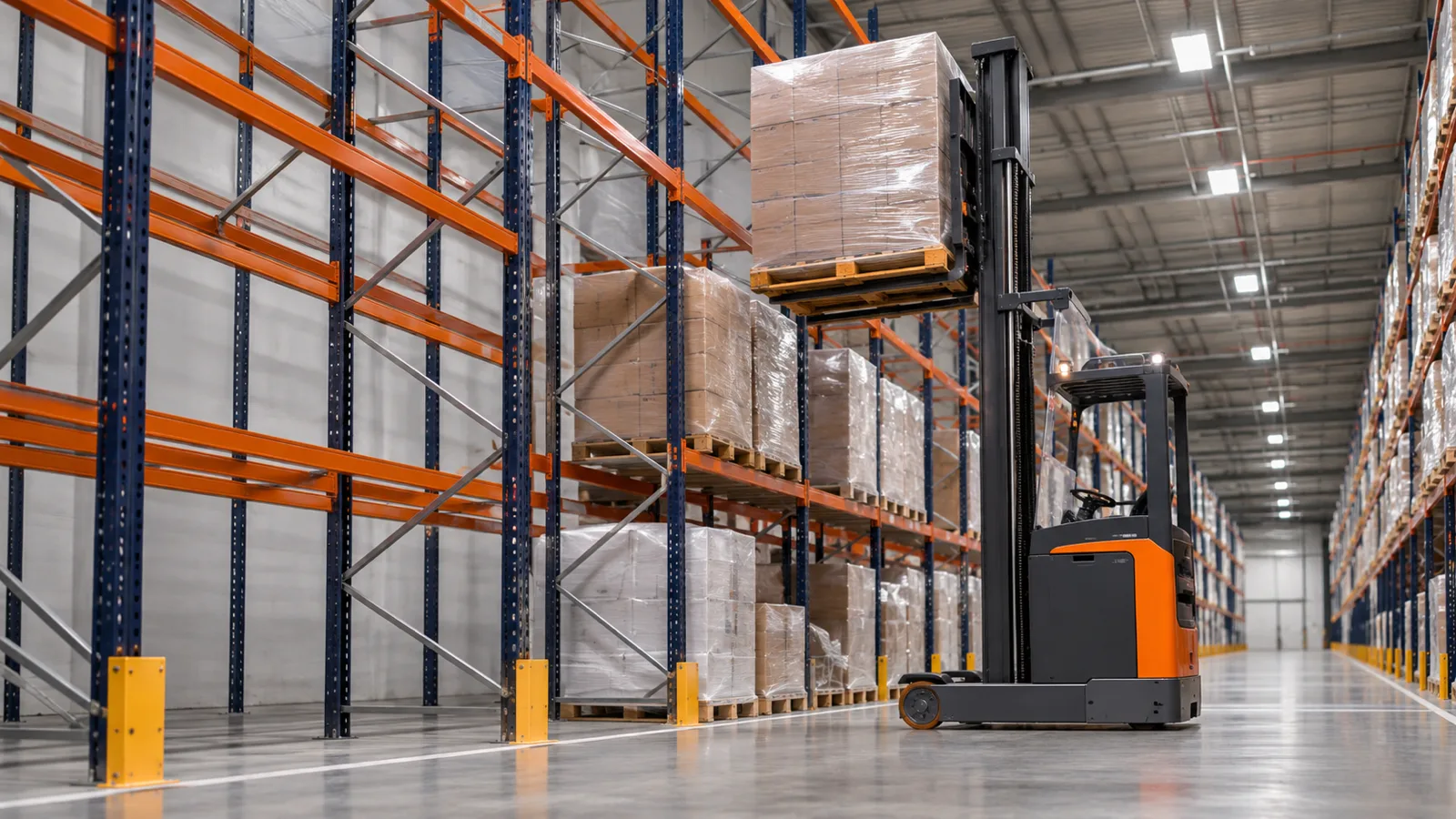
Every August, a home décor importer in the Gateway business district faces the same squeeze. Containers of holiday stock arrive from overseas through the Port of Vancouver or Montreal and land at the door in Mississauga, while the warehouse is still holding summer patio inventory that has not sold through. For roughly four months, there are more pallets than racking. By February, the space problem has vanished, and the business is left wondering whether to sign a bigger lease it only needs for a third of the year.
Seasonal overflow is one of the most common storage problems for importers, distributors, ecommerce brands and manufacturers. The answer is rarely a longer or larger lease. It is usually some form of short-term warehouse space that flexes with your inventory curve. The difficulty is that "short-term warehousing" can mean very different things, from a bare trailer in a yard to a fully managed 3PL arrangement, and the wrong choice can cost more than it saves.
This guide compares the realistic options in the Mississauga market, explains how pricing typically works, and gives you a checklist to use before you move a single pallet.
Why overflow happens (and why it is getting harder to plan)
Overflow is the result of inventory arriving faster than it sells, and there are several reasons that happens on a seasonal basis:
- Peak-season stock builds for Black Friday and the holidays, which need to be in place weeks before demand starts.
- Import lead times that push brands to order early and in larger quantities to avoid delays at ports or borders.
- Tariff and trade uncertainty, which leads some businesses to bring forward purchases. Our article on tariffs and ecommerce sellers discusses this behaviour.
- Manufacturing runs where it is cheaper to produce a large batch once than to run small batches throughout the year.
- Seasonal products such as garden supplies, patio furniture, heaters, back-to-school goods or holiday décor.
- Retailer programmes that require you to hold stock ready for scheduled store replenishment.
If you already know your busy months, you can plan overflow capacity months ahead. If you do not, it is worth reviewing the last two or three years of inventory levels by month. The pattern is usually clearer than people expect.
The options, compared
1. Short-term or sublet industrial space
You rent a portion of a building, sometimes subleased from another company with temporary vacancy. You get your own walls and dock access, but you are responsible for staffing, equipment, racking, insurance and security.
- Works for: businesses with their own warehouse team that need a lot of space for several months.
- Watch out for: minimum terms, fit-out costs, the time your staff spend shuttling between two sites, and the fact that industrial vacancy in the western GTA can be tight, so suitable short-term space is not always available when you need it.
2. Trailer or container storage in a yard
You keep goods inside trailers or containers parked in a secure yard and pull them when needed.
- Works for: very short holds of durable, non-temperature-sensitive goods.
- Watch out for: no climate control (Ontario winters and summers are hard on many products), limited access to individual SKUs, and per diem or detention fees if the equipment belongs to a carrier or shipping line. Our post on drayage explains how container fees accumulate.
3. Pallet-in, pallet-out storage with a 3PL
A third-party warehouse receives your pallets, stores them in racking and releases them when you request. You pay for storage and handling rather than square footage. This is often the simplest overflow model. See our guide to pallet-in, pallet-out services for the details.
- Works for: full pallets of stock that will be pulled back to your own facility or shipped out as full pallets.
- Watch out for: handling fees on every inbound and outbound pallet, and whether the 3PL can also break pallets down if your plans change.
4. Fully managed overflow with fulfillment
The 3PL stores your overflow and also ships orders or distribution directly from that stock, so it does not need to come back to your building at all. During peak, your own site focuses on core SKUs while the 3PL handles the surge. ShipCarte's distribution warehousing and pick and pack services can be combined this way.
- Works for: brands whose overflow is mostly peak-season demand that has to go out to customers anyway.
- Watch out for: onboarding time. Systems, SKUs and integrations need setting up before the rush, not during it.
5. Dedicated space within a shared facility
For larger, recurring needs, some 3PLs offer a defined footprint within their building for a set period, with their staff and equipment. This is a middle path between a lease and pay-per-pallet storage. ShipCarte's dedicated warehousing is an example.
How short-term warehousing is usually priced
Prices vary widely by provider, product and season, but the building blocks are fairly consistent:
- Storage: typically charged per pallet position per month (or per week for very short holds), or per square foot for floor-stacked goods. Oversized or double-height pallets often cost more.
- Receiving: a fee per pallet or per container unloaded. Floor-loaded containers, where cartons are stacked loose rather than on pallets, take much longer to unload and are usually charged by the hour or per container.
- Outbound handling: a fee per pallet or carton released.
- Accessorials: palletizing, stretch wrapping, labelling, cycle counts and special projects.
- Minimums: some providers set a monthly minimum or a minimum term, particularly for peak-season contracts.
Expect demand to affect availability and pricing. Space in the GTA tends to fill up in the run-up to the holiday season, so the best time to secure overflow capacity is usually well before your containers sail.
Location: why Mississauga makes sense for overflow
Overflow storage only saves money if moving goods in and out is cheap and fast. Mississauga's location helps:
- Highways 401, 407, 410 and 427 connect quickly to the rail intermodal terminals in Brampton and Vaughan, where many import containers arrive from the coast.
- Toronto Pearson is on the city's northeastern edge for air freight.
- Short shuttle runs connect overflow sites with primary warehouses across Peel, Halton and Toronto.
- Major retailer distribution centres and the US border routes along the QEW and 401 are within easy reach for outbound loads.
The closer your overflow is to your primary facility and to your customers, the less you spend on shuttle moves. A provider in the Airport Corporate Centre or Gateway area, for example, can often reach a primary site elsewhere in Peel within a short drive, traffic permitting.
Checklist before you move inventory in
Run through these points with any short-term storage provider:
- Product suitability: Is the space climate-controlled or heated? Can it store your specific products, including any regulated goods, food, health products or dangerous goods?
- Inventory visibility: Will you see stock levels by SKU and lot in real time, or only get a monthly report? A proper inventory management system matters when stock is split across two sites.
- Release process: How do you request pallets out, and how quickly can they be ready? Same day, next day, 48 hours?
- Receiving requirements: Does the provider need advance shipping notices, pallet labels, specific pallet heights or appointment bookings?
- Insurance and liability: What does the warehouse's liability cover, and what does your own policy need to cover?
- Term and exit: What is the minimum term? What happens if you need longer than planned, or want out early?
- Peak capacity: Has the provider committed space for you, or is it first come, first served?
- Transportation: Can the provider arrange the shuttle moves, inbound drayage and outbound freight, or will you manage those separately?
Planning your overflow calendar
A simple planning rhythm works well for most seasonal businesses:
- Four to six months before peak: forecast how many pallets you will hold at the high point, and for how long. Start conversations with providers.
- Two to three months before: confirm space, agree on pricing and processes, set up SKUs and any system integrations.
- As stock arrives: route overflow directly to the short-term site rather than double-handling through your own building.
- During peak: pull or ship from overflow first for fast movers, keeping slower SKUs in reserve.
- After peak: consolidate leftover stock, decide what to liquidate (see our guide on liquidating inventory) and release the overflow space.
That cycle can repeat for spring and summer if your business has two peaks, as many garden, outdoor and back-to-school brands do.
A note on the true cost of "free" space
Some businesses avoid paying for overflow by cramming extra pallets into aisles, staging areas and dock doors. It feels free, but it usually is not. Blocked aisles slow every pick, crowded docks delay receiving, and pallets stored in walkways are a safety hazard. The productivity lost across the whole building is often greater than the cost of renting proper overflow space for a few months.
Find the right overflow setup
Short-term warehouse space in Mississauga does not have to mean a rushed, expensive decision each autumn. With a forecast, the right provider model and a clear release process, overflow becomes a routine part of the year. Talk to ShipCarte about seasonal storage, from pallet-in, pallet-out holding to fully managed fulfillment from overflow stock. Request a quote with your expected pallet count and dates, and we will help you plan the season.