
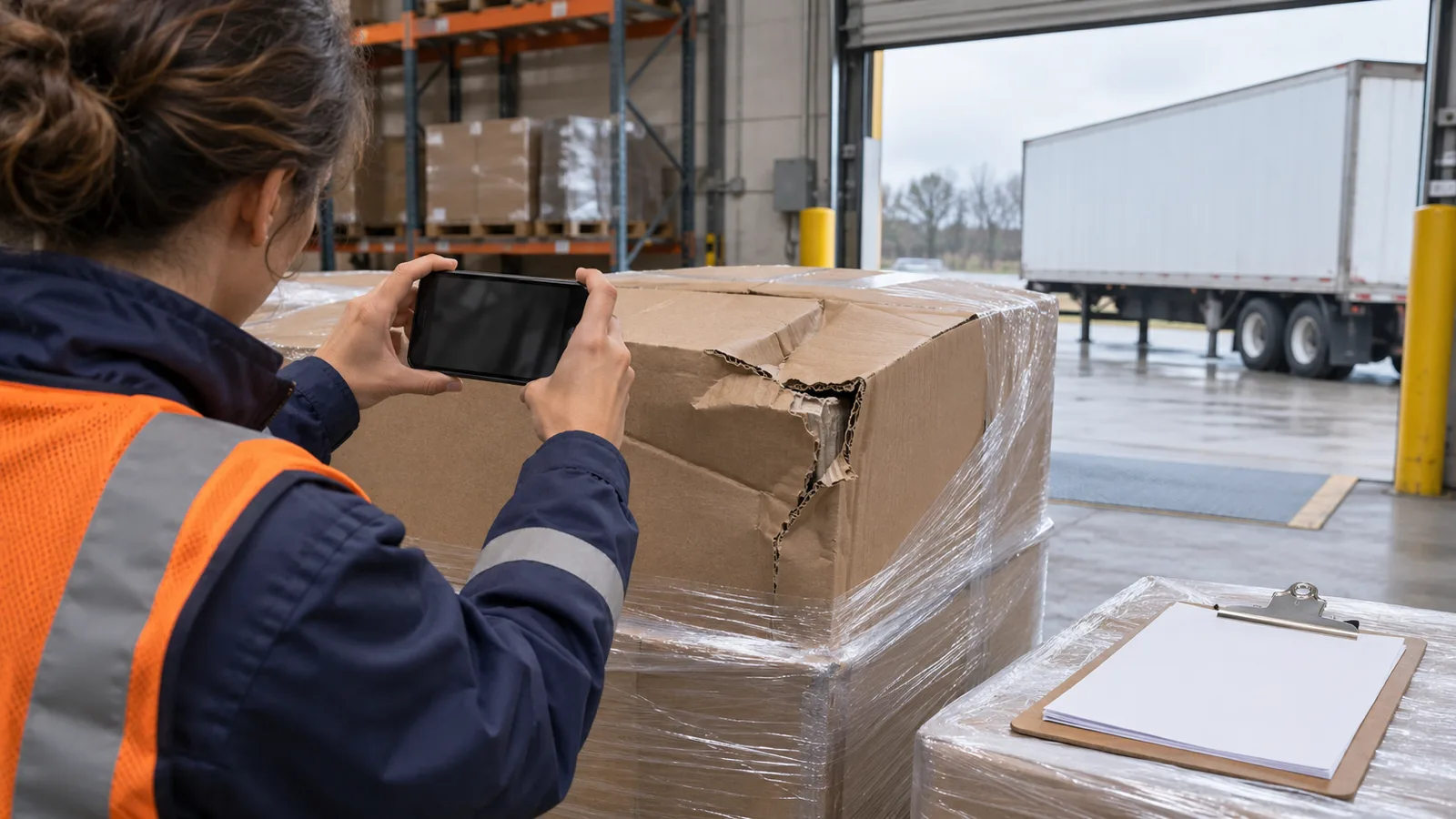
The receiver at a kitchen equipment distributor near Highway 10 and Eglinton signs for six pallets late on a Friday afternoon. Everyone wants to go home, the driver is in a hurry, and the shrink wrap looks fine from the dock. On Monday morning, the team breaks down the pallets and finds two commercial mixers with cracked housings and a corner of one pallet crushed inward. They take a few photos, email the carrier, and wait. Weeks later, the claim is declined: the delivery receipt was signed clean, the photos were not dated, and there was no proof the damage happened in transit rather than in their own warehouse.
This happens more often than most businesses expect, and it is almost always preventable. Carriers do pay legitimate claims, but they pay claims that are documented, timely and complete. For shippers and receivers in Mississauga, where freight moves daily through busy docks in Malton, Gateway, Meadowvale and along the Highway 401 and 410 corridors, a simple, repeatable claims process can recover money that would otherwise be written off.
Here is how to set one up, from the moment the truck backs in to the moment the payment arrives.
Know What You Are Claiming For
Shipping claims generally fall into a few categories, and each needs slightly different evidence:
- Visible damage: damage that can be seen at delivery, such as crushed cartons, torn wrap, broken pallets or wet packaging.
- Concealed damage: damage discovered only after the shipment is opened, even though the outside looked fine.
- Shortage: fewer pieces or units delivered than shipped.
- Loss: the entire shipment never arrived.
- Delay: late delivery causing a financial loss. Carriers rarely accept delay claims unless guaranteed service was purchased, so check your terms.
Visible damage and shortages recorded at delivery are the easiest claims to win. Concealed damage claims are harder, which is why inspection practices at the dock matter so much.
At the Dock: The Five Minutes That Decide Your Claim
Most claims are won or lost at the moment of delivery. Train every receiver, including the person covering the Friday afternoon shift, to follow these steps.
Count before you sign
Compare the number of pallets, crates or cartons against the bill of lading. If one is missing, note it on the delivery receipt before signing.
Inspect every handling unit
Walk around each pallet. Look for crushed corners, punctures, torn or re-wrapped stretch film, leaning loads, wet spots, broken pallet boards and tampered seals. Re-wrapped pallets can be a sign that something was rebuilt in transit.
Write specific exceptions on the delivery receipt
If anything is wrong, write it on the carrier's delivery receipt before signing, and make sure the driver's copy shows it too. Be specific. "Damaged" is weak. "Pallet 3 of 6: NE corner crushed, 4 cartons punctured, stretch wrap torn" is strong. Avoid vague phrases like "subject to inspection," which many carriers do not treat as a notation of damage.
Photograph immediately
Take photos before moving anything: the trailer interior if accessible, each damaged pallet from several angles, close-ups of damage, labels and the trailer number. Phone photos with date and time metadata are fine; keep the original files.
Refuse only when appropriate
Refusing a shipment can make sense when it is clearly destroyed, but refusal has consequences: you may not have the goods, and the shipper may face return charges. In most cases, accepting with detailed exceptions and filing a claim is the better route. Agree on a policy with your suppliers in advance.
After the Truck Leaves: Handling Concealed Damage
When damage is found after delivery, speed matters. Carriers' terms usually require prompt notice of concealed damage, sometimes within a short number of days. Do the following as soon as damage is discovered:
- Stop unpacking and leave the goods and packaging as they are.
- Photograph the outer packaging, inner packaging and damaged items.
- Notify the carrier in writing and request an inspection.
- Keep all packaging materials until the carrier inspects or waives inspection.
- Record when the shipment was delivered, when it was opened and by whom.
The carrier will want to know whether damage could have occurred after delivery. Keeping packaging, acting quickly and showing that the goods were not moved around your warehouse help answer that question.
Your Claim Evidence Kit
When you file, assemble a complete package. Missing documents are the most common reason claims stall. Your kit should include:
- Bill of lading: proves what was tendered to the carrier, including piece count and declared value. Our post on the bill of lading's purpose explains why it is so important.
- Delivery receipt with exceptions: proves the condition noted at delivery.
- Photos: dated, clear and showing both overall condition and detail.
- Commercial invoice or proof of value: shows the value of the goods, usually at cost or invoice value depending on terms.
- Repair estimate or proof of loss: if items can be repaired, a repair quote; if not, documentation that they are a total loss.
- Freight bill: the carrier's invoice for the shipment.
- Inspection report: if the carrier inspected.
- Written claim form: most carriers have their own form or online portal.
Understanding Carrier Liability Limits
Many shippers are surprised to learn how little a carrier may owe. In Canada, carrier liability for general freight is commonly limited by the conditions of carriage, often calculated by weight unless a higher value was declared on the bill of lading at the time of shipping. For light but valuable goods, that limit can be far below what the goods are worth. Parcel carriers have their own liability limits set out in their service terms, and they typically offer declared value coverage for an extra fee.
That means a perfectly documented claim might still pay only part of the loss. The way to close that gap is to declare value where appropriate or buy separate cargo or shipping insurance. Our articles on freight insurance and getting shipping insurance explain the options.
Deadlines: Do Not Miss Them
Every claim has time limits, and they are strictly applied. There are typically separate deadlines for giving notice of a loss or damage and for filing the formal claim with supporting documents. The exact deadlines depend on whether the shipment moved by LTL, truckload, parcel or across the border, and on the terms printed on the bill of lading or in the carrier's tariff. Concealed damage notice windows tend to be the shortest. Read the terms for each carrier you use and keep a simple calendar of claim deadlines.
Filing and Following Up
Submit the claim in writing through the carrier's preferred channel and keep proof of submission. Record the claim number. Then follow up regularly; claims that go quiet are often waiting for a missing document. If a claim is denied, ask for the reason in writing. Denials can sometimes be reversed with additional evidence, such as clearer photos or proof of packaging quality.
Stay professional. Carriers handle large volumes of claims, and a clear, complete, polite claim tends to move faster than an angry one.
Mistakes That Sink Claims
- Signing the delivery receipt clean when damage was visible.
- Writing vague notations like "subject to count."
- Discarding damaged packaging before inspection.
- Waiting too long to report concealed damage.
- Poor packaging or palletization that lets the carrier argue the shipment was not fit for transport.
- Missing proof of value.
- Filing after the deadline.
The packaging point deserves attention. Carriers may deny claims if they believe the shipper's packaging was inadequate. Stable pallets, corner boards, proper stretch wrapping and cartons rated for the load all strengthen your position. Our guide on packing fragile items covers the basics for parcels.
Local Factors Mississauga Shippers Should Consider
Some causes of damage are specific to how freight moves around the GTA. A typical LTL shipment from a Mississauga warehouse is picked up, taken to a carrier terminal, cross-docked onto a linehaul trailer, and may be handled again at a destination terminal before final delivery. Every transfer is another chance for a forklift tine to puncture a carton or for a pallet to be top-loaded with something heavy. Shipments that pass through several terminals benefit most from sturdy palletizing and clear "do not stack" labelling.
Seasonal conditions matter too. Ontario winters bring freezing temperatures that can damage liquids, coatings and some electronics if goods sit in an unheated trailer or terminal. If your products are sensitive to cold, request protect-from-freeze service when booking, because carriers generally will not accept a freeze damage claim on a shipment that was not booked with that service. Summer heat can soften adhesives and affect temperature-sensitive goods in the same way.
Cross-border freight through the Peace Bridge, Lewiston-Queenston or the Ambassador Bridge adds another layer: customs inspections may involve opening and re-wrapping pallets. Documenting the condition of freight before it leaves Mississauga, with photos of wrapped pallets and seal numbers, makes it easier to show where damage occurred if something arrives broken on the US side.
Finally, keep your own dock in good order. Receivers working in cramped, poorly lit areas are more likely to miss damage at delivery, and goods damaged by your own forklifts after delivery are not the carrier's responsibility. A clear inspection zone near the dock door, with good lighting and a phone or tablet for photos, makes the right process the easy one.
Prevention Is Cheaper Than Claims
Even successful claims cost time and rarely cover everything: lost sales, customer frustration, reshipping and administrative effort are seldom recovered. Reducing damage in the first place pays off. Practical steps include choosing carriers with good handling records for your lanes, palletizing loose cartons, labelling non-stackable freight clearly, and reviewing damage trends by carrier and lane. ShipCarte's carrier management service helps shippers track performance and steer freight away from problem lanes, and our LTL freight team can advise on packaging that travels well.
Let ShipCarte Help You Ship Safely
When damage happens, a disciplined claims process helps Mississauga businesses recover what they are owed. When it does not happen, everyone wins. ShipCarte helps shippers book freight with reliable carriers, compare options and understand coverage. Request a quote for your next shipment, or schedule a consultation to review how you ship and protect your freight.