
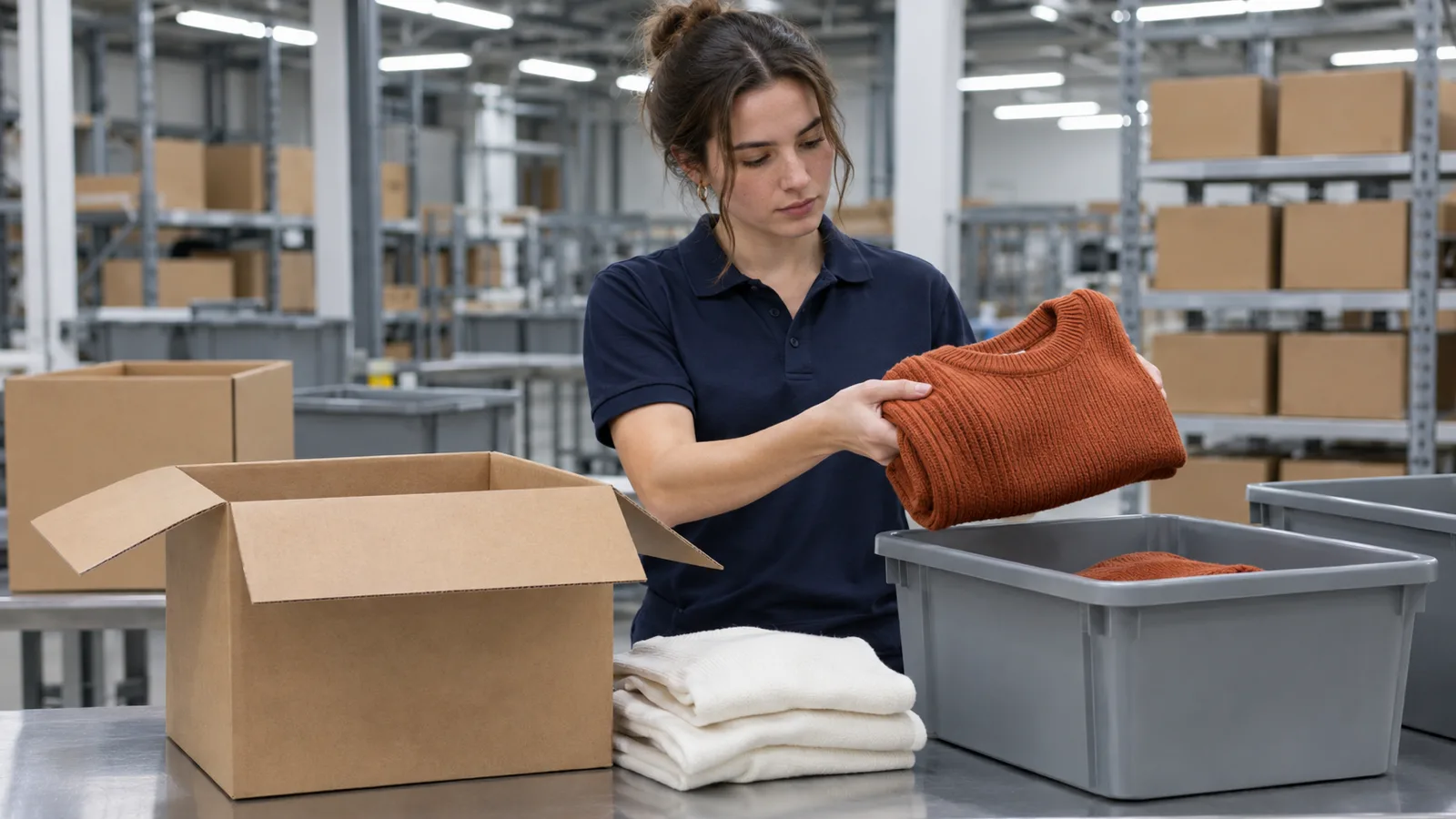
Every January, a familiar scene plays out in back rooms and warehouses across Mississauga. Holiday orders that left the building in November and December start coming back: sweaters in the wrong size, gadgets that did not match the gift recipient's expectations, duplicate presents, and the occasional item that arrived damaged. For a direct-to-consumer brand, those boxes pile up in a corner while the team argues over who has time to open them.
The longer a return sits unopened, the more value it loses. Seasonal apparel drifts out of season. Electronics drop in price as newer models arrive. Customers wait for refunds and start emailing support. Meanwhile, the inventory system still shows those units as sold, so the business may be reordering stock it already has sitting in a pile by the door.
Returns are often treated as a cost centre, something to minimize and endure. A better way to think about them is as an inbound inventory stream that needs the same discipline as receiving from a supplier. Handled well, a meaningful portion of returned goods can go back on the shelf and sell again at full price. This article follows a return from the customer's doorstep back to resale, and looks at where Mississauga businesses can recover value at each step.
Following One Return Through the System
To make this concrete, imagine a customer in Ottawa who orders a pair of boots from a footwear brand whose inventory sits in a Mississauga fulfillment centre. The boots fit poorly, so the customer requests a return. Here is what a well-run process looks like, stage by stage.
Stage 1: The return request
The customer visits a returns portal rather than emailing support. The portal asks for the order number, the reason for return and whether the customer would prefer a refund, an exchange or store credit. This is the first opportunity to recover revenue: if the boots are available in the next size up, offering an instant exchange keeps the sale. Store credit, sometimes sweetened with a small bonus, keeps the money inside the business.
The reason code matters more than most brands realize. "Too small," "not as pictured" and "arrived damaged" each point to a different fix upstream, whether that is a size chart, product photography or packaging. A portal that forces a structured reason, rather than a free-text box, produces data you can actually use. Our post on self-service returns covers how these portals typically work.
Stage 2: The label and the journey back
The portal generates a prepaid return label routed to the fulfillment centre in Mississauga. For Canadian customers, a ground service is usually sufficient; there is rarely a reason to pay for expedited return shipping. The return carries a reference linking it to the original order so the warehouse can identify it on arrival without detective work.
Mississauga's location helps here. With major carrier terminals clustered near Pearson, Malton and the Highway 401 and 410 interchange, returns from across Ontario and Quebec typically flow back into the area quickly. Returns from the United States are a different story, involving customs considerations that we will come back to.
Stage 3: Receiving and identification
When the parcel arrives, it is scanned and matched to the return authorization. At this moment, the business should trigger whatever the customer was promised. Some brands issue refunds on carrier scan, before the item even arrives, to build trust. Others wait for inspection. There is no single right answer, but the policy should be deliberate and consistent.
Stage 4: Inspection and grading
This is where value is made or lost. A trained associate opens the box and assesses the boots against a written grading standard. Are they unworn, with the original box and tags? Lightly tried on indoors? Clearly worn outside? Damaged? Each grade leads to a different destination.
Stage 5: Disposition
Based on the grade, the boots are restocked as new, repackaged and restocked, routed to a discount or outlet channel, sent back to the vendor under a supplier agreement, donated, or recycled. The faster this decision happens, the more the item is worth.
Stage 6: Inventory and reporting
Once dispositioned, the inventory record updates so the boots are available to sell again, and the return reason feeds into a report that the merchandising team actually reads. That last step closes the loop and is the one most often skipped.
Building a Grading Standard That Works
A grading standard turns subjective judgement into a repeatable process. Without one, two associates will make different calls on the same item, and resellable stock ends up in the clearance bin. Most brands work with four or five grades.
- Grade A, resell as new: unopened or unused, all packaging and tags intact. Goes straight back to available stock.
- Grade B, refurbish and resell: unused but with damaged outer packaging, missing tissue or a loose tag. Needs repackaging, relabelling or minor cleanup before restocking.
- Grade C, secondary channel: lightly used or with cosmetic flaws. Sold through an outlet, marketplace listing, warehouse sale or liquidation partner.
- Grade D, return to vendor: defective in a way the supplier is responsible for, handled under whatever return-to-vendor terms exist.
- Grade E, donate or recycle: not resellable. Disposed of responsibly, with records kept for accounting.
Photos at inspection help enormously. When a customer disputes a partial refund, or a supplier questions a defect claim, a timestamped photo settles the matter quickly. It also lets the brand audit grading consistency without reopening boxes.
Where the Revenue Actually Comes From
"Turning returns into revenue" can sound like marketing language, so it is worth being specific about the mechanisms.
Speed to shelf
A Grade A item restocked within a day or two of arrival can sell at full price, often to a customer who would otherwise have seen it as out of stock. The same item restocked six weeks later may be out of season or superseded. Processing speed is the single biggest driver of recovered value.
Exchanges over refunds
Every exchange is a sale that did not disappear. Making exchanges easier than refunds, by offering instant exchange shipping or a simple size swap, protects revenue that would otherwise walk away.
Secondary channels
Items that cannot be sold as new still have value. Open-box listings, outlet sections on your own site, warehouse sales and liquidation partners all recover something. The key is having a channel ready before the inventory accumulates. Our guide on liquidating ecommerce inventory walks through options for stock that cannot go back to full price.
Fixing root causes
The most valuable return is the one that never happens. If reason codes show that a particular product is frequently returned as "smaller than expected," a revised size chart or product description can reduce future returns. If "arrived damaged" clusters around one SKU, the packaging needs attention.
Catching abuse
Most customers return items honestly, but return fraud and policy abuse do exist: wardrobing, empty-box returns, swapping a used item for a new one. Inspection catches these, and good records make patterns visible. Our article on returns fraud has more on spotting it.
Cross-Border Returns From US Customers
Many Mississauga brands sell heavily into the United States, which adds complexity to returns. Goods returning to Canada are imports, and depending on how they originally left and their origin, they may qualify for relief from duties when they come back unchanged. The documentation must be in order, and the paperwork is managed through the Canada Border Services Agency's processes, including the CBSA Assessment and Revenue Management (CARM) system for importers.
Shipping every individual US return back across the border can be expensive. Some brands consolidate US returns at a US address and ship them back in bulk, or liquidate lower-value returns in the US rather than paying to bring them home. The right approach depends on product value, volume and margins. A logistics partner experienced in cross-border shipping can help weigh those options.
In-House or Outsourced?
Smaller brands often start by processing returns themselves, which is perfectly reasonable when volume is low. The trouble starts when returns spike after peak season and the same people who pack outbound orders are suddenly expected to inspect, grade and restock inbound ones. Returns almost always lose that fight for attention.
Outsourcing to a fulfillment provider makes sense when returns volume is large or spiky enough to disrupt outbound operations, when the brand lacks space for a dedicated returns station, or when the inventory is already stored with a 3PL. In that last case, sending returns to the same building as the stock is simply more efficient: graded items go straight back onto pick shelves without another transfer. ShipCarte's returns management service is built around that idea, connected to the same inventory management system that tracks outbound orders.
Metrics Worth Tracking
- Return rate by SKU and by reason: highlights products with fit, quality or description problems.
- Dock-to-stock time for returns: how many days between arrival and availability for resale.
- Recovery rate: the share of returned units resold at full price, at a discount, or written off.
- Exchange versus refund ratio: a direct measure of revenue retained.
- Refund cycle time: how long customers wait, which affects satisfaction and repeat purchases.
These numbers do not need to be perfect to be useful. Even a rough monthly view will show whether returns are being handled as an asset or left to decay.
Common Pitfalls
- Letting unopened returns accumulate until "someone has time."
- Restocking without inspection, which sends worn or damaged goods to the next customer.
- Refunding before verifying high-value items, without a clear policy on when that is acceptable.
- Collecting reason codes but never reviewing them.
- Failing to update inventory, which leads to overselling or unnecessary reorders.
Get Returns Moving Again
Returns will never be anyone's favourite part of running an ecommerce business, but they do not have to be a slow leak of margin. With a clear grading standard, fast processing and data that feeds back into product decisions, reverse logistics can recover real value. If returns are piling up at your Mississauga operation, or you want to see how a dedicated returns workflow would fit alongside your outbound fulfillment, schedule a consultation with ShipCarte.