
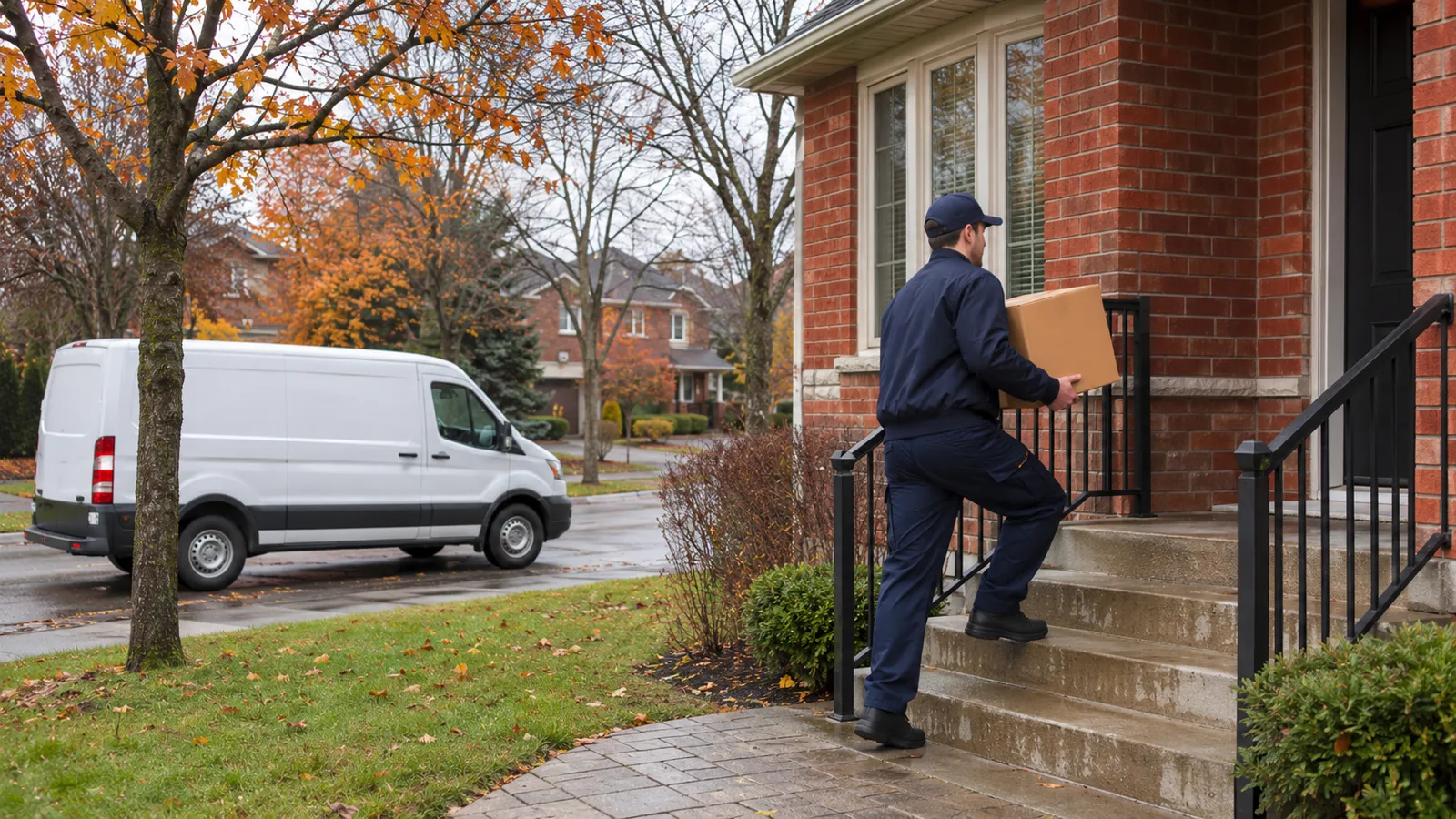
A furniture accessories brand in Streetsville reviews its carrier invoices at the end of the quarter and notices something odd. The base shipping rates look exactly as quoted, but the total is noticeably higher than expected. Line by line, the culprit appears: a residential delivery charge on almost every parcel, plus a handful of address corrections and a couple of extended area fees for customers in rural Ontario. None of it is a billing error. It is simply the cost of delivering to homes, and nobody had been tracking it.
Residential surcharges are among the most common and least understood fees in parcel and freight shipping. For direct-to-consumer brands in Mississauga, where most orders end up at a house, townhouse or condo, they can quietly add up to a meaningful share of total shipping spend. The good news is that while you cannot eliminate them entirely, you can understand them, plan for them and reduce their impact.
What Is a Residential Delivery Surcharge?
A residential surcharge is an additional fee carriers apply when a shipment is delivered to a home rather than a commercial address. The logic, from the carrier's perspective, is straightforward. Business deliveries tend to be concentrated: a single stop at an office park or industrial unit can drop several parcels, someone is usually there to sign during business hours, and the routes are dense. Residential deliveries are more spread out, often one parcel per stop, more likely to require a second attempt, and more likely to involve stairs, gates, buzzers and parking challenges.
Carriers recover that extra cost with a per-package or per-shipment fee. The exact amount varies by carrier, service level and contract, and it typically changes when carriers publish their annual rate updates. Some carriers also apply higher residential fees during peak season, usually from late autumn through the holidays.
How carriers decide an address is residential
Carriers use address databases and driver feedback to classify addresses. That classification is not always what you expect. A home-based business might be classified as residential even though it operates commercially. A mixed-use building in City Centre near Square One might be commercial for some units and residential for others. Condo towers along Hurontario Street are usually treated as residential, even though they look like large commercial buildings and receive many parcels a day.
If you declare an address as commercial and the carrier determines it is residential, you will typically be billed the residential fee after the fact, sometimes with an additional correction charge.
Residential Charges in LTL Freight
Parcel shippers are not the only ones affected. For pallet freight, residential delivery is an accessorial service with its own charge, and it often brings other fees with it. A residential LTL delivery may also require a liftgate because there is no loading dock, an appointment because someone needs to be home, and potentially inside delivery if the customer cannot move the pallet themselves. Each of these is typically billed separately. Our guide to types of shipping surcharges explains these accessorials in more detail.
Businesses selling large items such as furniture, fitness equipment, appliances or home renovation materials to Mississauga homeowners feel these costs most acutely.
Related Fees That Travel With Residential Deliveries
When reviewing your invoices, look for these companion fees, which often appear alongside residential charges:
- Delivery area surcharges. Applied to addresses outside a carrier's core service area. Some rural and remote postal codes in Ontario and across Canada attract these, as do certain suburban areas.
- Address correction fees. Charged when the carrier has to fix an incomplete or incorrect address, such as a missing unit number in a condo.
- Signature fees. Charged when you request signature confirmation.
- Additional handling and oversize fees. Triggered by heavy, long or awkwardly packaged items.
- Peak or demand surcharges. Temporary fees during high-volume periods.
- Redelivery or return-to-sender charges. Incurred when delivery attempts fail.
Ten Ways to Reduce Residential Surcharges
You will never get residential fees to zero if you sell to consumers. But these strategies can bring them down and make the remaining costs predictable.
1. Measure what you are actually paying
Start by pulling three to six months of carrier invoices and totalling residential fees, delivery area fees and address corrections. Express them as an average per order. This number becomes your baseline, and you may find it is larger than you assumed. Regular shipping bill auditing helps catch fees that should not have been applied.
2. Compare carriers on total landed cost, not base rate
Carriers structure residential pricing differently. Some build residential delivery into their consumer-focused services, while others add it as a separate fee. A carrier with a slightly higher base rate but no residential surcharge may be cheaper overall for home deliveries. Comparing rates per shipment through a multi-carrier shipping platform lets you see the full cost before you buy the label.
3. Use services designed for residential delivery
Most major carriers offer at least one ground service aimed at home delivery. These services often handle residential stops more economically. For lightweight parcels, postal services may also be competitive because residential delivery is built into their network.
4. Validate addresses at checkout
Address validation tools in your ecommerce platform or shipping software flag missing unit numbers, misspelled street names and invalid postal codes before the order is placed. That reduces correction fees and failed deliveries, which are particularly common in Mississauga's many condo buildings and townhouse complexes where unit numbers are essential.
5. Classify addresses accurately
Declare residential addresses as residential when you create the label. It may feel counterintuitive, but an accurate declaration avoids the extra correction charges some carriers apply when they reclassify a shipment after the fact.
6. Encourage pickup point delivery
Offering delivery to parcel lockers, retail pickup points or carrier depots can avoid residential fees altogether for customers who choose it. Many Mississauga shoppers are already used to collecting parcels from pharmacies, convenience stores and plazas. Present it as a convenient option, perhaps with a small discount, rather than a downgrade.
7. Consolidate orders
If customers frequently place multiple orders in a short period, consider holding orders briefly to ship them together, or encourage bundling at checkout. One parcel means one residential fee instead of two or three.
8. Right-size your packaging
Residential fees often compound with dimensional weight and handling charges. Smaller, well-fitted boxes reduce the chance that a parcel crosses into a higher pricing tier. Cartonization tools choose the smallest suitable box for each order automatically.
9. Rethink large-item delivery
For bulky products, compare LTL residential delivery against specialized last-mile carriers that focus on home delivery of large items. In some cases, breaking a large product into multiple parcel-sized boxes is cheaper than shipping it on a pallet, while in other cases the reverse is true. Test both.
10. Leverage a 3PL's volume
Individual brands have limited bargaining power with carriers. A third-party logistics provider shipping for many clients may have access to rates and surcharge terms that a single shipper cannot get alone. ShipCarte's carrier management service helps clients choose carriers and services based on the full cost of each shipment.
Should You Pass Residential Fees to Customers?
This is a pricing decision, not a logistics one, but logistics data should inform it. Some brands absorb residential fees into their free-shipping threshold. Others build an average residential cost into flat-rate shipping prices. Very few list a residential fee separately at checkout, because customers dislike unexpected line items.
Whatever approach you choose, base it on your actual average cost per order rather than a guess. If residential and related fees make up a significant portion of your shipping spend, your free-shipping threshold or flat rate may need adjusting. Our article on flat rate shipping walks through how to set those numbers.
The Mississauga Condo Factor
Mississauga's skyline has changed dramatically, and a growing share of local customers now live in high-rise buildings around City Centre, Port Credit and along the Hurontario corridor. Condo deliveries create their own costs. Drivers need a buzzer code or concierge, parcel rooms fill up quickly, and a missing unit number can send a parcel back to the depot. Each failed attempt risks a redelivery fee or a return-to-sender charge on top of the original residential surcharge.
A few small changes help. Make the unit or suite field mandatory at checkout rather than optional. Add a delivery instructions field so customers can note concierge hours or a side entrance. For higher-value orders, consider whether signature confirmation is worth the added fee, or whether a parcel locker is a safer and cheaper option. These details seem minor, but in dense buildings they decide whether a parcel is delivered on the first try.
A Quick Monthly Checklist
- Total residential, delivery area and address correction fees from last month's invoices.
- Calculate the average per order and compare it to your baseline.
- Check for addresses that were reclassified or corrected, and see if patterns emerge.
- Review which carrier and service handled residential deliveries most cheaply.
- Look ahead for any announced carrier rate changes or peak surcharges.
- Adjust shipping rules in your platform if needed.
Back in Streetsville
For the furniture accessories brand from our opening, a sensible first step would be to quantify the fees, then compare carriers on a sample of real residential orders, add address validation at checkout, and consider promoting pickup locations for smaller items. None of these changes requires renegotiating a contract or changing the product, yet together they can make residential costs smaller and far more predictable.
Get Help With Your Shipping Costs
ShipCarte helps Mississauga ecommerce and retail businesses ship to homes across Canada and the US with clear, comparable rates. If residential surcharges are eroding your margins, request a quote or schedule a consultation and we will look at your shipping profile with you.