
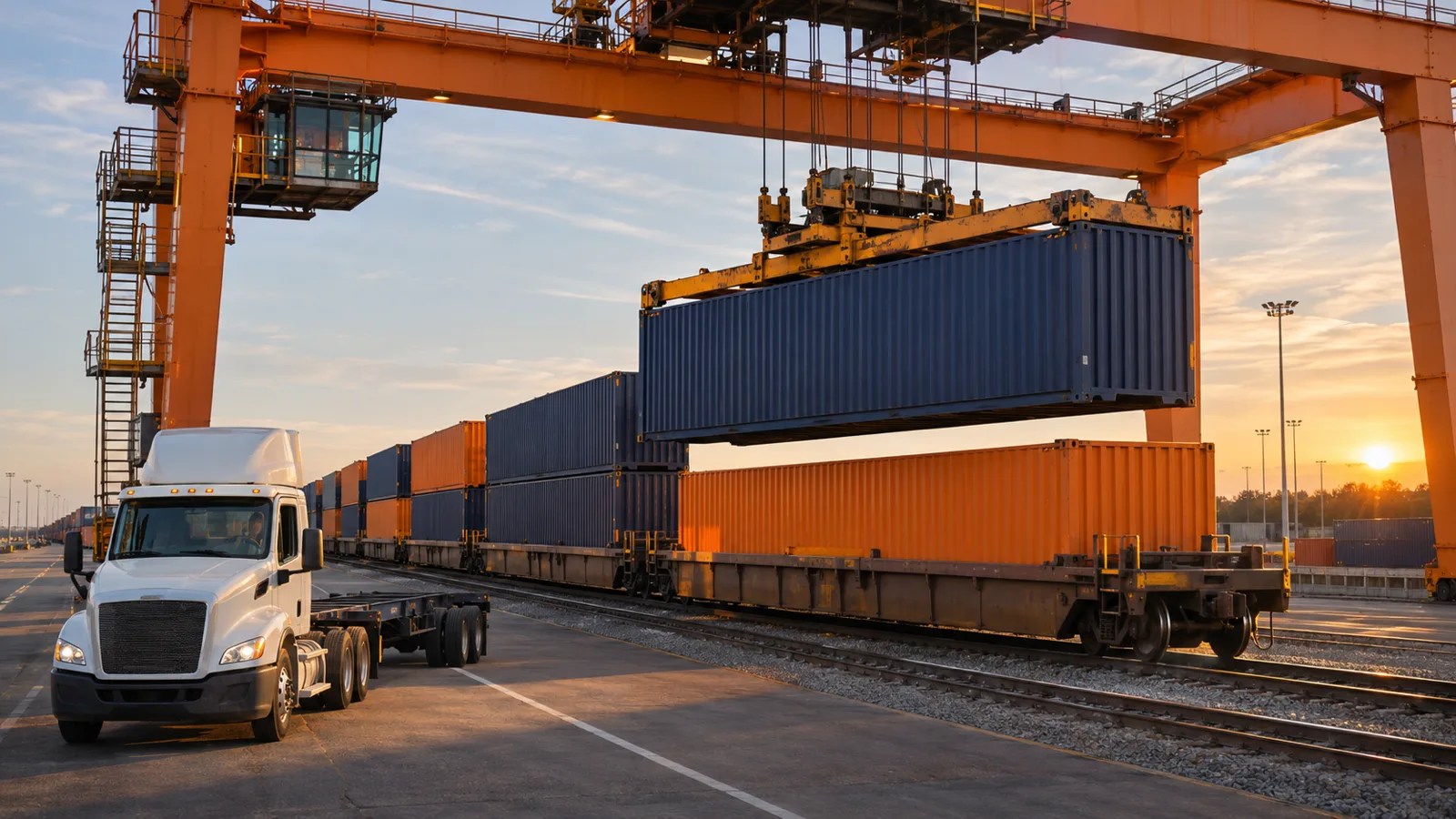
A building products distributor in Mississauga needs to move a few full loads a month to a customer in Calgary. Every quote for a dedicated truck comes back high, and capacity on westbound lanes gets tight in certain seasons. Someone on the team asks a reasonable question: the railway runs right past the GTA, so why are we not using it?
For long-distance freight within Canada, rail intermodal is often worth a serious look. It moves the same trailers and containers you would load at your dock, but puts them on a train for the longest part of the journey. For shippers in Mississauga, two of the country's major intermodal terminals sit within a reasonable drive, which makes the option more practical than many people assume.
This post explains how intermodal rail works, how it compares to trucking, and how to decide whether it fits your freight.
What Intermodal Rail Actually Means
"Intermodal" refers to moving freight in a container or trailer that transfers between modes, usually truck and rail, without the goods themselves being unloaded and reloaded. A typical domestic intermodal shipment has three legs:
- First-mile drayage. A truck brings an empty container to your dock, you load it, and the truck takes it to the rail terminal.
- Rail linehaul. The container rides a train across the country to a destination terminal.
- Last-mile drayage. Another truck picks up the container at the destination terminal and delivers it to the consignee.
Within Canada, domestic intermodal usually uses 53-foot containers, similar in capacity to a standard dry van trailer. International intermodal, by contrast, moves ocean containers (20-foot and 40-foot) between ports and inland terminals. If you import goods through Vancouver, Prince Rupert, Montreal or Halifax, there is a good chance your containers already reach the GTA by rail before a truck brings them to your warehouse. Our explainer on drayage in shipping covers those truck legs in more detail.
Carload rail, where goods are loaded into boxcars, tank cars or hoppers directly at a rail-served facility, is a different service. It suits bulk commodities and shippers with a rail siding. Most businesses shipping packaged goods from Mississauga will use intermodal rather than carload.
The Terminals Closest to Mississauga
The GTA is served by Canada's two Class 1 railways, and each runs a major intermodal terminal close to Mississauga:
- CN's Brampton Intermodal Terminal, just north of Mississauga in Brampton, is one of CN's busiest intermodal facilities and handles both domestic and international containers.
- CP's Vaughan Intermodal Terminal, to the northeast in Vaughan, serves the Canadian Pacific network, which reaches Western Canada and connects to the US Midwest.
From Mississauga industrial areas such as Gateway, Meadowvale or the Airport Corporate Centre, both terminals are usually a short drive via Highway 407, 410 or 427. That short drayage distance matters, because drayage is charged separately and can add up quickly when terminals are far away.
Rail vs. Truck: A Side-by-Side Comparison
Neither mode is better in every case. Here is how they typically compare on the factors shippers care about most.
Cost
On long lanes, intermodal rail is often less expensive than a dedicated truckload, because a train moves many containers with one crew and relatively little fuel per tonne. On shorter lanes, the savings shrink, because drayage at both ends and terminal handling eat into the linehaul advantage. As a rough guide, intermodal tends to become more competitive as distance increases, and it is rarely worthwhile for trips within Ontario or Quebec. Actual pricing varies with lane, season, fuel and capacity, so get quotes on both modes for your specific route.
Transit Time
Truck usually wins. A team-driven truck can cover long distances faster than a container waiting for a scheduled train, being loaded, travelling, and then being unloaded and drayed. Rail transit is generally predictable but adds some days compared with expedited truck. If your customer needs delivery on a tight deadline, a truck is often the safer choice.
Reliability
Rail schedules are steady most of the year, but rail can be disrupted by severe weather in the mountains, network congestion, or labour disputes, all of which have affected Canadian rail service at times. Trucks have their own risks, including driver shortages and winter highway closures. Many shippers keep both options open so they can shift freight when one mode is disrupted.
Environmental Footprint
Rail is widely recognized as more fuel-efficient than road freight per tonne-kilometre. For companies tracking supply chain emissions, moving long-haul freight to rail is one of the more practical changes available.
Handling and Damage
Freight in a container on a train experiences different forces from a truck: slack action as cars bunch and stretch, and lifts on and off the railcar at terminals. Good load securement, blocking and bracing become even more important. Our guide to dunnage covers materials that keep loads stable.
Which Lanes Make Sense From Mississauga
Rail intermodal from the GTA tends to suit:
- Westbound to the Prairies and British Columbia. Winnipeg, Regina, Saskatoon, Calgary, Edmonton and Vancouver are classic intermodal destinations. The distance is long enough for rail economics to work.
- Eastbound to Atlantic Canada. Halifax and Moncton are served by rail and can be competitive for non-urgent freight.
- Some US destinations, particularly through cross-border rail corridors, though cross-border intermodal involves additional customs steps.
Lanes that generally favour trucking from Mississauga include Ottawa, Montreal, Quebec City and most US Northeast and Midwest cities reachable within a day or two by highway. For those, a full truckload or LTL shipment is usually simpler and faster.
Is Your Freight a Good Fit? A Quick Checklist
Intermodal rail is a strong candidate when most of these are true:
- You ship full container loads, not partial pallets.
- The destination is far enough that rail's linehaul savings outweigh drayage costs.
- Delivery dates have a few days of flexibility.
- The freight is not highly time-sensitive or perishable (though refrigerated intermodal exists for some lanes).
- Your goods are dense or heavy, which can be costly by truck because of weight limits.
- You ship regularly enough to build a routine with a provider.
If you ship smaller volumes, LTL consolidation onto rail is sometimes available through freight forwarders, but most small shippers find LTL trucking easier.
How to Get Started
1. Gather Your Shipping Data
Pull a few months of outbound freight data: destinations, weights, pallet counts and required delivery dates. Look for repeated long-distance lanes with full loads.
2. Get Comparative Quotes
Request door-to-door quotes for both truckload and intermodal on the same lanes. Make sure the intermodal quote includes drayage at both ends, fuel surcharges and any terminal or chassis fees, so you are comparing like with like.
3. Plan Loading
Intermodal containers are loaded at your dock just like a trailer. Plan for proper blocking and bracing, and note that free time to load is usually limited before detention charges apply.
4. Pilot One Lane
Move a few loads on one lane before committing your whole network. Track transit time, damage and total cost against what you were paying for truck.
5. Keep a Backup
Maintain trucking options on the same lane so you can switch if rail service is disrupted or an urgent order comes up.
Common Mistakes First-Time Rail Shippers Make
- Comparing rail linehaul to a door-to-door truck price. The rail rate alone always looks cheap. Only the full door-to-door figure, including both drayage legs and surcharges, is a fair comparison.
- Ignoring the receiver. Your customer needs to accept a container delivery, often with an appointment. Confirm they have a dock that can take a 53-foot container and that they understand the delivery window.
- Underestimating loading time limits. Containers dropped at your dock usually come with limited free time. If your team cannot load promptly, detention charges can erase the savings.
- Loading too heavy. Containers, chassis and highway weight rules all impose limits. Overweight loads may be refused or need to be reworked at the terminal.
- Forgetting winter. Freight crossing the Prairies and Rockies in January can face extreme cold. Products that cannot freeze need heated or refrigerated equipment, which is not available on every lane.
Where a Logistics Partner Fits
Booking intermodal directly with a railway is usually reserved for large-volume shippers. Most small and mid-sized businesses access rail through intermodal marketing companies, freight brokers or third-party logistics providers, who bundle drayage and rail into a single price and handle tracking and paperwork.
A partner who manages several freight modes can also help you decide when not to use rail. The goal is not to move everything to trains but to put each shipment on the mode that best balances cost, speed and reliability. That is where strong carrier management pays off.
Warehousing location matters too. Holding inventory in a Mississauga facility near the 407 and 427 keeps first-mile drayage to the Brampton and Vaughan terminals short, and gives you easy access to the highway network for shipments that should go by truck instead.
Explore Long-Distance Freight Options
Rail intermodal is not right for every shipment, but for long-haul lanes from the GTA to Western and Atlantic Canada, it deserves a place in the comparison. ShipCarte helps businesses in Mississauga and across Ontario plan freight across trucking modes and carrier networks, and can help you assess whether rail fits your lanes. Request a quote with your lanes and volumes, and we will help you compare the options.