
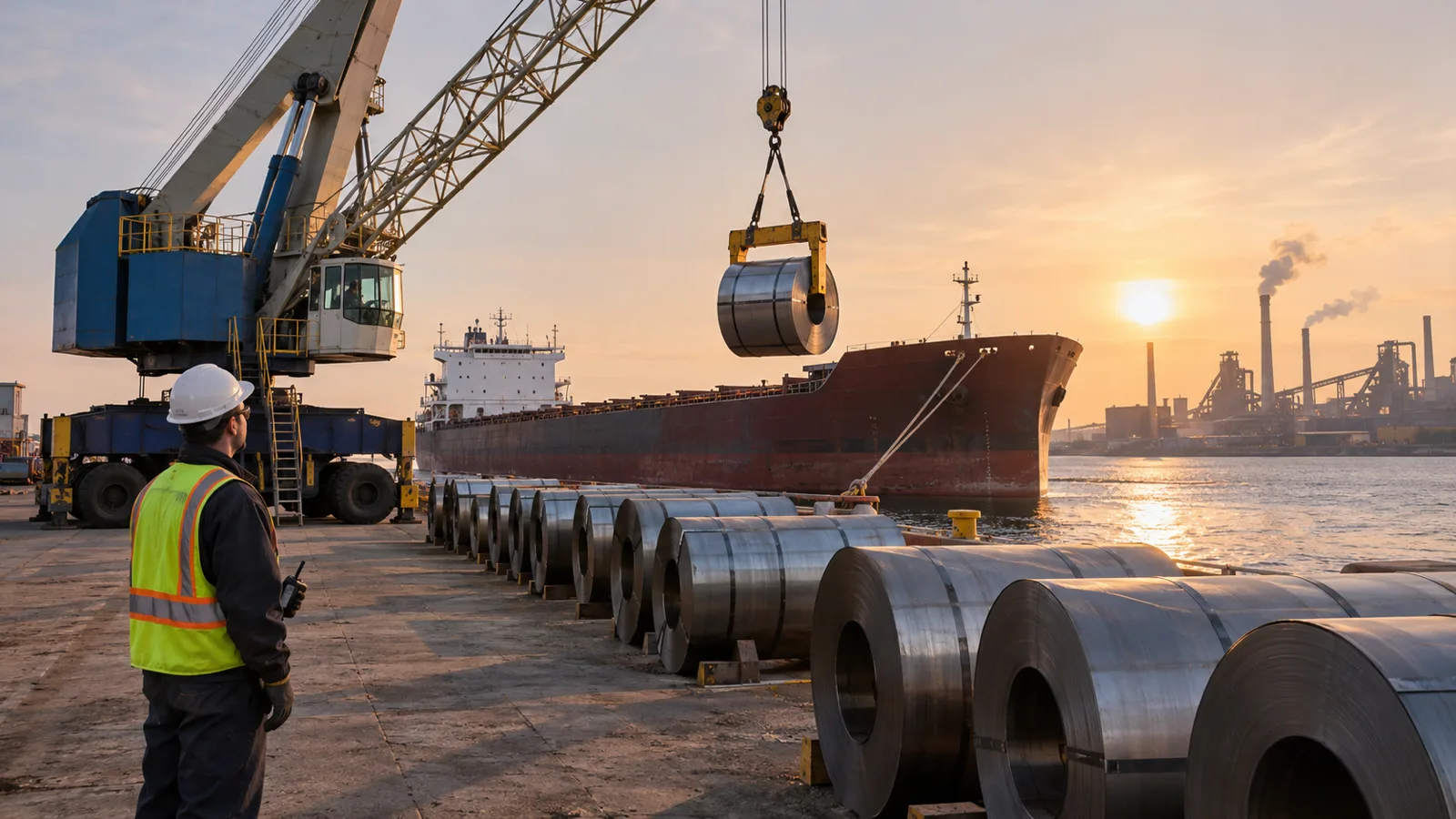
A fabricator in Brantford buys steel plate from a European mill. For years, the plate has arrived the same way: by ocean vessel to the Port of Montreal, then by rail or truck down Highway 401 to Ontario. Every shipment involves extra handling, a long truck haul and the risk of damage along the way. Then a trading partner mentions that similar steel arrives by ship directly into Hamilton Harbour, about 40 minutes from the fabricator's plant. Nobody at the company had ever looked into it.
The Port of Hamilton is the busiest Canadian port on the Great Lakes, yet many Ontario businesses think of it only as the home of the city's steel mills. In reality, it handles a wide range of cargo for companies across southern Ontario, from grain and fertilizer to steel products, salt, liquid bulk and oversized project cargo. For the right shipments, routing through Hamilton can shorten inland trucking, reduce handling and put cargo right at the edge of the Golden Horseshoe.
This guide explains what the port handles, which shipments are a good fit, how it compares with coastal ports, and how to plan your first shipment through Hamilton.
The Port at a Glance
Hamilton sits at the western tip of Lake Ontario, connected to the Atlantic by the St. Lawrence Seaway. The port typically handles in the range of 10 to 12 million tonnes of cargo a year, carried by both domestic lake freighters and ocean-going vessels. It is managed by a federal port authority, which this year combined with the Oshawa port authority to form the Hamilton-Oshawa Port Authority, bringing both Lake Ontario ports under one organization.
Several features make Hamilton useful for Ontario businesses:
- Location. It is within a short drive of Toronto, Niagara, Kitchener-Waterloo, Brantford and the 401 corridor.
- Road access. The QEW, Highway 403, the Red Hill Valley Parkway and the Lincoln Alexander Parkway connect the port to the provincial highway network.
- Rail. Both of Canada's major railways serve the Hamilton area, allowing cargo to move on to destinations across the country.
- Industrial land. Warehousing, processing and storage facilities sit right on the port lands, so cargo can be stored, processed or transloaded without leaving the harbour.
- Air cargo nearby. John C. Munro Hamilton International Airport is one of Canada's busiest overnight cargo airports, which can matter for urgent parts and spares.
What Moves Through Hamilton
Steel and metals
Steel remains the backbone of the port. Raw materials arrive for the local mills, and finished steel products, including coils, plate, pipe and structural shapes, move in and out. For Ontario fabricators, manufacturers and automotive suppliers, steel arriving by water can be stored on port lands and drawn down as needed.
Agri-food
Grain, oilseeds, fertilizer and other agricultural products are a growing part of the port's business. Ontario farmers and grain handlers ship wheat, corn and soybeans outbound, while fertilizer and other inputs arrive for southern Ontario agriculture. Food processors also use the port for bulk ingredients such as sugar.
Bulk materials
Road salt, aggregates, cement, coal and petroleum products move through the harbour, much of it supporting construction and municipal operations across the region.
Project and heavy-lift cargo
Wind turbine components, industrial machinery, transformers and other oversized items are well suited to water transport, since they are difficult and costly to move long distances by road. Arriving close to the final site can shorten the most expensive part of the journey.
What it does not do much of
Hamilton is not a major container port. Most containerized consumer goods bound for Ontario arrive through the ports of Montreal, Halifax, Vancouver or Prince Rupert, or through US East Coast ports, and then reach the province by rail and truck. If your imports are boxed goods arriving in standard containers, Hamilton is usually not your gateway. Our guide to comparing Canadian ports for importers covers those container routes.
Is Hamilton Right for Your Shipment? Five Questions
- Is the cargo bulk, breakbulk or project cargo? Steel, grain, bagged or bulk commodities and large equipment are good candidates. Palletized retail goods in containers usually are not.
- Is the volume large enough? Water transport shines at scale. A full or partial shipload, or a significant parcel of cargo on a vessel already calling Hamilton, is where the economics work.
- Is the final destination in southern Ontario? The closer the end customer is to Hamilton, the more inland trucking you save compared with landing cargo at Montreal or Halifax.
- Can the timeline fit the Seaway season? Ocean vessels can only reach Hamilton while the Seaway is open, typically from late March to late December.
- Does the origin port have service to the Great Lakes? Some European and other ports regularly send ships into the Lakes; others do not. Your freight forwarder can confirm options.
If you answer yes to most of these, Hamilton deserves a closer look.
Planning Around the Seaway Season
The St. Lawrence Seaway's locks close each winter, generally from late December until late March. During that time, ocean vessels cannot reach Hamilton, and lake shipping slows down as ice forms. For importers, this has several implications:
- Stock up before closing. Businesses that rely on water-borne materials often bring in larger shipments in the fall to carry them through winter.
- Arrange winter alternatives. During closure, cargo can still arrive at Montreal or Halifax and move inland by rail or truck. Build these options into contracts early.
- Plan storage. Larger fall shipments mean more inventory on hand. Covered storage at the port or a nearby distribution warehouse keeps material protected until it is needed.
- Watch the end-of-season rush. Vessel space and port services get busy in November and December as everyone tries to beat the closing date.
Our post on the St. Lawrence Seaway and Ontario explains how the locks and vessel size limits work in more detail.
Customs and Compliance
Goods imported through Hamilton are cleared by the Canada Border Services Agency just as they would be at any other port. A few points to keep in mind:
- Marine carriers must transmit advance cargo information to the CBSA before loading or arrival, depending on the type of cargo.
- Your customs broker files the release and accounting documents, paying any duties and the 5% GST owed at import. Once the goods are sold within Ontario, the 13% HST applies to those domestic sales in the usual way.
- Food and agricultural products may require CFIA permits or inspection. Steel products may face additional reporting or trade remedy measures, so confirm requirements in advance.
- If you import inputs that are later exported, ask your broker about duty relief and deferral programs. Our guide to the Duties Relief Program explains how these work.
From Ship to Your Door
The water leg is only part of the trip. Once cargo is discharged in Hamilton, it needs to move to its final destination. Common options include:
- Direct truck delivery. Flatbeds for steel and machinery, dry vans for bagged goods, and bulk trailers for loose materials. Deliveries to the GTA, Niagara and Kitchener-Waterloo can often happen the same day.
- Port storage and drawdown. Cargo is stored on the port lands and released in smaller quantities over weeks or months.
- Transload and distribute. Cargo is broken down, repackaged or relabelled, then distributed by LTL or truckload to multiple customers.
- Rail onward. Cargo continues by rail to destinations farther afield in Ontario or beyond.
Coordinating these steps is where many importers stumble. Vessel arrival dates shift, discharge takes time, and trucks need to be ready when cargo is released. Clear communication between the forwarder, the terminal, the customs broker and the trucking company prevents storage charges and delays.
Comparing Routes on a Landed-Cost Basis
The ocean freight rate is only one line in the total. To compare Hamilton fairly with landing cargo at Montreal or another coastal port, build a side-by-side estimate that includes every step from the supplier's dock to yours. Go back to the Brantford fabricator from the introduction and the comparison looks like this:
Via Montreal
- Ocean freight to Montreal, often at a competitive rate because of frequent sailings.
- Terminal handling and discharge in Montreal.
- Rail or truck from Montreal to Brantford, roughly 650 kilometres, often requiring flatbeds for steel plate.
- Extra handling at each transfer point, with a higher chance of edge damage or rust on exposed steel.
- Possible storage costs if trucks are not available when the cargo is released.
Via Hamilton
- Ocean freight to Hamilton, which may carry a higher rate because the vessel travels further into the Lakes and pays Seaway tolls.
- Discharge and terminal handling in Hamilton, with the option of covered storage on port lands.
- A short truck haul of roughly 40 kilometres to Brantford, often done several times a day.
- Fewer transfers and less exposure to weather and handling damage.
Neither route wins automatically. When sailings into the Lakes are infrequent or the volume is small, Montreal may still be cheaper and faster. When volumes are steady and the end destination is in the Golden Horseshoe, the savings on inland trucking and handling often outweigh a higher ocean rate. The only way to know is to price both routes with real quotes, including storage, and to factor in how quickly you need the material.
A First-Shipment Checklist
- Confirm with your supplier and forwarder that a vessel serving Hamilton is available for your origin and timing.
- Get quotes that cover the full trip, including discharge, terminal handling, storage and inland trucking.
- Line up a customs broker and confirm any permits or agency requirements.
- Arrange inland transport and storage in advance, with equipment suited to your cargo.
- Plan for vessel delays and decide what happens if the ship arrives early or late.
- Compare the total landed cost with your current route through Montreal or another port.
Move Your Cargo Inland With ShipCarte
ShipCarte helps businesses across Ontario move imported cargo from ports to production lines and customers. Whether your goods arrive in Hamilton, Montreal or Halifax, we can arrange truckload and LTL transport, storage and distribution, and coordinate with your forwarder and broker so cargo keeps moving. Manufacturers can learn more about our work in manufacturing logistics. Request a quote or schedule a consultation to plan your next import.