
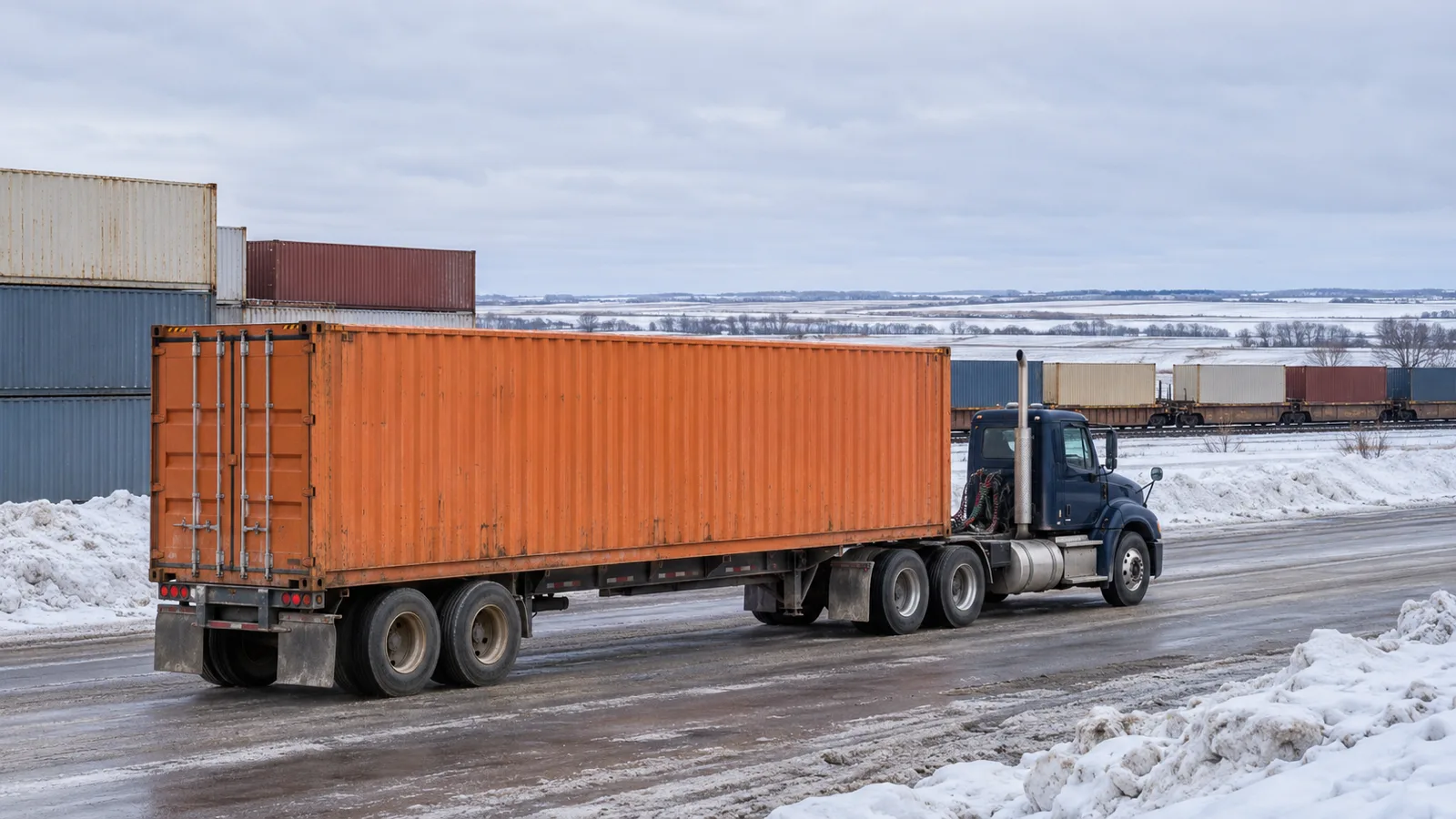
The vessel has arrived in Vancouver. The tracking says "discharged". Your customs broker confirms the CBSA has released the goods. And yet, three days later, the container is still sitting in a stack at the terminal, and nobody can tell you exactly when it will reach your warehouse in Calgary. Meanwhile, the free time clock is ticking.
That gap between "the ship is in" and "the container is at my dock" is the world of drayage: the short-haul trucking that moves containers between ports, rail ramps, container yards and warehouses. It is a small part of the total distance your goods travel, but in Canada it is often where delays and unexpected costs pile up. Understanding how drayage works, step by step, helps importers plan realistically and avoid paying for time they did not expect to lose.
If you are new to the term, our introductory post on what drayage is explains the basics. This article focuses on how it plays out at Canadian ports and inland rail terminals.
Where Canadian Drayage Happens
Port terminals
On the west coast, the Port of Vancouver handles the bulk of Canada's container imports through several container terminals on Burrard Inlet, at Roberts Bank in Delta and on the Fraser River. Trucks serving those terminals operate under the port authority's truck licensing system. The Port of Prince Rupert's container terminal is designed primarily for direct ship-to-rail transfer, so most of its import containers move inland by CN rather than by local truck. On the east coast, the Port of Montreal handles large volumes for Quebec and Ontario, the Port of Halifax serves Atlantic Canada and rail-connected inland markets, and the Port of Saint John handles a growing share of container traffic for New Brunswick and beyond.
Inland rail ramps
A large share of import containers never travels by truck from the port. Instead, they are loaded onto trains and railed inland to intermodal terminals operated by CN and CPR in and around the Greater Toronto Area, Montreal, Winnipeg, Regina, Saskatoon, Calgary and Edmonton. From those ramps, a local drayage carrier picks them up. For a warehouse in Mississauga, Brampton or Vaughan, "port drayage" usually means a run from a rail terminal a short drive away rather than a trip from a coast.
Container yards and depots
Empty containers are often returned to an off-dock depot rather than the terminal they came from. Knowing where the empty must go is as important as knowing where the loaded box is.
Step by Step: From Discharge to Delivery
1. Arrival notice and availability
The ocean carrier or your forwarder sends an arrival notice when the vessel arrives. For containers moving inland by rail, a separate notice comes when the box reaches the inland ramp. Availability matters: a container that is discharged is not necessarily available. It may still be buried in a stack, waiting for rail, or under a hold.
2. Customs release
Your customs broker submits the import declaration so that the CBSA can release the goods. If the container is selected for examination, it may be moved to a CBSA examination facility, adding time and cost. Releases from other agencies, such as the CFIA for food, plants and animal products, may also be needed.
3. Carrier release and freight payment
The ocean carrier or the forwarder must also release the container, which usually requires that freight and destination charges are paid and original or electronic bills of lading are surrendered where applicable. A container with customs release but no carrier release still cannot leave.
4. Terminal holds and appointments
The terminal checks for any remaining holds, whether from customs, the carrier or the terminal itself for unpaid storage. Many Canadian container terminals use appointment systems that require trucks to book a time slot for pickup. During busy periods, appointment slots can be hard to get, which is one of the main causes of delay at port terminals.
5. Equipment
The drayage carrier needs a chassis to carry the container. In Canada, chassis are often supplied by the trucking company, by pools at the terminal, or by the rail carrier at intermodal ramps. Heavy containers may require a tri-axle chassis to stay within provincial weight limits, which vary between provinces. If your container is heavy, tell the drayage carrier in advance.
6. Pickup and delivery
The truck enters the terminal, picks up the container, exits through the gate and drives to your warehouse. Delivery can be a "live unload", where the driver waits while you unload, or a "drop", where the container is left on its chassis at your dock and picked up later. Live unloads are typically cheaper per move but leave you a fixed window, usually a couple of hours, before waiting time charges start. Drops give you flexibility but may incur chassis rental and an extra trip.
7. Empty return
Once unloaded, the empty must go back to the location the ocean carrier specifies, which may differ from where it was picked up. Returning it promptly stops the detention clock. Ask your drayage carrier to confirm the return location before they leave your dock.
What Drives Drayage Costs
Drayage rates in Canada typically include a base move charge plus a range of accessorial charges. The main drivers include:
- Distance and time: drayage is priced more by time than by kilometres, because a short trip can still take hours with terminal queues.
- Fuel surcharges, adjusted regularly in line with diesel prices.
- Chassis fees, especially for extended use or when the container is dropped.
- Waiting time at the terminal or your dock beyond the free period.
- Pre-pulls and storage, when the carrier collects the container before your dock is ready and holds it in their own yard.
- Overweight and tri-axle charges for heavy containers.
- Dry runs, when a truck arrives but cannot collect the container because of a hold or missing appointment.
- Hazardous materials surcharges where dangerous goods regulations apply.
Because many of these charges depend on how smoothly the process runs, the cheapest base rate is not always the lowest total cost. A carrier with strong terminal relationships and reliable appointment booking may cost more per move and less per container overall.
Seasonal and Regional Realities
Winter
Canadian winters affect drayage directly. Snowstorms in the Lower Mainland can disrupt terminal operations; avalanche control and weather on rail lines through the mountains can delay containers headed for the Prairies and Ontario; and cold weather affects equipment. Build buffer time into delivery promises during the winter months, particularly for goods moving from the west coast to central Canada.
Peak season
Late summer and autumn bring high import volumes ahead of the holiday season. The past year has been especially busy, with strong ecommerce demand during the pandemic pushing import volumes up and creating congestion at terminals and rail ramps that has carried into 2021. When appointment slots and chassis are scarce, containers dwell longer, and the cost of a slow pickup rises.
Rail ramp dwell
At inland ramps in the GTA, Montreal, Calgary and elsewhere, rail carriers allow a limited free period after notification before storage charges apply. Ramp storage can be charged daily, and the rules differ by railway and by contract. Know the ramp's free time as well as the ocean carrier's.
How to Keep Containers Moving
- Get customs documentation ready before arrival. Pre-clearance with your broker means release can be granted as soon as the container arrives.
- Pay freight and destination charges early so carrier release is not the bottleneck.
- Give your drayage carrier advance notice of arrivals, weights and dock availability.
- Schedule receiving capacity. A container is only as fast as your ability to unload it. If your own team cannot keep up, consider a warehouse partner that offers distribution warehousing near the port or ramp.
- Consider transloading. At busy ports, moving goods from the ocean container into a domestic trailer close to the terminal can free the container quickly and reduce detention. See our guide on transload warehousing in Canada.
- Track every container daily, including its free time expiry date, so you can prioritise those nearest to incurring charges.
Questions to Ask a Drayage Carrier
Drayage carriers vary widely in size, equipment and terminal access. Before you trust one with your containers, ask:
- Which terminals and rail ramps do you serve every day, and are your trucks and drivers licensed or registered for the port terminals I use?
- Do you supply your own chassis, including tri-axle units for heavy containers, or rely on terminal pools?
- How do you book terminal appointments, and what happens if no slots are available before my last free day?
- Do you have a secure yard for pre-pulls, and what do you charge per day for storage there?
- How much free time do you allow for live unloads before waiting time begins?
- How will you notify me of pickup, delivery and empty return, and will I receive proof of each?
- Are you able to move dangerous goods under Transport Canada's TDG rules if my cargo requires it?
- What cargo liability coverage do you carry, and what are its limits?
The answers tell you more about likely total cost than the base rate on the quote. A carrier that can explain clearly how it handles a missed appointment or a terminal hold is usually one that has dealt with them many times before.
Beyond the Dock
Drayage is the bridge between international shipping and domestic distribution. Once a container is unloaded, goods might be stored, fulfilled to ecommerce customers, cross-docked to stores, or moved onward by LTL or full truckload to other regions of Canada. Planning those next steps in advance, through a provider that coordinates distribution services, keeps the container from becoming a bottleneck. If you rely on scheduled deliveries, our article on delivery appointments in freight is a useful companion.
Let ShipCarte Help Move Your Containers
ShipCarte works with importers across Canada to coordinate the movement of goods from terminal to warehouse and on to customers. If containers are sitting too long at the port or rail ramp, or you want a more predictable receiving process, request a quote or schedule a consultation with our team.