
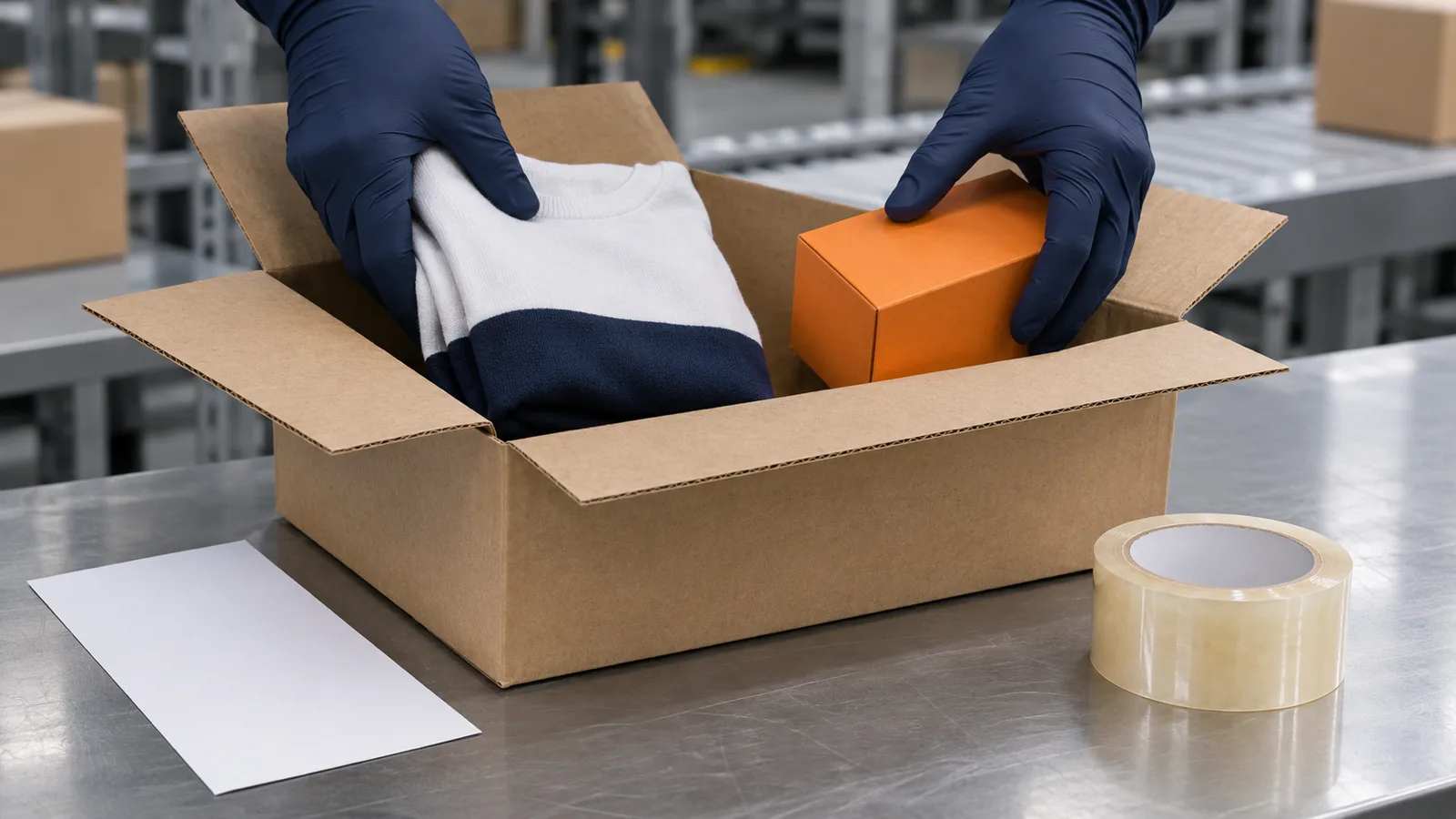
A customer in Guelph orders three things from an online apparel brand on a Tuesday morning: a medium navy hoodie, a pair of socks in a gift box, and a reusable water bottle. To her, it's one click. To the warehouse in Mississauga that fulfills the order, it's a short sequence of decisions and physical steps, any one of which could go wrong. The hoodie could be a large instead of a medium. The water bottle could be the wrong colour. The socks could be crushed by the bottle in the box. The label could go on the wrong parcel.
When everything goes right, the customer opens a neat, complete package the next day and never thinks about the warehouse at all. That's the goal of pick and pack: making accuracy so routine that it becomes invisible.
This article follows that single order from the moment it's placed to the moment it leaves the dock, explaining how a well-run pick and pack operation builds accuracy into each step. If you're considering outsourcing fulfillment in Mississauga, it will also help you understand what to ask a provider and what good looks like.
8:47 a.m. — The Order Arrives
The order is placed on the brand's Shopify store. Within minutes, an integration passes it to the warehouse management system with the product SKUs, quantities, shipping address and chosen delivery speed. No one retypes anything. That matters, because manual re-entry of orders is one of the first places errors creep in.
The system checks that all three items are in stock and allocates specific units to this order, so they can't be promised to someone else. If the address looks incomplete or suspicious, it flags it for review before any work begins. ShipCarte's order management tools handle this allocation and validation automatically for connected stores.
9:15 a.m. — The Order Is Released to the Floor
Orders aren't usually picked one at a time the moment they arrive. Instead, the system groups them into waves or batches to keep pickers efficient. How it does that depends on the picking method the warehouse uses.
Discrete picking
One picker collects all items for one order before starting the next. It's simple and accurate, well suited to low volumes or large, complex orders, but it involves a lot of walking.
Batch picking
A picker collects items for several orders at once, often using a cart with separate totes or compartments for each order. This cuts walking time dramatically when many orders share popular SKUs. Accuracy depends on putting each item in the right tote, so scanning each placement is important.
Zone picking
The warehouse is divided into zones, and each picker works only within their zone. Orders pass from zone to zone, or items from each zone are consolidated afterwards. It suits larger facilities with wide product ranges.
Wave picking
Orders are released in scheduled waves, often timed to carrier pickups. For example, a wave for express orders might be released early to meet an afternoon air cut-off, followed by ground waves later in the day.
Our Guelph customer's order lands in a batch with a dozen other apparel orders, because the system recognizes they share several popular SKUs and are all heading out by ground.
9:32 a.m. — Picking
The picker's handheld device directs her to the first location in an optimized path. She scans the location barcode to confirm she's in the right bay, then scans the hoodie. The scanner confirms it's the correct SKU: navy, size medium. If she had grabbed the large from the next bin, the device would have rejected it.
She places the hoodie in the tote assigned to the Guelph order, scans the tote, and moves on. The socks and water bottle follow the same pattern. Each scan updates inventory in real time.
Product placement makes a big difference at this stage. Well-run warehouses use slotting, positioning the fastest-moving products closest to pack stations and keeping look-alike SKUs apart, so that a size medium and size large aren't sitting side by side in identical bins. It's an unglamorous detail that prevents a lot of mistakes.
9:58 a.m. — Packing
The tote arrives at a pack station. The packer scans the tote, and the screen shows the order contents, any special instructions and the recommended box or mailer.
Verification
The packer scans each item again as it comes out of the tote. This second scan catches anything that slipped past the pick, such as an item dropped in the wrong tote during batch picking. If something is missing or wrong, the order goes to an exception area rather than being shipped incomplete.
Packaging selection
Cartonization logic suggests the smallest box that fits all three items safely. For this order, a small corrugated box works better than a poly mailer, because the water bottle is rigid and the gift-boxed socks shouldn't be crushed. ShipCarte's cartonization feature makes these recommendations automatically to reduce both damage and dimensional weight charges.
Packing standards
The hoodie goes in first as a soft base, the socks on top, and the bottle along one side with paper fill to stop it shifting. The brand has asked for a thank-you card and branded tissue paper in every order, so those go in too. Good pick and pack providers document each client's packing standards with photos so every packer follows them consistently.
Weight check
The sealed box is weighed. If its weight is significantly different from what the system expects based on product data, it's flagged. That's a simple but effective way to catch a missing item or an extra one.
10:04 a.m. — Labelling and Carrier Selection
With final weight and dimensions known, the shipping platform compares carrier rates and transit times for the Guelph address and prints a label for the most cost-effective service that meets the delivery promise. The tracking number is linked to the order and sent to the customer automatically. ShipCarte's shipping platform handles this step for every order.
10:06 a.m. — Staging and Dispatch
The parcel is sorted to the correct carrier's outbound area. Later that afternoon, the carrier picks up, scans each parcel, and the order is on its way down the 401. From a Mississauga warehouse, Guelph is typically a next-day ground destination.
From order placement to a packed, labelled parcel, about an hour and twenty minutes passed, and the actual hands-on work was a few minutes. The rest of the time was the order waiting for its batch, which is normal and efficient.
The Quality Controls Behind Each Step
Looking back, accuracy didn't depend on any one person being perfect. It came from a series of checks:
- Automatic order import with no retyping
- Inventory allocation that prevents overselling
- Location and item scans at the pick
- Slotting that separates look-alike SKUs
- Item-level verification scans at the pack station
- Documented, client-specific packing standards
- Weight verification before labelling
- Automatic carrier selection and tracking
Each of these catches a different type of error. Together, they make mistakes rare and, when they do happen, easy to trace. For more on the scanning side specifically, see our article on barcode scanning in Mississauga warehouses.
Special Handling Most Brands Eventually Need
Not every order is as simple as the Guelph one. A capable pick and pack operation should also handle:
- Lot and expiry tracking for supplements, cosmetics and food, with first-expired, first-out picking. Our article on FIFO explains the principle.
- Kits and bundles assembled on demand or in advance. See ShipCarte's kitting and assembly service.
- Fragile items that need extra protection and specific packing methods.
- Gift messages and promotional inserts that vary by order or campaign.
- B2B orders with retailer labelling, packing list and pallet requirements.
- Subscription boxes that ship in large monthly waves.
The Metrics That Show Whether It's Working
You can't manage accuracy you don't measure. When you work with a pick and pack provider in Mississauga, or run your own operation, a handful of metrics tell you most of what you need to know:
- Order accuracy: the share of orders shipped with the right items, in the right quantities, to the right address. Track it from customer complaints and returns coded as "wrong item" or "missing item."
- Same-day ship rate: the share of orders received before cut-off that leave the building the same day.
- Dock-to-stock time: how long it takes for received inventory to become available for orders. Slow receiving causes avoidable stockouts.
- Inventory accuracy: how closely cycle counts match system records.
- Damage rate: the share of shipments that arrive damaged, which reflects packing standards and box selection.
Ask for these numbers regularly and look at trends rather than single weeks. A good provider will discuss them openly and explain what it's doing about any problem areas.
How Pick and Pack Is Typically Priced
Pricing structures vary between providers, but most include some combination of:
- A per-order fee covering the first item picked
- A per-additional-item fee
- Packaging materials, charged per box or mailer
- Inserts, gift wrapping or other value-added work
- Shipping, billed separately based on carrier rates
Order profile drives cost more than anything else. Single-item orders in poly mailers are inexpensive to process; multi-item orders with fragile goods and custom packaging take longer and cost more. When comparing quotes, model them against a realistic sample of your own orders rather than a headline per-order price.
Questions to Ask a Mississauga Pick and Pack Provider
- Is every item scanned at both pick and pack?
- How do you document and enforce our packing standards?
- What is your daily order cut-off for same-day shipping?
- How do you handle exceptions, such as missing items or damaged stock?
- Can you track lot numbers and expiry dates?
- What reporting will we see on accuracy and turnaround time?
- Which store platforms and marketplaces do you integrate with?
Get Accurate Fulfillment, Order After Order
Accuracy in pick and pack is built through process, not luck. ShipCarte's pick and pack services in the Greater Toronto Area combine scan-verified picking, consistent packing standards and automated carrier selection to get your orders right and out the door quickly. Request a quote with a sample of your recent orders, and we'll show you how your products would flow through our operation.