
It is 7 p.m. on a Thursday in Malton, and a dog owner realizes there is one scoop of kibble left in the bin. She could drive to a big-box store, or she could check whether her online order from a small, grain-free dog food brand will arrive by Saturday. If it will, she stays loyal. If not, she picks up a different brand at the store, and there is a real chance she never switches back.
Pet products are one of the most loyal ecommerce categories, but that loyalty is fragile. Customers buy the same food, litter and treats on a schedule, and running out is not an option. At the same time, the products are heavy, bulky and sometimes messy to ship. A 10 kg bag of kibble or a box of clumping litter carries real postage costs, and a split bag creates a mess in the carrier's network and a very unhappy customer. For pet brands selling across Ontario and the rest of Canada, pet products fulfillment in Mississauga offers a way to keep heavy items close to a large customer base while controlling what each delivery costs.
Let us look at the three things that make or break a pet brand's fulfillment: heavy goods, autoship and speed. Then we will cover the smaller details that separate an average operation from a great one.
The Heavy-Bag Problem
Most ecommerce products weigh under a couple of kilograms. Pet food and litter can weigh five or ten times that. Weight drives shipping costs, so pet brands feel every decision about packaging and carrier selection more sharply than other sellers.
To box or not to box
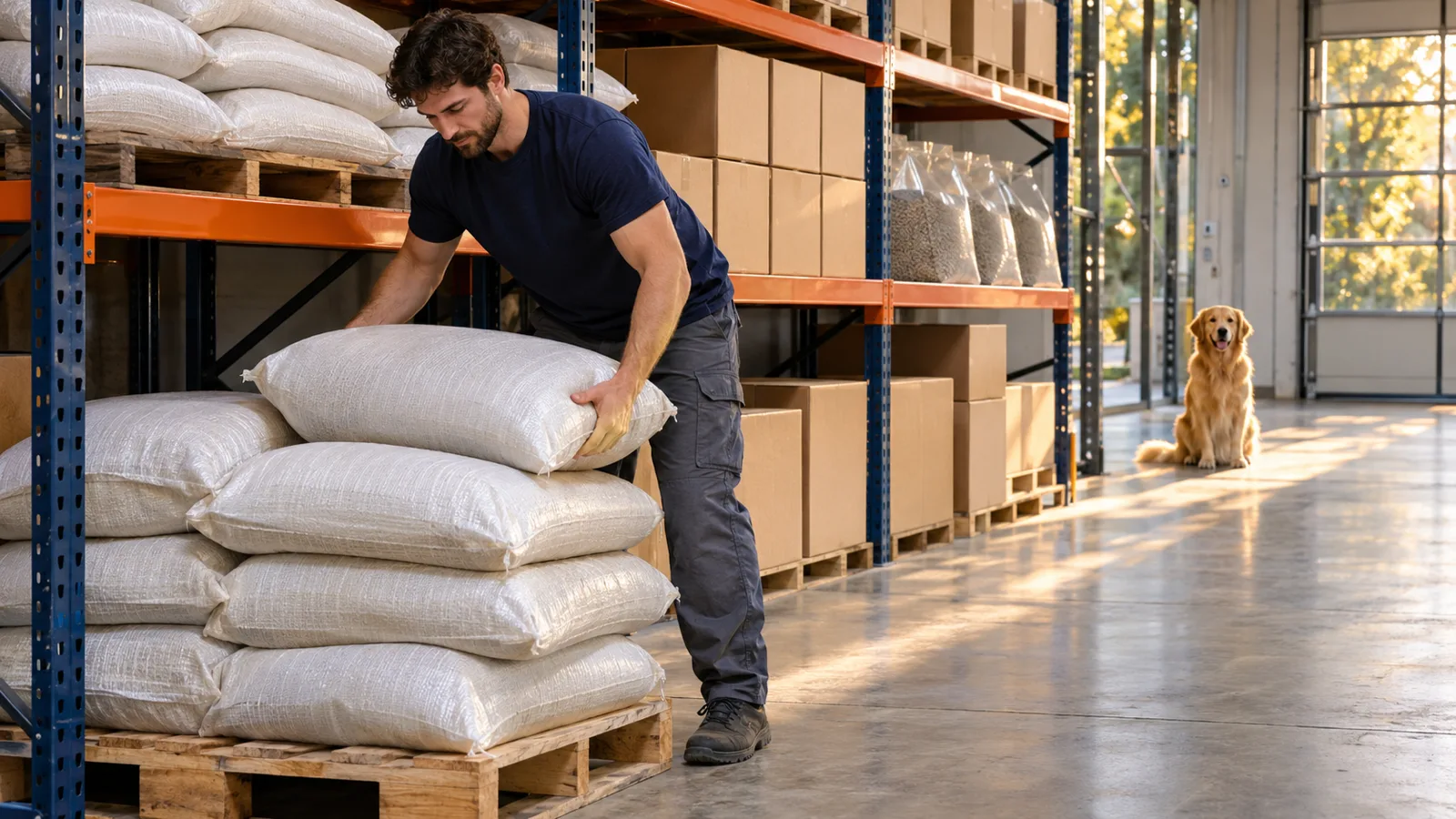
Many pet food bags are made of woven polypropylene or heavy laminated film. Some brands ship them as-is with a label attached, which saves on packaging and dimensional weight. The risk is punctures and tears from conveyor belts and other parcels. Others place bags in corrugated boxes, which adds cost and size but protects the bag. The right answer depends on the bag's construction and how far it is going. A durable woven bag travelling across the GTA may survive fine unboxed; a thin film bag heading to Alberta probably should not.
Testing is worth the effort. Send a handful of orders through different carriers and to different regions, then ask the recipients (or your own staff at home) to report on condition. Small pilot runs reveal packaging weaknesses before thousands of orders do.
Watch the weight breaks
Couriers price in weight bands and apply surcharges above certain weights or sizes. A product that sits just above a threshold may be noticeably more expensive to ship than one just below it. When designing bundles, such as "two bags plus treats," check where the combined weight lands. Splitting a very heavy order into two parcels is occasionally cheaper than one heavy one, though not always.
Consider freight for wholesale
Independent pet stores and groomers who stock your products generally order by the case or pallet. These should ship by LTL freight rather than parcel, which is usually far more economical for heavy goods. If you sell both direct-to-consumer and wholesale, both channels can draw from the same warehouse inventory.
Making Autoship Reliable
Autoship, or subscribe-and-save, is the engine of many pet brands. Customers choose a delivery frequency, and orders are generated automatically. When it works, it builds predictable revenue. When it fails, customers cancel.
Predictable volume is a gift, so use it
Unlike promotional spikes, autoship volume is visible in advance. Share your upcoming autoship schedule with your fulfillment partner so labour can be planned and inventory confirmed. If thousands of orders renew on Mondays, the warehouse should know before Monday morning.
Never let a subscriber be the one who discovers a stockout
Autoship customers expect their order to ship whether or not you just ran a promotion. Track weeks of supply for every subscription SKU and set reorder points that account for supplier lead times. If a product does run low, it is better to contact subscribers proactively with an alternative than to let orders sit unfulfilled. ShipCarte's inventory management reports show stock levels and velocity so problems are visible early.
Keep the order flexible
Pet owners skip, delay and change subscriptions as their pets age, change diets or go through vet treatment. The order intake connection between your store and warehouse should handle these changes up to the moment an order is released for picking. Test how late a change can be made before the cutoff.
For more on recurring order operations, our guide on fulfilling subscription box orders covers the planning side in more depth, and ShipCarte supports subscription brands of all kinds.
Delivering Fast Across the GTA and Beyond
Speed matters in this category because customers often reorder late. A Mississauga warehouse reaches much of the GTA quickly: Brampton, Oakville, Etobicoke, Vaughan and downtown Toronto are all a short drive along the 401, 403, 410, 427 and QEW. Regional and national parcel carriers run sortation facilities nearby, so orders shipped by the afternoon cutoff can usually move into carrier networks the same day.
Outside the GTA, ground delivery across Ontario and Quebec is typically quick from a central Mississauga location. Western Canada and Atlantic Canada take longer by ground, and air services out of Toronto Pearson are available for urgent orders, though they are expensive for heavy items. Most pet brands set customer expectations by region rather than promising the same speed everywhere.
A Day in a Pet Brand's Fulfillment Operation
To make this concrete, here is how a typical day might look for a mid-sized pet food brand using a Mississauga 3PL.
Early morning: overnight web orders and the day's autoship batch have already flowed into the warehouse system. The team reviews the volume and confirms there is enough stock in the forward pick area. Pallets of kibble are brought down from reserve racking to replenish pick faces.
Mid-morning: pickers work through orders, starting with multi-item orders that combine food, treats and toys. Heavy bags are picked using carts designed for weight, while light items like toys and chews come from shelving. Orders with heavy and fragile items, such as a ceramic bowl alongside a bag of food, are packed so the bowl is separated and cushioned.
Midday: a wholesale order for a pet store in Oakville is picked as full cases, palletized, wrapped and staged for an LTL pickup.
Afternoon: parcel carriers collect the day's orders. Tracking numbers flow back to the store, and customers receive shipping notifications.
Late afternoon: an inbound container of treats arrives from a co-packer. The receiving team checks lot codes and best-before dates, records them in the system and puts the product away. Customer returns from earlier in the week are processed according to the brand's rules.
The Details That Make a Difference
Expiry dates and rotation
Pet food and treats have best-before dates. Stock should be shipped on a first-expired, first-out basis, and the warehouse system should record dates at receiving. Shipping a customer a bag that expires next month is a fast way to lose trust.
Pests and odour
Pet food attracts pests if not stored properly, and some treats have strong smells. Clean, well-managed storage with pest control and separation from other goods matters, especially if your 3PL also stores products like cosmetics or apparel.
Labelling and imports
Pet food sold in Canada typically needs bilingual labelling, and imported pet food and treats containing animal-derived ingredients may face import requirements from the Canadian Food Inspection Agency. Confirm requirements with your supplier and a customs broker before you import.
Returns of opened food
Most brands do not restock opened food or treats. Decide what happens to returns: donation to a local animal shelter, disposal or inspection. A clear policy saves time and keeps the warehouse from accumulating unsellable stock. ShipCarte's returns management service follows whatever disposition rules you set.
Inserts and surprises
Pet owners love small gestures. A treat sample, a birthday card for the pet, or a handwritten thank-you note on an anniversary order can build attachment. Keep inserts simple enough that they do not slow down packing.
Seasonal swings
Pet demand is steadier than many categories, but it still moves. Flea and tick products, cooling mats and outdoor toys rise in spring and summer, while holiday gift sets, stockings and treat advent calendars spike in November and December. Plan seasonal inventory with your fulfillment partner a few months ahead, and agree on where seasonal SKUs will live so they do not crowd the fast-moving food and litter locations during the busiest weeks.
Questions to Ask a Pet Fulfillment Partner
- How do you handle very heavy parcels, and which carriers do you use for them?
- Can you record lot codes and best-before dates at receiving and pick by expiry?
- How do you manage pest control in food storage areas?
- Can you ship both parcels and pallets from the same inventory?
- What is your daily cutoff for same-day shipping?
- How quickly do inventory levels sync to my online store?
Keep Pet Parents Coming Back
The best pet brands make reordering effortless. Food arrives before the bowl is empty, bags arrive intact, and the box feels like it came from people who love animals. ShipCarte offers ecommerce fulfillment from Mississauga for pet brands, with heavy-goods handling, autoship support and freight for wholesale. Request a quote or schedule a consultation to see how we can help.