
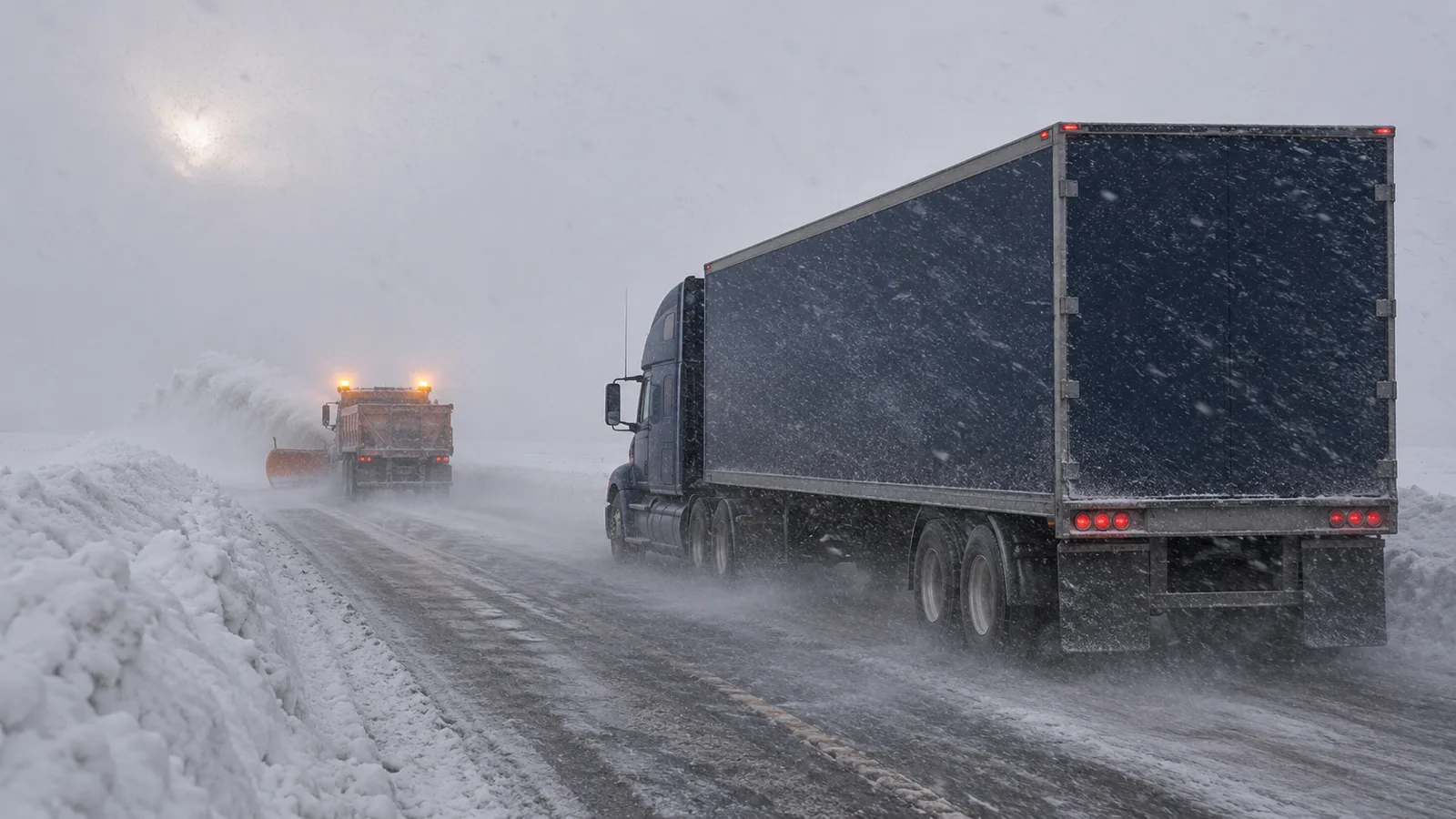
It is early December, the first squalls have already rolled off the lakes, and the holiday peak is in full swing. Every year, businesses across Ontario lose sales, pay expedite fees and field angry customer calls because a squall closed Highway 402, a freezing rain storm grounded deliveries in Ottawa, or a single collision shut the only road to Thunder Bay for half a day. Most of those losses were predictable months in advance, and many can still be reduced with a few weeks of winter left to plan for.
Winter freight delays are not random. They cluster in specific regions, on specific highways and at specific times of year. Once you know where Ontario's snow belts are and how highway closures ripple through carrier networks, you can build a winter plan that keeps product moving and customers informed.
This guide maps the main trouble spots, explains how closures affect freight and courier networks, and offers a month-by-month planning approach you can use for the rest of this winter and build into your calendar for next year.
Ontario's Winter Trouble Spots
The Lake Huron and Georgian Bay snow belts
When cold air flows across the relatively warm waters of Lake Huron and Georgian Bay, it picks up moisture and drops it as intense, narrow bands of snow on the land downwind. These lake-effect squalls can produce whiteouts and tens of centimetres of snow in a few hours while areas just a few kilometres away stay clear.
The most affected freight routes include:
- Highway 402 between London and Sarnia. This corridor to the Blue Water Bridge is exposed to squalls off Lake Huron. In December 2010, a storm stranded hundreds of motorists on the 402 for many hours, and closures still happen most winters.
- Highway 401 west of London. Squalls can extend east and south, causing sudden whiteouts and multi-vehicle collisions.
- Grey, Bruce and Huron counties. Highways 21, 9 and 10 and the routes into Owen Sound, Kincardine, Goderich and Wiarton are frequently affected.
- Highway 400 around Barrie and north to Waubaushene. Squalls off Georgian Bay can stall the main route between the GTA and Northern Ontario.
- Highway 26 and the Collingwood area. Busy with ski traffic on top of snow.
Northern Ontario's long highways
In the north, the problem is less about squalls and more about distance and lack of alternatives. Highways 11 and 17 are often the only through routes. When a collision or storm closes a section near Wawa, Nipigon or Kenora, trucks simply wait. In January 2016, a structural problem on the Nipigon River Bridge closed the Trans-Canada at Nipigon, briefly cutting the only road link between eastern and western Canada. Lake Superior also produces its own lake-effect snow around Wawa and Sault Ste. Marie.
Eastern Ontario's freezing rain
Ottawa, Kingston, Cornwall and the Ottawa Valley see more freezing rain than most of the province. Ice storms rarely close highways for long, but they can halt local deliveries, knock out power to warehouses and receivers, and make docks and yards treacherous. Many Ontario businesses still remember the 1998 ice storm and the weeks of disruption it caused.
The Golden Horseshoe
Toronto, Hamilton and Niagara usually receive less snow than the snow belts, but the sheer volume of traffic means even a moderate snowfall slows everything. A 15-centimetre snowfall during the morning rush can push the entire day's deliveries in the GTA several hours behind. Niagara and the Peace Bridge also feel lake-effect snow from Lake Erie, which can affect cross-border freight through Buffalo.
How Highway Closures Ripple Through Freight Networks
A closure does not just delay the trucks stuck behind it. It disrupts carrier schedules across the province.
- Missed linehaul connections. An LTL linehaul truck that arrives at a terminal four hours late may miss the morning sort, pushing every shipment on that trailer back a full day.
- Driver hours. Drivers waiting at a closure are still on duty. When the road reopens, some may not have enough hours left to finish their route.
- Equipment out of position. Trucks and trailers stranded in the wrong place mean fewer available units the next day, which can tighten capacity across a whole region.
- Backlogs at receivers. Distribution centres that could not receive trucks during a storm face a surge of arrivals afterwards, and appointment slots fill up.
- Courier service suspensions. Courier companies may suspend service to affected areas, and their published guarantees often exclude weather delays.
The practical result is that a closure lasting six hours can cause delays of one to three days for shipments that never came near the closed road. Our article on winter delivery exceptions explains how carriers report these delays.
A Month-by-Month Winter Plan
September and October: Prepare
- Review last winter. Pull your shipment data for December through March. Which lanes had the most late deliveries? Which carriers recovered fastest?
- Identify freeze-sensitive products. Liquids, paints, adhesives, some foods, cosmetics, pharmaceuticals and electronics with batteries may need heated service from November onward.
- Talk to your carriers. Ask about their winter plans, heated trailer availability, and how they communicate delays.
- Plan inventory for the north. If you supply customers in Northern Ontario, consider sending larger shipments before winter to reduce the number of trips during the worst months.
November: Lock it in
- Confirm protect-from-freeze service with your LTL carriers. Heated capacity becomes scarce once temperatures drop. Our guide to cold weather freight protection covers the options.
- Update delivery promises on your website for winter, especially for northern and snow-belt postal codes.
- Agree on communication protocols with key customers, such as who gets notified when a shipment is delayed by weather and how quickly.
- Prepare for holiday peak volume and weather risk at the same time; they overlap in December.
December to February: Operate
- Check Ontario 511 and Environment Canada weather warnings each morning for your key lanes.
- Ship time-sensitive orders a day early when a storm is forecast, rather than hoping it misses.
- Book wider delivery appointments, and avoid stacking critical deliveries on the day after a major storm.
- Keep your docks, yards and walkways clear; a receiver that cannot accept a truck adds to the delay.
- Use shipment tracking proactively so your team sees delays before customers call.
March: Transition
Winter does not end on a schedule in Ontario. March often brings late storms and the start of spring thaw, when many municipal roads and some provincial highways in the north move into reduced load periods. Plan for weight limits on rural deliveries as the snow melts. Keep protect-from-freeze service in place for sensitive products until overnight temperatures stay reliably above freezing.
Inventory Strategies That Reduce Winter Risk
Better routing and communication can only go so far. The most resilient businesses also use inventory to absorb winter disruption.
Build safety stock where it matters
Raise safety stock levels for products that are hard to replace quickly, and for customers on lanes most exposed to closures. A retailer in Owen Sound or Sudbury will appreciate a slightly larger order in November far more than an empty shelf in January. Good inventory management lets you make these adjustments based on data rather than guesswork.
Position stock closer to customers
If you serve a large customer base in a snow-belt region, holding some inventory nearby can avoid long-haul exposure altogether. Even a small amount of forward stock can keep critical customers supplied while highways are closed.
Protect temperature-sensitive goods in storage
Freeze risk does not end when the truck arrives. Products may sit on unheated docks or in trailers waiting to be unloaded. A temperature-controlled warehouse keeps sensitive products in a stable range through receiving, storage and shipping.
Communicating With Customers About Winter Delays
Customers in Ontario are used to winter. What frustrates them is being surprised. A few habits go a long way:
- Show realistic delivery estimates at checkout, adjusted for winter in regions that need it.
- Send proactive delay notifications when a carrier reports a weather exception.
- Give your customer service team a short script and access to tracking, so they can answer quickly.
- For B2B customers, share a forecast-based heads-up when a major storm is predicted, along with any change in delivery dates.
The Hidden Costs of a Bad Winter Week
Weather delays rarely show up as a single line on an invoice, which is why they are easy to underestimate. When you review last winter, look for these costs as well as late deliveries:
- Protect-from-freeze and heated service charges, which apply on every eligible shipment for several months.
- Redelivery and storage fees when a receiver was closed or could not be reached on the original date.
- Detention charges when trucks queue at your dock or a customer's after a storm backlog.
- Expedite costs when you upgraded to express or a dedicated truck to recover from a delay.
- Freeze damage claims, which are often denied if the shipment was not booked with heated service.
- Retail chargebacks for late or missed delivery windows, which some retailers apply even when weather was the cause.
Adding these up for December through March usually makes a strong case for the preparation steps above. Spending a little more on safety stock or heated capacity in November is often far cheaper than paying for recovery in February.
Questions to Ask Your Carriers Before Winter
- How do you decide when to suspend service to a region, and how will we be notified?
- How many heated trailers or protect-from-freeze units do you have, and how far in advance should we book?
- What is your recovery plan after a closure? Do you add extra linehauls or weekend runs to clear backlogs?
- Which of our lanes do you consider high risk in winter, and what transit buffer do you recommend?
- How do weather delays affect your service guarantees and our ability to claim refunds?
- Do your drivers have equipment and training for snow-belt and northern routes?
The answers will tell you a lot about which carriers are prepared and which are hoping for a mild winter.
Get Ready for Winter With ShipCarte
ShipCarte helps businesses across Ontario plan freight, parcel and warehousing operations that hold up through the toughest months of the year. From protect-from-freeze LTL freight to inventory planning and temperature-controlled storage, our team can help you stay ahead of winter for the rest of the season and beyond. Request a quote or schedule a consultation to build your winter shipping plan.