
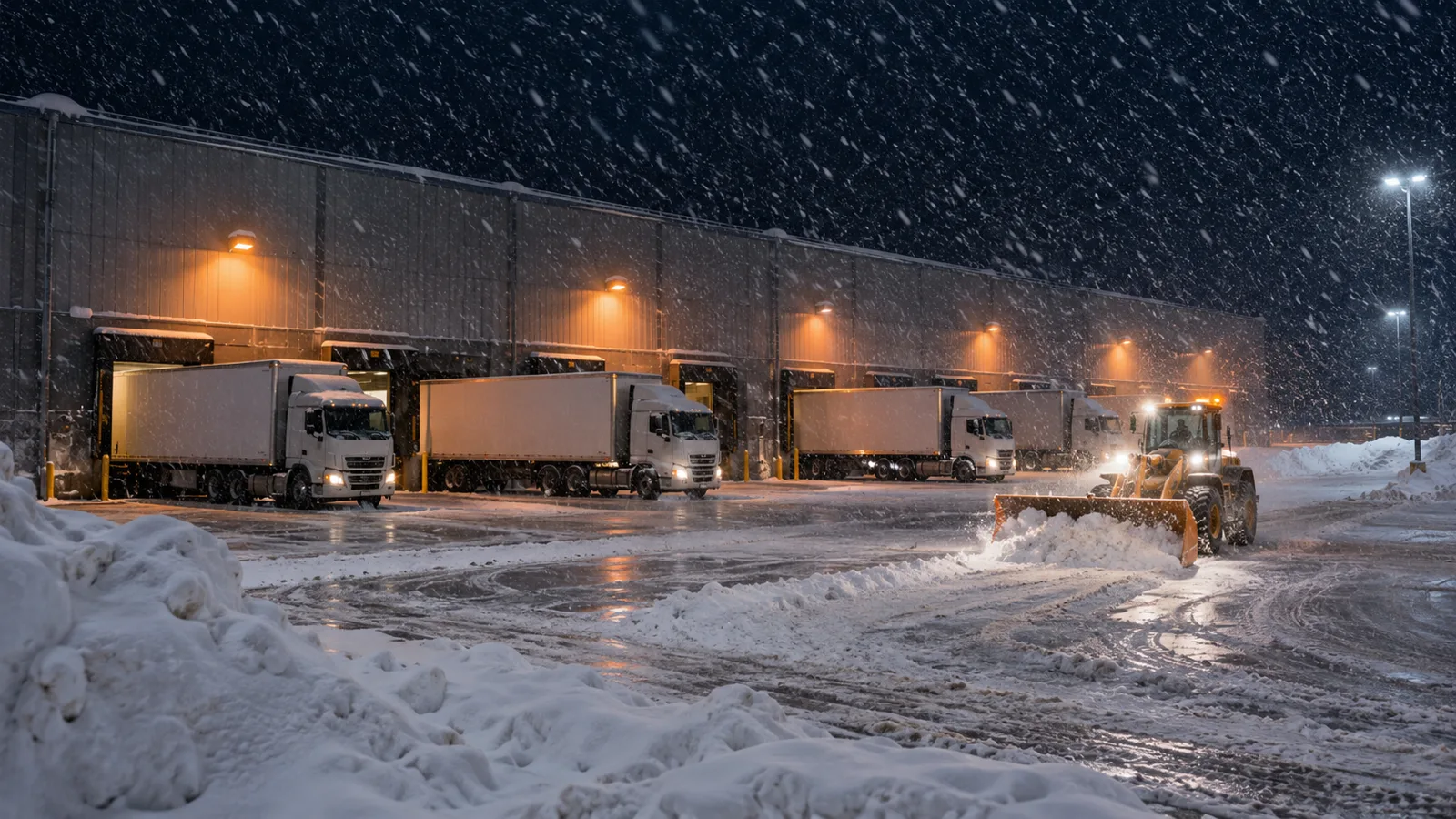
It is 5:30 on a January morning. Fifteen centimetres of snow fell overnight, the wind is blowing it across the yard, and the first inbound truck is already idling at the gate. The plow contractor has not arrived. Two dock doors are frozen to their sills, the pallet jack batteries were left in the cold, and the shift supervisor is fielding calls from staff stuck on Highway 401 behind a collision. Outbound orders still need to leave by noon.
For warehouse operators in Ontario, winter is not an occasional disruption. It is four or five months of the year when cold, snow, ice and darkness change how every part of the operation works. A facility in Windsor might see relatively mild winters, while one in Ottawa or Sudbury deals with deep cold for weeks at a time, and those in the snow belts near Barrie, London or Kingston face sudden squalls. Each needs a plan.
This article breaks winter warehouse operations into the areas that matter most, the yard, the docks, the building, the people, the equipment and the inventory, and closes with a storm-day playbook you can adapt for your own site.
The Yard: Snow Clearing and Traffic
Your yard is where winter first causes trouble. Trucks need room to turn and back in, staff need safe walkways, and snowbanks need somewhere to go.
- Sign a clear snow contract. Specify trigger depths, maximum response times, priority areas (dock aprons, fire routes, walkways) and whether the contract is seasonal or per event. Make sure plowing happens before the first shift starts, not after.
- Plan snow storage. Mark where snow will be piled so it does not block trailer parking, fire hydrants, drains or sightlines at intersections. After a heavy winter, piles may need to be hauled away.
- Manage ice responsibly. Salt and other de-icers keep surfaces safe but damage concrete, vehicles and the environment when overused. Contractors certified through programs such as Smart About Salt, which was developed in Ontario, are trained to use less material more effectively.
- Separate people from trucks. Snowbanks narrow lanes and reduce visibility. Keep pedestrian routes marked and cleared, and consider temporary barriers near dock aprons.
- Keep the lights on. In December and January, it is dark for much of the first and last shifts. Check yard lighting before winter starts.
The Docks: Where Heat and Safety Meet
Dock doors are the biggest source of heat loss in most warehouses, and dock areas are where many winter injuries happen.
Keep the Cold Out
- Inspect dock seals and shelters each fall and replace torn or flattened ones. A gap between the trailer and the building lets in cold air, snow and sometimes rodents.
- Keep doors closed whenever a trailer is not at the door. Consider high-speed doors for busy internal openings.
- Check door weatherstripping and bottom seals. Ice building up under a door can freeze it shut or prevent it closing fully.
- Use dock levellers with insulated lips or brush seals where gaps remain.
Keep the Dock Safe
- Snow and slush tracked in from trailers make dock plates and floors slippery. Place absorbent matting and assign someone to keep the area dry.
- Check trailer floors before entering with a forklift. Ice inside trailers is common, especially on loads that came from the north or sat overnight.
- Use vehicle restraints or wheel chocks consistently. Icy aprons make trailer creep more likely.
- Inspect dock plates and levellers for ice build-up that can stop them sitting flat.
The Building: Heating, Roofs and Pipes
Ontario's Occupational Health and Safety Act and its regulations for industrial establishments require workplaces to be kept at a temperature that is reasonable for the work being done. Beyond compliance, a cold warehouse slows people down, increases errors and affects morale.
- Service heating early. Have unit heaters, radiant tube heaters and rooftop units inspected in the fall, not after the first breakdown in January.
- Use destratification fans. Warm air rises to the roof in high-bay buildings. Large ceiling fans push it back down to the working level and can reduce heating costs.
- Watch the roof. Heavy snow loads, especially wet snow followed by rain, can stress roofs. Know your building's design loads, watch for drifting near parapets and rooftop units, and have a plan for safe removal if needed.
- Protect pipes and sprinklers. Dry-pipe sprinkler systems and areas near exterior walls and loading docks are vulnerable to freezing. Check heat trace and low-point drains as part of the fall inspection. A burst sprinkler pipe can do more damage to inventory than any storm.
- Ventilate if you use propane or gas equipment. With doors closed, carbon monoxide from propane forklifts or gas heaters can build up. Use CO monitors and maintain equipment properly.
The People: Safety, Attendance and Comfort
Winter affects warehouse staff before they even arrive. Commutes on the 400-series highways can double in length during storms, and public transit can be delayed.
- Prevent slips and falls. They are one of the most common winter workplace injuries, and they become far more frequent once ice arrives. Clear and salt walkways and entrances, provide boot trays and mats, and encourage proper winter footwear.
- Protect people working in cold areas. Dock staff, yard workers and anyone in a cold storage zone need appropriate gear, warm-up breaks and training on recognising cold stress.
- Have an attendance plan. Decide in advance how you will communicate shift changes or delays during a storm, who is essential, and how pay is handled under the Employment Standards Act if a shift is cancelled or shortened.
- Cross-train staff. On storm days, whoever makes it in needs to be able to cover critical tasks such as receiving, shipping and cut-off deadlines.
The Equipment: Forklifts, Batteries and Devices
- Electric forklift batteries lose capacity in the cold. Store and charge batteries indoors and expect shorter run times for trucks working on docks.
- Propane cylinders can lose pressure in deep cold. Store them according to regulations in a protected cage and allow extra time for changes.
- Handheld scanners and printers can suffer from condensation when moved between cold and warm areas. Give devices time to warm up, or use cold-rated models.
- Check yard trucks and snow equipment before the season, including block heaters, tires and hydraulic fluid.
The Inventory: Protecting Freeze-Sensitive Goods
Many products can be damaged by freezing: beverages, liquid detergents, paints, adhesives, cosmetics, some pharmaceuticals and many food products. In winter, the risk is greatest on the docks and in trailers.
- Flag freeze-sensitive SKUs in your WMS so they are stored away from dock doors and exterior walls.
- Move inbound freeze-sensitive freight off the dock and into heated storage promptly.
- Stage outbound orders indoors until the trailer is ready, rather than on a cold dock.
- Book "protect from freezing" or heated service for shipments to Northern Ontario and other cold destinations, and mark it on the bill of lading.
- Monitor temperatures in storage zones with data loggers. For products that need tight control, use dedicated temperature-controlled warehousing.
Our guide on shipping temperature-sensitive products has more on packaging and transport.
A Fall Readiness Walk-Through
The best time to prepare for an Ontario winter is October, when the weather is still mild enough to fix things outside. A walk-through with your maintenance lead, a supervisor and a member of the joint health and safety committee can catch most problems. Bring a list and work through it area by area:
- Every dock door opens, closes and seals fully, with no daylight visible around the edges
- Dock levellers, lips and restraints have been serviced
- All heaters have been inspected and fired up at least once
- Roof drains are clear of leaves and debris, and snow guards are intact
- Sprinkler risers, dry-pipe valves and heat trace have been checked by a qualified contractor
- Yard lighting and emergency lighting are working
- Snow contract is signed, with contact numbers posted in the shipping office
- Salt, sand, shovels, ice scrapers and mats are stocked
- Winter PPE such as insulated gloves and high-visibility parkas is available in all sizes
- Freeze-sensitive SKUs are flagged and slotted away from exterior walls
Record the results and assign each issue to a named person with a date. Running the same walk-through every year builds a history that shows which items keep recurring and might need a permanent fix, such as replacing a door that never seals properly.
A Storm-Day Playbook
When Environment Canada issues a winter storm warning, a short written playbook keeps everyone aligned. Adapt this to your site:
- 24 to 48 hours before: Confirm the snow contractor is on standby. Review inbound appointments and contact carriers about likely delays. Pull forward outbound orders that can ship early. Check fuel, salt and spare parts.
- The evening before: Send staff a message explaining the plan for the morning shift and how updates will be shared. Bring batteries and portable equipment inside.
- Morning of: Supervisor arrives early to check the yard, docks and heating. Confirm which staff are on site. Prioritise outbound shipments with the tightest deadlines and reschedule non-urgent inbound appointments.
- During the storm: Keep doors closed between trailers, keep docks dry, check roof drains and watch for drifting. Update customers on any shipment delays proactively.
- After the storm: Clear and haul snow if needed. Prepare for a surge of delayed inbound freight and backlogged outbound orders over the next two to three days. Record what went well and what did not.
Communicating With Customers and Carriers
Good communication turns a storm from a crisis into an inconvenience. Let your customers know early if pickups or deliveries will be affected, and give them realistic recovery times. Work with your carriers on rescheduled appointments, and use a carrier management approach to reroute freight when one carrier is struggling. For ecommerce clients, see our related post on weather-related delivery exceptions in Ontario.
A Partner That Plans for Winter
ShipCarte operates warehousing and distribution for businesses across Ontario with winter built into the plan: heated storage, freeze protection for sensitive goods, prepared yards and docks, and carriers that keep moving freight through the season. If winter keeps disrupting your operations, request a quote for distribution warehousing or book a consultation to talk through your options.