
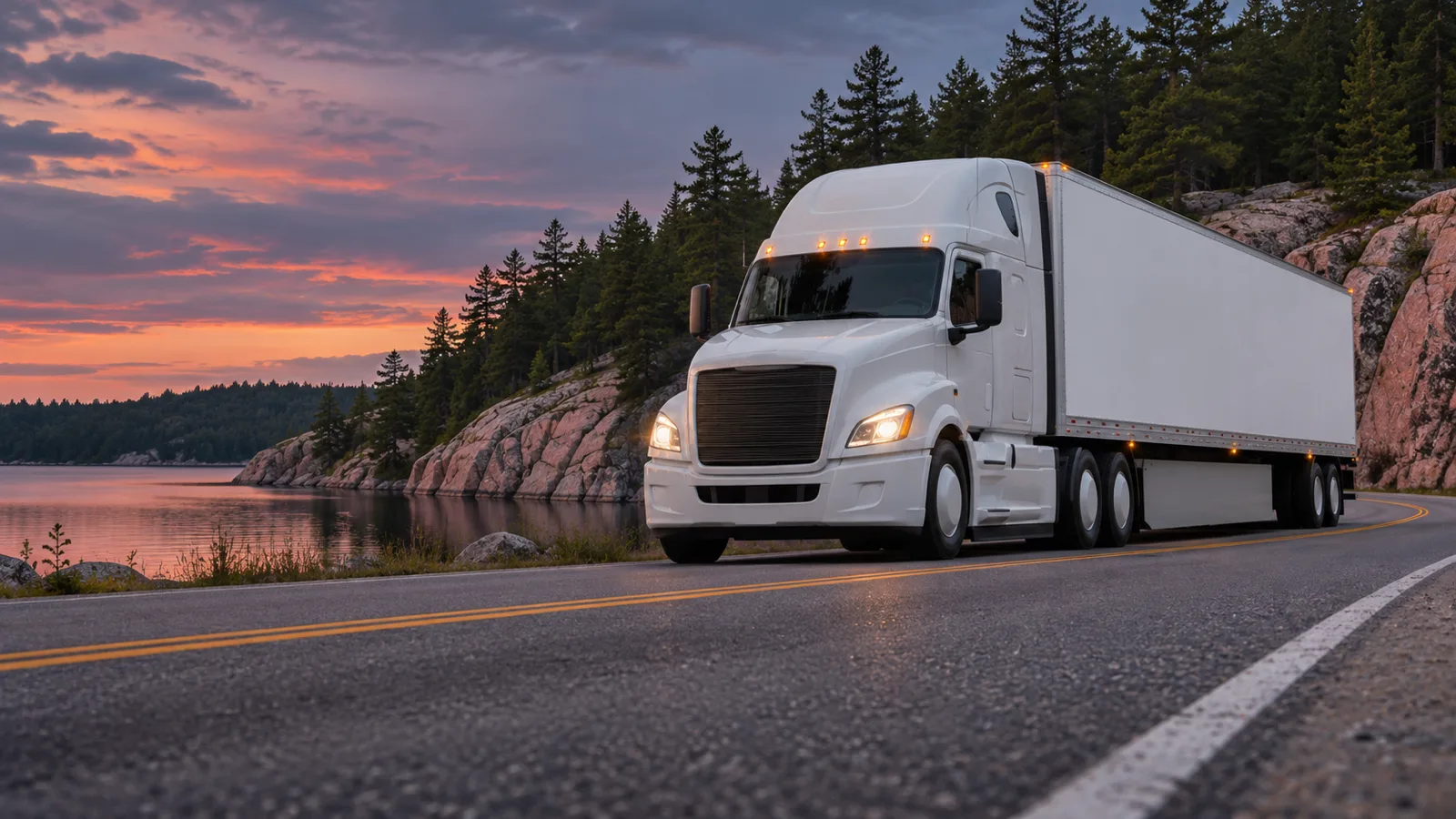
Every week, a steady stream of manufactured goods, consumer products, building materials and retail stock leaves southern Ontario bound for Calgary and Edmonton. The lane between the Greater Toronto Area and Alberta is one of the backbones of domestic freight in Canada, linking the country's largest manufacturing and distribution base with one of its fastest-growing consumer and industrial markets.
For a shipper, that busy lane cuts both ways. There is plenty of carrier capacity, and the routes are well understood. But the distances are long, the weather can be brutal, and rates move with seasons and with the balance of freight going west versus coming back east. A shipment planned on assumptions from shorter Ontario or Quebec lanes can arrive later and cost more than anyone expected.
This article walks through how freight actually moves between Ontario and Alberta, the main modes available, and a step-by-step approach to planning shipments on the lane.
How freight gets from Ontario to Alberta
Calgary sits roughly 3,400 kilometres by road from Toronto, and Edmonton is a similar distance. There are two broad road routes and one major rail option.
The all-Canadian road route
Trucks staying in Canada typically run north from the GTA and across northern Ontario on the Trans-Canada Highway system, via Highway 11 or Highway 17 through communities like Sudbury, Sault Ste. Marie, Wawa, Thunder Bay and Kenora, then across Manitoba and Saskatchewan on Highway 1 or the Yellowhead. Northern Ontario is the most demanding part of the trip: long stretches of two-lane highway, few alternate routes, steep grades along Lake Superior, and winter storms that can close the road for hours. A single collision or snow closure near Lake Superior can hold up traffic with no practical detour.
The US transit route
Some carriers route through the United States, crossing at points such as Sarnia–Port Huron or Sault Ste. Marie and travelling across Michigan, Wisconsin and Minnesota before re-entering Canada in Manitoba or further west. US interstates can be faster and less exposed to northern Ontario weather. However, Canadian domestic goods moving through the US need the right in-transit customs documentation, the driver and equipment must be eligible to cross the border, and border delays are a variable of their own. Over the past year, border processes have also been affected by pandemic-related measures, even though commercial freight has continued to move.
Intermodal rail
Canada's two national railways both run intermodal service connecting terminals in the GTA with Calgary and Edmonton. Containers or trailers are drayed by truck to an origin terminal, moved by rail across the country, and drayed again to the final destination. Rail intermodal can be cost-effective for regular, non-urgent volume, though transit times are generally longer than team truckload and depend on terminal cut-off times and dray availability at both ends.
Comparing the main modes
Which mode fits depends on volume, urgency and how your freight handles transfers. Here is how they typically compare on this lane.
LTL (less-than-truckload)
For a handful of pallets, LTL freight is usually the default. Your pallets share a trailer with other shippers' freight and pass through one or more terminals along the way. LTL rates for a cross-country move are built on weight, density, distance, freight characteristics and accessorials, and transit times are typically several business days longer than a direct truck because of terminal handling. Each terminal transfer is also another chance for damage, so packaging and pallet build quality matter more on long LTL moves.
Full truckload
Once you have enough freight to fill most of a 53-foot trailer, or when your goods are fragile or high-value, a dedicated full truckload often makes more sense. A solo driver must take mandated rest breaks, so a solo truckload from the GTA to Calgary usually takes a few days. Team drivers, who alternate driving and rest, can cut that substantially for urgent freight, at a higher price.
Volume LTL and partial truckload
Between those two sits volume or partial truckload: shipments too big for standard LTL pricing but not big enough to justify a full trailer. These are often quoted on linear feet of trailer space used and can travel with fewer transfers than standard LTL.
Intermodal
Intermodal fits steady, plannable volume where a day or two of extra transit is acceptable. It is less suited to small or highly time-sensitive shipments, and the dray legs at each end add cost and coordination.
Why westbound and eastbound rates differ
On many Canadian lanes, freight does not flow evenly in both directions, and Ontario–Alberta is a classic example. A lot of finished goods move west from central Canada, while the return flow eastbound is often lighter. Carriers price that imbalance into their rates: the busy direction tends to carry stronger pricing, and the lighter direction can sometimes be more competitive because carriers want to fill trucks heading home.
Seasonality layers on top of that. Pre-holiday retail shipping in the autumn, spring construction season and periods of tight capacity can all push rates up. Winter adds risk and sometimes cost, as carriers plan for slower travel and weather delays across northern Ontario and the Prairies.
If your business also moves freight eastbound, for example returns from Alberta customers, raw materials from western suppliers or stock being rebalanced back to Ontario, it is worth asking carriers about eastbound pricing separately. Some shippers find that pairing regular westbound and eastbound volume with the same carrier or partner strengthens their position in rate discussions, because it helps the carrier keep trucks loaded in both directions.
What happens at the Alberta end
Arriving in Alberta is not the end of the planning. Calgary and Edmonton both have large industrial and distribution areas on their outskirts, and many retail distribution centres operate strict appointment systems with limited receiving windows. Freight that arrives late in the day may wait overnight for the next available slot. For deliveries beyond the two big cities, such as Red Deer, Lethbridge, Medicine Hat, Grande Prairie or Fort McMurray, LTL carriers may transfer freight again at their Calgary or Edmonton terminals before the final leg, adding time. Ask your carrier whether your destination is a direct point or served through a partner, and plan transit times accordingly.
A step-by-step plan for shipping on the lane
Whether you ship one pallet a month or several trailers a week, these steps help avoid the most common problems.
- Measure and weigh accurately. Cross-country LTL is priced on precise weight and dimensions. If the carrier re-weighs or re-measures and finds a difference, you will see adjustments on the invoice. Record exact pallet dimensions, including overhang, and actual weight.
- Decide what really drives the delivery date. If a retailer's receiving appointment in Calgary is fixed, plan backwards from it and add buffer for weather. If the freight is stock replenishment with some flexibility, a slower mode may save money.
- Choose the mode based on volume and fragility. Use the comparison above. If you are borderline between LTL and partial truckload, get both quotes.
- Build pallets for a long trip. Use sturdy pallets, stack evenly without overhang, use corner boards and stretch wrap thoroughly. Freight on a 3,400-kilometre LTL journey may be handled several times.
- Protect from freezing in winter. If your goods can be damaged by cold, request heated or protective service. Many carriers offer it as an accessorial between roughly late autumn and early spring.
- Confirm delivery requirements in advance. Does the consignee have a loading dock? Is an appointment required? Does it need a liftgate? Telling the carrier at booking prevents redelivery fees and delays.
- Get the paperwork right. An accurate bill of lading with correct addresses, piece counts, weights and any declared value protects you if something goes wrong. If the freight transits the US, make sure in-transit documentation is arranged.
- Track and follow up. Watch the shipment at key milestones, especially through northern Ontario in winter, and alert the consignee early if weather is causing delays.
When a western stocking point makes sense
If you are sending freight to Alberta every week, it may be time to ask a bigger question: should some inventory live in the West? Holding stock in Calgary or Edmonton means the long haul happens in efficient full loads, and customers across Alberta, Saskatchewan and even British Columbia can be served faster. It also means managing inventory in two places and carrying more stock overall.
The decision usually comes down to how much of your sales go west, how quickly customers expect delivery, and the cost difference between frequent LTL shipments and periodic truckloads into a western distribution warehouse. For brands that sell through both retail and ecommerce, a western location can also simplify replenishment for retailers with distribution centres in Calgary or Edmonton.
Common mistakes on the Ontario–Alberta lane
- Quoting customers transit times based on Ontario–Quebec experience. A cross-country LTL move takes considerably longer.
- Forgetting winter. Weather closures, slower travel and freezing risk are routine from November to March.
- Under-declaring value. Standard carrier liability in Canada is limited and often far below the value of the freight.
- Booking without accessorials. Residential, liftgate, inside delivery and appointment charges added after the fact quickly erode savings.
- Choosing on price alone. A slightly cheaper carrier with poor on-time performance through northern Ontario can cost more in missed retail appointments than you saved.
Plan the lane, not just the load
Ontario to Alberta freight works best when it is planned as a lane rather than a series of one-off shipments. Understanding the routes, the modes and the seasonal patterns lets you choose the right service for each load, set realistic delivery dates and spot when a structural change, like a western stocking point, would pay off.
ShipCarte helps businesses across Canada plan and move freight between Ontario, the Prairies and beyond, with access to LTL, truckload and carrier management through one platform. If you have freight heading west, request a quote and we will help you choose the right option for your timeline and budget.