
A food entrepreneur in Hamilton has spent two years building a following for her company's granola at farmers' markets and independent shops. A buyer from a national grocery chain tastes it at a trade show in Toronto and asks for a listing proposal. The pitch goes well. Then the vendor setup package arrives: EDI requirements, GS1 product data, case and pallet specifications, food safety certification, delivery appointment rules, fill-rate targets and a schedule of chargebacks for getting any of it wrong.
This is the moment many small and mid-size food and consumer packaged goods brands in Ontario discover that winning a grocery listing is a sales achievement, but keeping one is an operational achievement. Buyers expect suppliers to perform like the large brands on the shelf next to them. Late deliveries, short shipments and mislabelled pallets cost money directly through deductions and indirectly through lost trust.
This article is a readiness guide. Work through each area, be honest about where you stand, and fix gaps before your first purchase order rather than after your first chargeback.
Readiness Area 1: Food Safety and Regulatory Compliance
Grocery buyers will not take a product from a supplier who cannot demonstrate food safety. Expect questions in three layers.
Federal requirements
Since the Safe Food for Canadians Regulations took effect in January 2019, many businesses that manufacture, process, package or label food for sale across provincial borders need a licence from the CFIA, a written preventive control plan for many activities, and traceability records that track food one step back and one step forward. If your product is sold by a national chain, it will almost certainly cross provincial borders at some point, even if you only ship to an Ontario distribution centre. See our overview of the Safe Food for Canadians licence.
Labelling
Bilingual labelling, a nutrition facts table, ingredient list, allergen declarations and net quantity all need to meet federal rules. Health Canada's updated nutrition facts and ingredient list format is being phased in over the next few years, so plan packaging redesigns accordingly.
Third-party certification
Most major chains expect suppliers to hold a recognised food safety certification, typically a GFSI-benchmarked scheme such as SQF or BRC, or to be working toward one. Smaller regional grocers may accept a lower standard to start, which is one reason many Ontario brands begin with independents before approaching the national chains.
Readiness Area 2: Product Data and Barcodes
Grocery supply chains are automated, and automation runs on accurate data.
- GS1 barcodes: every consumer unit needs a GS1 Canada-issued UPC. Cases need their own GTIN-14. Do not reuse codes across sizes or flavours.
- Product registry: Canadian grocers commonly require suppliers to load product data, including dimensions, weights, images, ingredients and nutrition, into a shared industry product registry. Retailers pull from that registry, so errors there end up in their systems.
- Measured dimensions: case dimensions feed shelf planning and warehouse slotting. A case that is two centimetres taller than recorded may not fit its assigned slot.
- Pallet configuration: cases per layer, layers per pallet and total pallet height registered and followed consistently.
Readiness Area 3: EDI and Order Processing
Large grocers exchange orders, shipping notices and invoices electronically through EDI. The core transactions you will meet are:
- 850 purchase order: the retailer's order.
- 855 acknowledgement: sometimes required, confirming what you will ship.
- 856 advance ship notice (ASN): what is on the truck, by pallet and case, sent before the truck arrives.
- 810 invoice: your electronic bill.
The ASN is where many suppliers struggle. It must match exactly what is physically on the truck, often down to the serial shipping container code on each pallet label. If your warehouse cannot generate accurate pallet labels and transmit the ASN, the retailer's receiving dock cannot process your delivery as planned. Partners connected through EDI and system integrations handle this as part of standard shipping. A good warehouse partner treats a clean ASN as part of the shipment itself, not an afterthought.
Readiness Area 4: Fill Rate and Inventory
Grocery buyers track how much of each order you deliver. A fill rate below the retailer's target, often 95 to 98 percent or higher, triggers penalties and conversations nobody enjoys. Fill rate failures usually come from:
- Not enough finished inventory to cover orders, especially during promotions.
- Inaccurate inventory records, so stock you thought you had is not there.
- Shelf-life limits, where the retailer will not accept product with less than a set number of days of remaining life.
The last point is easy to miss. Many grocers require a minimum remaining shelf life at receiving, so stock that is technically in date may still be unshippable. Warehouse systems that pick by best-before date and alert you to aging stock are essential. An accurate inventory management process is the foundation of a good fill rate.
Promotions deserve special planning. A flyer feature can multiply orders several times over for a week or two. Ask the buyer for the promotional calendar and build stock ahead of every event.
Readiness Area 5: Getting Product to the Distribution Centre
Most national and regional chains in Ontario receive the bulk of their products through large distribution centres across the GTA and elsewhere in the province, then supply stores from there. Some products, often bakery, dairy and specialty items, are delivered directly to stores instead, which is called direct store delivery or DSD.
Distribution centre delivery
- Appointments are mandatory and usually booked through a carrier portal or the retailer's transportation team.
- Late or missed appointments can mean refusal, rescheduling fees or both.
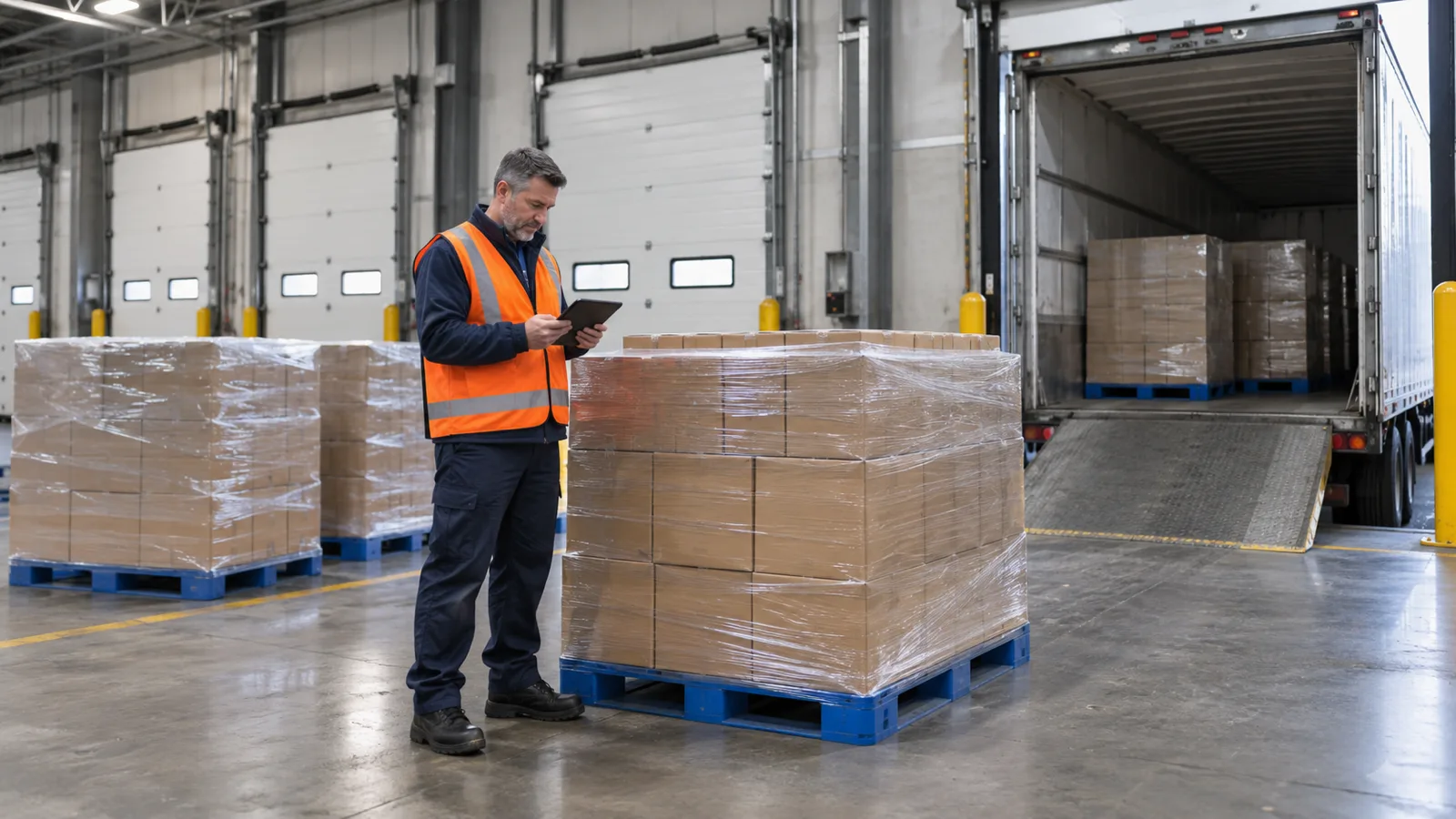
- Pallets must meet the retailer's specifications for type, height, wrapping and labelling. Some chains use pooled pallet programs, so check which pallet type is expected.
- Temperature-controlled products are checked at the door. Chilled or frozen products outside their range will be rejected.
- Some retailers collect product from suppliers with their own fleet or appointed carriers, known as a backhaul or pickup allowance arrangement. Understand which model applies before quoting your price.
Direct store delivery
DSD gives you control over shelf presentation and freshness but turns you into a route delivery business. Serving 40 stores across Ontario, from Windsor to Kingston, needs vehicles, drivers, route planning and proof of delivery. For many smaller suppliers, DSD makes sense only for a tight geographic area.
For shipping to distribution centres, a mix of LTL freight for smaller orders and full truckloads for larger ones is typical. A distribution services partner can consolidate your orders and book appointments on your behalf.
Readiness Area 6: Understanding Chargebacks
Chargebacks, also called deductions or compliance fines, are what retailers deduct from your payments when shipments do not meet their requirements. Typical triggers include:
- Late, missing or inaccurate ASNs.
- Short or over shipments.
- Missing or unreadable pallet labels.
- Missed delivery appointments.
- Damaged product or non-compliant pallets.
- Insufficient remaining shelf life.
Individually, a chargeback might seem small. Across a year of weekly orders, they can wipe out the margin on a listing. Track every deduction, find the root cause, and dispute those that are wrong, which happens more often than suppliers expect.
A Self-Assessment Before Your First Purchase Order
Score yourself honestly on each item:
- We have the licences and food safety certification the buyer requires.
- All products have correct GS1 unit and case barcodes, registered and verified.
- Our product data in the retailer's systems matches our actual packaging.
- We can receive EDI orders and send accurate ASNs and invoices.
- We hold enough inventory to fill normal orders and promotions at the target fill rate.
- We track lots and best-before dates and can meet minimum shelf-life requirements.
- We can build compliant pallets with correct labels every time.
- We have reliable carriers who handle appointment-based deliveries, including temperature control if needed.
- We have a process to review and dispute chargebacks.
- We could trace every case of a given lot to its customer within hours.
If you answered no to three or more, you are not alone, and it is far better to know now.
Start Regional, Then Scale
Not every Ontario brand needs to go straight to a national chain. Many build their operations with regional and independent grocers first: stores in Ottawa, Kingston, Kitchener-Waterloo and London, independent markets in Toronto neighbourhoods, and specialty chains with a few dozen locations. These accounts often accept smaller orders, simpler paperwork and direct delivery.
Use that stage deliberately. Practise building consistent pallets, keeping accurate inventory, tracking lots and meeting delivery windows. Measure your own fill rate before anyone else does. When the national buyer asks how you perform, you will have numbers rather than hopes.
Shipping to a mix of independents also teaches you about freight costs across the province. A case delivered to a store in Sudbury or Sault Ste. Marie costs much more than one delivered in the GTA, and your wholesale pricing should reflect it.
Where a 3PL Fits
Many growing food brands in Ontario outsource storage, order processing and shipping to a third-party logistics provider at this stage. A 3PL that already ships to grocery distribution centres brings EDI connectivity, compliant labelling, appointment booking and carrier relationships that would take a small brand years to build. For temperature-sensitive products, choose a partner with food and beverage logistics experience and proper refrigerated space.
Get Grocery-Ready With ShipCarte
ShipCarte helps Ontario food and consumer goods brands meet grocery chain requirements, from EDI and labelling to warehousing and DC deliveries. If a listing is on the horizon, schedule a consultation and we will walk through your readiness with you.