
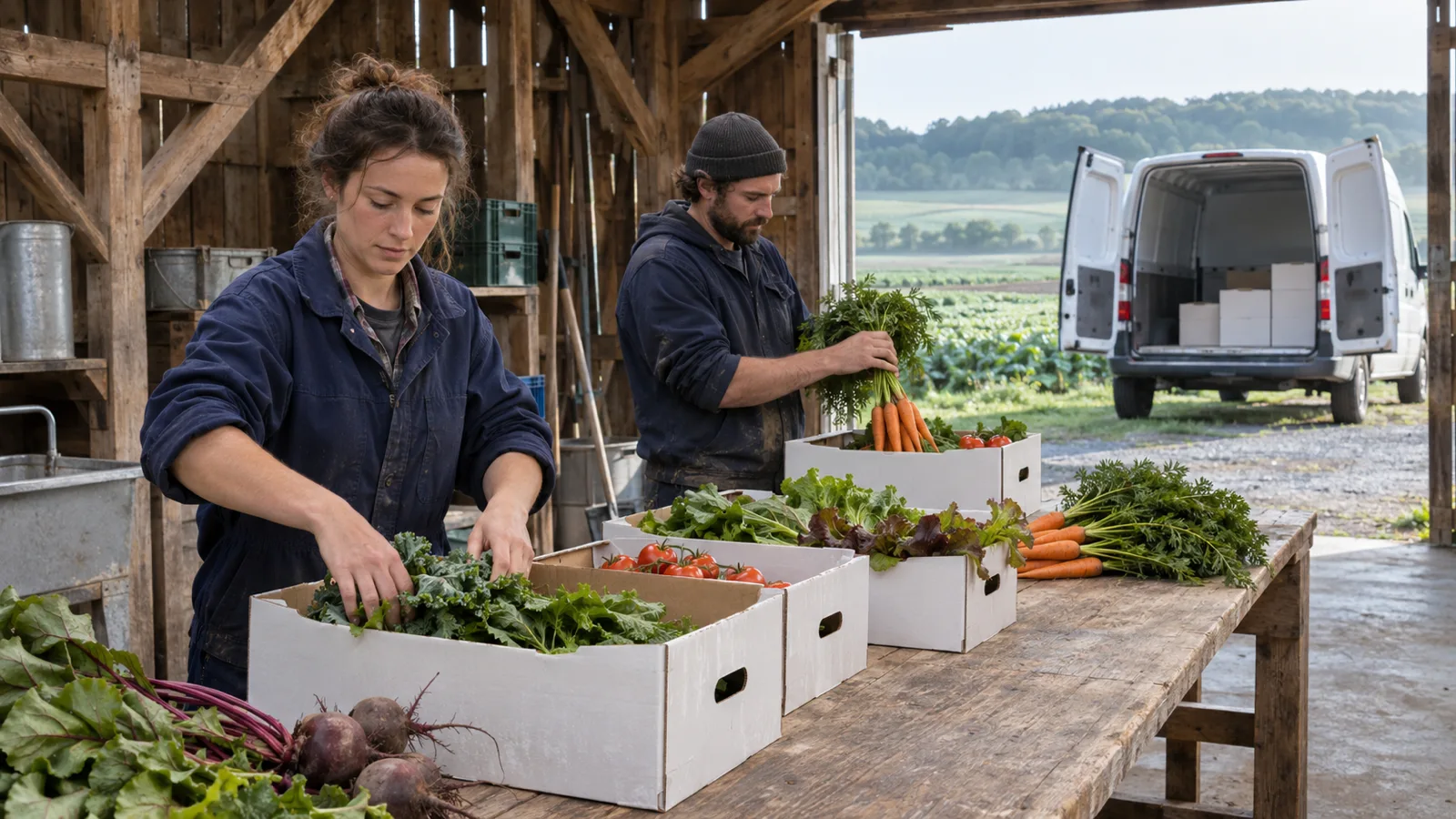
Late June is when Ontario CSA farms find out whether their delivery plan works. The first boxes of the season went out a few weeks ago with greens, radishes and asparagus. Now strawberries, peas and new potatoes are coming in, membership numbers are at their peak, and every Wednesday the farm has to harvest, wash, pack and deliver more than a hundred boxes before members get home from work.
Community supported agriculture has grown steadily across Ontario, from small market gardens near Ottawa and Kingston to larger organic operations around Guelph, the Holland Marsh and Prince Edward County. Members pay upfront for a share of the season's harvest, and the farm promises a weekly or biweekly box. That promise is only as good as the logistics behind it. Members forgive a light box after a hailstorm. They are less forgiving about wilted lettuce, a missed delivery or a pickup location that changes without notice.
This guide covers the practical decisions behind CSA and farm-to-door delivery in Ontario: pickup hubs versus home delivery, route planning, keeping produce cool, add-on products, and when to bring in outside help.
Decision 1: Pickup Hubs, Home Delivery or Both?
The single biggest logistics choice for a CSA is where the box changes hands.
Pickup hubs
Most Ontario CSAs started with pickup points: the farm itself, a member's porch, a church hall, a café, a fitness studio, or a farmers' market stall. Hubs concentrate deliveries, so one van can serve dozens of members in a single stop.
- Pros: low delivery cost per box, simple routing, builds community.
- Cons: boxes may sit for hours, uncollected boxes go to waste, members must travel.
- Best for: farms with members clustered in a few neighbourhoods or towns.
Home delivery
Home delivery is increasingly what members expect, especially in Toronto, Ottawa and the larger cities, where online grocery services have raised the bar.
- Pros: convenient, attracts members who would never use a hub, supports higher prices.
- Cons: far more stops, higher cost per box, apartment buildings and condos are slow to serve, boxes left on doorsteps in summer heat.
- Best for: farms with dense urban membership or those charging a delivery premium.
The hybrid model
Many farms now offer free hub pickup and paid home delivery. This lets price-sensitive members choose hubs while giving others convenience, and the delivery fee helps cover the true cost. Make sure the fee reflects reality. A home delivery in downtown Toronto with parking, elevator waits and condo concierge desks can easily take 10 to 15 minutes per stop.
Decision 2: How to Plan Routes
A farm 90 minutes from its main market spends three hours a week just getting to and from the city before the first box is dropped. Route planning makes a bigger difference to delivery cost than almost anything else.
- Group members by delivery day and area. Assign each neighbourhood a fixed day rather than serving the whole city every day.
- Order stops logically. Free route-planning tools can cut driving time noticeably compared with a hand-built list.
- Avoid the worst traffic. Heading into Toronto on the 401 or the Don Valley Parkway at 8 a.m. is a recipe for warm produce. Many farms deliver in the late morning or early afternoon, or use the 407 where the toll saves enough time to be worth it.
- Set realistic delivery windows and communicate them clearly. A four-hour window that you hit every week is better than a one-hour window you miss half the time.
- Review routes monthly. Members join and leave through the season. A route that worked in June may be inefficient by September.
Decision 3: Keeping Produce Fresh
The cold chain for a CSA box starts in the field. Leafy greens harvested at midday in July and left in the sun will wilt no matter how good the delivery is.
On the farm
- Harvest heat-sensitive crops early in the morning.
- Cool them quickly with cold water, hydrocooling or a walk-in cooler.
- Pack boxes in a cool, shaded space, and pack the most perishable items last.
On the road
A refrigerated van or a van fitted with a portable cooling unit makes a real difference on hot days. Farms without refrigerated vehicles can use insulated covers, frozen gel packs or reusable ice packs in each box, and avoid leaving the van parked in the sun. On a 30°C day in the GTA, a regular cargo van's interior can quickly get much hotter than outside.
At the hub or doorstep
Ask hub hosts to keep boxes in a shaded, cool area, ideally indoors. For doorstep deliveries, insulated liners or bags help. Text members when their box has been delivered so it does not sit outside all afternoon.
For more on cold chain principles, see our article on handling perishable goods in fulfillment.
Decision 4: Boxes, Totes and Returns
Packaging choices affect cost, waste and member experience.
- Waxed produce boxes handle moisture well but are hard to recycle in many Ontario municipal Blue Box programs.
- Plain corrugated boxes are recyclable but weaken when wet.
- Reusable plastic totes are durable and cut waste, but only work if members return them. Charge a deposit or swap a full tote for last week's empty one.
Collecting empty boxes or totes adds time to each stop. Build that into your route timing rather than treating it as an afterthought.
Decision 5: What Goes in the Box
Add-on products like eggs, meat, cheese, bread, honey and preserves increase revenue per member and make the box more attractive. They also change the logistics and the rules.
- Meat and poultry must come from a licensed and inspected plant, and needs to stay cold or frozen. See our guide to meat and poultry cold chain in Ontario.
- Eggs are regulated. Ontario restricts the sale of ungraded eggs to direct sales from the producer at the farm, so check with the Ontario Ministry of Agriculture, Food and Rural Affairs before adding ungraded eggs to delivered boxes.
- Dairy must come from licensed processors, and raw milk cannot be sold in Ontario.
- Baked goods and preserves made in a commercial kitchen are simpler, but still need proper labelling. Products made in a home kitchen may face local public health restrictions.
Every add-on adds a pick, so keep packing lists clear. A simple printed list per box, checked off as items go in, prevents the most common complaint: a missing add-on that the member paid for.
Decision 6: Communication With Members
Good communication turns small logistics hiccups into non-events.
- Send a weekly email listing what is in the box and any storage tips.
- Give a clear delivery window and send a text when the box is dropped off.
- Explain holiday schedule changes well ahead. In Ontario, Canada Day, the Civic Holiday in August and Thanksgiving all fall during CSA season.
- Make it easy for members to pause deliveries for cottage weekends and vacations, and update routes accordingly.
Decision 7: Pricing Delivery Honestly
Many CSA farms set their share price in the first year and never revisit the delivery cost buried inside it. That is risky, because delivery is often the cost that grows fastest as membership spreads out.
Track a few numbers each week through the season:
- Hours spent driving and delivering, including loading and the trip back to the farm.
- Kilometres driven, and the fuel and vehicle costs that go with them.
- Boxes delivered per route hour.
- Boxes uncollected at hubs, and what happened to them.
At the end of the season, divide total delivery cost by boxes delivered. If home delivery in one city costs twice as much per box as hub pickup in another, the price should say so. Members generally accept a clear delivery fee when they can see it pays for a real service, and it allows the farm to keep share prices fair for those who pick up.
Labour deserves an honest number too. If the farmer spends Wednesday driving instead of weeding, that time has a cost even if no one writes a cheque for it. Seasonal staff hired to pack and deliver must be paid at least Ontario's $14 general minimum wage, and farm employment rules can be complicated, so get advice on which Employment Standards Act provisions apply to your workers.
When to Get Outside Help
Many CSA farms handle every step themselves, and for good reason: the farm-to-member relationship is the heart of the model. But some parts of the operation can be outsourced without losing that connection.
- Last-mile delivery in the city: a courier partner can take pre-packed boxes from a drop point and deliver them across Toronto or Ottawa, freeing the farmer to get back to the field.
- Cold storage near the city: a cold storage facility closer to your members lets you deliver in bulk early in the morning, with final deliveries going out from there.
- Shelf-stable add-ons: preserves, honey and dried goods sold online year-round can be handled by an e-commerce fulfillment partner, keeping your winter income flowing.
- Subscriptions beyond the season: some farms offer winter shares with storage crops, or monthly boxes of pantry items. That model has a lot in common with subscription box fulfillment.
If you are thinking about selling more of your farm's products online, our post on moving from the farmers' market to online sales covers the first steps.
Grow Your Farm-to-Door Program With ShipCarte
ShipCarte supports small food businesses across Ontario with cold storage, courier delivery and fulfillment for shelf-stable products. If your CSA is growing faster than your delivery van, request a quote and tell us where your members are.