
For most craft distilleries in Ontario, the business starts in the tasting room. Visitors drive out to Prince Edward County, the Niagara Escarpment, a converted building in Hamilton or a small town north of Barrie, taste a few spirits, and leave with a bottle or two. The margin on those bottles is the best the business will ever see, and the distillery handles every step itself.
Then growth arrives. An LCBO listing comes through. A bar in Ottawa wants your gin on its cocktail menu. A distributor in Alberta asks for samples. A visitor from Michigan wants to know if they can buy your rye at home. Suddenly the distillery that ran its logistics with a hand truck and the owner's van needs to move pallets, meet delivery appointments, manage duty-paid and duty-unpaid stock, and keep glass from breaking across thousands of kilometres.
This article looks at each sales channel beyond the tasting room, what it asks of your logistics, and where a warehousing and distribution partner can take pressure off a small team. Liquor rules in Ontario change often and vary by channel, so treat this as a logistics guide and confirm regulatory details with the AGCO, the LCBO and the Canada Revenue Agency.
The Foundation: Excise Status and Inventory Control
Before thinking about trucks, get clear on how your inventory is classified. Under the federal Excise Act, 2001, spirits are produced and stored under a spirits licence, and excise duty becomes payable when spirits are packaged and removed from the excise warehouse for the domestic market. Stock may be in one of several states at any time:
- Bulk spirits aging in barrels or tanks, duty unpaid.
- Packaged spirits still held in the licensed excise warehouse.
- Duty-paid packaged product ready for sale in Ontario.
- Product intended for export, which may move without domestic duty if the paperwork is right.
Your logistics setup has to respect those categories. If you plan to store duty-unpaid product anywhere other than your own licensed premises, it must be a facility authorised for that purpose. Many distilleries keep duty-unpaid stock at home and send only duty-paid, packaged inventory to a third-party warehouse. Either way, your warehouse records need to reconcile cleanly with your excise returns, so pick a partner whose inventory management tracks lots, case counts and movements precisely.
Channel 1: The On-Site Retail Store
The tasting room store remains the simplest channel logistically. Product moves from your packaging line to your own shelf. The logistics tasks are mostly about inventory accuracy, keeping enough of each SKU in front of customers on busy summer weekends, and reporting sales correctly.
Where it gets more complicated is when you add seasonal pop-ups, festival appearances or retail at off-site events. Each of these needs its own permissions, and the stock that leaves the distillery for an event needs to be tracked out and back again.
Channel 2: LCBO Listings
An LCBO listing is the volume step for most Ontario distilleries. It is also the moment logistics stops being informal. The LCBO expects suppliers to deliver to its distribution centres in the quantities ordered, on the appointment booked, with product, case and pallet labelling that meets its specifications. Errors lead to refused deliveries, delays in getting product to shelves and, in some cases, penalties.
Practical points for distillers preparing for a listing:
- Barcodes: each bottle needs a valid GS1 barcode, and each shipping case its own case code.
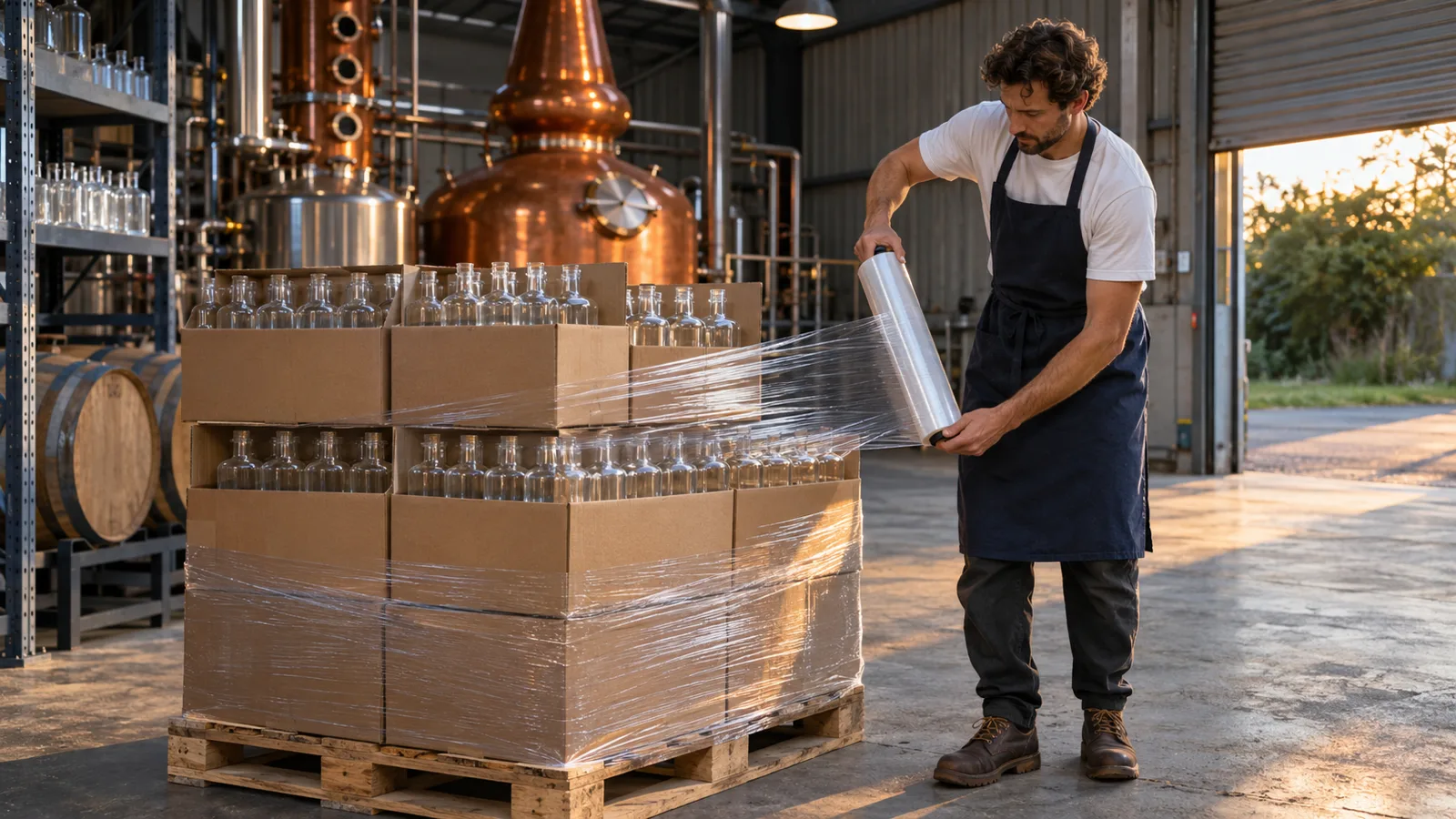
- Case and pallet configuration: consistent case counts, cases stacked to the LCBO's specified pattern and height, and stable stretch wrapping.
- Quality assurance: the LCBO's laboratory tests products before they reach shelves, so packaging and closures must be consistent with the samples submitted.
- Freight: a first listing might be a few pallets. Shipping that by LTL freight is usually far cheaper than a dedicated truck, but book carriers that are comfortable with delivery appointments.
We cover these requirements in detail in our guide to shipping to the LCBO.
Channel 3: Bars, Restaurants and Other Licensees
Bartenders are often a craft distillery's best ambassadors. Getting your spirits behind the bar at restaurants in Toronto, Kitchener-Waterloo or Ottawa builds the brand faster than almost any other marketing. How the sale is processed and who delivers depends on current Ontario rules for spirits, which have been different from beer and wine, so confirm the current process with the LCBO before setting up delivery routes.
Whatever the paperwork route, the physical challenge is similar: frequent, small deliveries to many addresses, often in dense downtown areas with limited loading space. A van route twice a week through downtown Toronto is a full day's work once parking and loading docks are factored in. Some distilleries pool delivery runs with other producers or use a distribution partner for urban drops, freeing their own staff to stay in production.
Channel 4: Other Provinces
Each province controls liquor sales within its borders, so selling outside Ontario means working with each provincial system separately. Quebec's SAQ, BC's Liquor Distribution Branch and the other boards each have their own listing processes. Alberta's market is privately retailed, with products warehoused centrally before going to private stores. In practice, that means:
- Separate listing applications and product approvals for each province.
- Product shipped to the board's designated warehouse, often by full pallets.
- Labelling that meets federal requirements, including bilingual labels.
- Pricing that accounts for each province's markups and freight costs.
Freight to Western Canada is a real cost line. A few pallets of glass spirits moving from Southern Ontario to Calgary or Vancouver will spend several days in transit, crossing Northern Ontario and the Prairies. In winter, freeze protection is not usually a concern for high-proof spirits, but lower-alcohol liqueurs and cream products may need heated service. Ask your carrier.
Channel 5: Exporting to the United States
The US is the most tempting export market for Ontario distillers, with Michigan and New York just across the Ambassador Bridge, the Blue Water Bridge and the Niagara crossings. It also has its own layered system.
- Importer: you generally need a licensed US importer, who in turn sells through wholesalers and retailers in each state.
- Label approval: spirits labels must be approved by the US Alcohol and Tobacco Tax and Trade Bureau (TTB) before sale.
- Bottle size: US standards of fill currently do not allow the 700 ml bottles that are common in Canada and Europe. Most US-bound spirits are bottled at 750 ml, which may require a separate packaging run.
- FDA: your facility generally needs FDA registration, and shipments require prior notice.
- Tariffs: Canadian whisky has historically entered the US duty-free under NAFTA. Keep an eye on trade developments, since spirits have been caught up in tariff disputes between the US and other trading partners.
For distilleries testing the US, consolidating export orders into larger, less frequent shipments keeps brokerage and freight costs per bottle reasonable. ShipCarte's cross-border shipping team can help coordinate carriers and documents.
Protecting Glass in Transit
Breakage is the hidden cost in spirits logistics. A broken bottle wastes product, soaks surrounding cases, and can lead a receiver to reject an entire pallet. Reduce it with:
- Partitioned shipping cases with full-height dividers.
- Corner boards and top sheets on pallets, with stretch wrap tied into the pallet base.
- No overhang off the pallet edges.
- Maximum pallet heights that respect what your cases can bear without crushing.
- Carriers instructed that the freight is glass and must not be double-stacked unless your pallets are built for it.
Most bottled spirits at typical strengths are not treated as dangerous goods for road transport in consumer packaging, but very high-proof products and bulk spirits can be. If you ship cask-strength products in bulk or move spirits by air, check the Transportation of Dangerous Goods requirements and carrier policies first.
Seasonality and Inventory Planning
Spirits sales in Ontario climb in the fall and peak in the weeks before Christmas and New Year's, when gift packs and premium bottles move. Summer brings tasting room traffic and patio demand for gin and ready-to-drink cocktails. Plan packaging runs around these peaks, especially if you need special gift packaging assembled. Holiday gift sets, such as a bottle with branded glasses, are a natural fit for kitting and assembly services, assembled ahead of time so your team is not building boxes in December.
Aged spirits add another planning layer. Whisky put into barrels today may not be sold for three years or more, so warehouse space for barrels is a long-term commitment. Some distilleries keep barrels on-site and use third-party distribution warehousing only for finished, duty-paid goods heading to market.
A Growth Checklist for Ontario Distillers
- Inventory classified by excise status, with records that reconcile to your returns.
- GS1 barcodes on bottles and cases.
- Standard case counts and a documented pallet pattern.
- Carriers lined up for appointment-based deliveries to the LCBO.
- A plan for licensee deliveries that does not consume your production staff.
- Provincial listing requirements researched for each new province.
- US-specific labels and bottle sizes before you commit to export.
Take Your Spirits Further With ShipCarte
ShipCarte helps Ontario producers store finished goods, build compliant pallets and move product to liquor boards, distributors and cross-border partners. If your distillery is ready to grow beyond the tasting room, schedule a consultation and we will map out a logistics plan that fits your channels.