
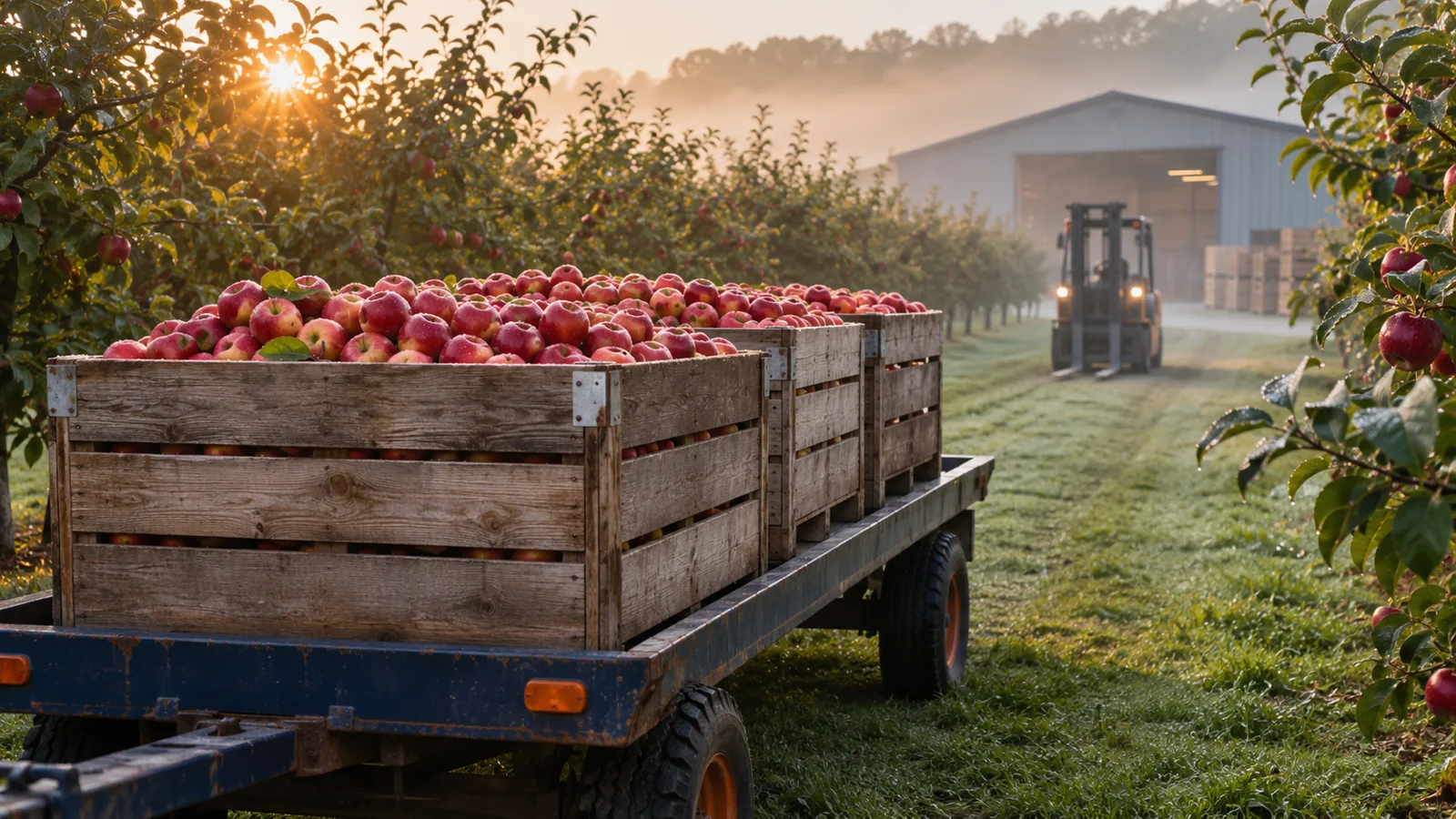
Mid-July in an Ontario orchard looks calm. The fruit is sizing up, the early varieties are still a few weeks away, and the packing line is quiet. Then late August arrives, the first Paula Reds and Ginger Golds come off the trees, and within six weeks the operation has to pick, sort, store and ship most of a year's revenue. McIntosh, Gala, Empire, Honeycrisp and Ambrosia follow one another in quick succession, and every bin needs somewhere cold to go.
Growers in Norfolk County, along the Georgian Bay shoreline near Thornbury, in Durham Region around Newcastle, along the Lake Huron shore and in Niagara all face the same crunch. The fruit is perishable, the window is short, and grocery buyers expect steady supply from September right through to the following summer. That steady supply is a logistics achievement, not just a growing one.
This guide looks at orchard logistics by season: what to have in place before harvest, how storage shapes your shipping calendar, and how to move fruit, juice and cider efficiently to buyers across Ontario and beyond.
Before Harvest: July and August Planning
The best harvest logistics decisions are made while the fruit is still on the tree. Use the summer to lock in the pieces that are hard to find in September.
Confirm your storage capacity
Estimate your crop by variety and compare it with the cold storage and controlled atmosphere (CA) rooms you have available, whether on the farm or at a packer. If your crop forecast is up and your rooms are full by early October, you need overflow space booked now, not when the bins are stacking up in the yard.
Book your trucking
Reefer trucks are in demand across southern Ontario in the fall because apples share the season with tender fruit, field vegetables and greenhouse produce. Agree on rates and capacity with carriers before the rush, and identify a backup carrier for each lane you rely on.
Review buyer requirements
Grocery chains and wholesalers update specifications each season: carton sizes, bag counts, pallet patterns, case labels and delivery windows. If a buyer has moved to a new distribution centre or a new appointment system, you want to know in August.
Check your licensing
Under the Safe Food for Canadians Regulations that took effect in January 2019, businesses that grade, pack or ship fresh fruit across provincial borders or for export generally need a licence from the CFIA, and fresh produce traders are expected to be members of the Fruit and Vegetable Dispute Resolution Corporation (DRC). If you are planning to send fruit to Quebec or the Maritimes this year for the first time, sort this out before the trucks are booked.
Harvest: September and October
Harvest is a race between ripening and refrigeration. Every hour an apple spends warm in the field shortens its storage life.
Field to cooler
The goal is to get picked fruit into cold storage the same day. That means having enough bins, wagons, forklifts and tractor drivers to keep pace with picking crews. Many operations stage bins under shade and run a shuttle to the cooler several times a day rather than waiting for a full load.
Hauling bins to packers or storage
Growers who sell to a packing house or use off-farm storage move bulk bins by flatbed or reefer. Bins are heavy (a full bin can weigh well over 350 kg) and awkward, so load securement and appropriate equipment matter. Short-haul runs from orchards to packers in Norfolk or the Georgian Bay area are often handled by local carriers who know the rural routes and the timing of the season.
Fresh market shipments
Fruit sold fresh at harvest, whether to the Ontario Food Terminal in Etobicoke, to independent grocers or to farm markets, moves in cartons or bags on pallets. Thanksgiving weekend in October is a demand peak for local apples and pies, so build inventory ahead of that week rather than trying to pick and ship in the same days.
Storage: The Engine Behind Year-Round Supply
Ontario apples are available in grocery stores long after harvest because of storage technology. Understanding the options helps you plan when product will be ready to ship.
Regular cold storage
Most varieties store well at around 0°C to 1°C with high humidity. McIntosh is an exception: it is prone to chilling injury and is usually stored a little warmer, around 2°C to 3°C. Regular cold storage keeps fruit in good condition for a few months, which covers the fall and early winter market.
Controlled atmosphere storage
CA rooms lower oxygen and raise carbon dioxide levels to slow the fruit's respiration, allowing apples to be stored into spring and summer. Once a CA room is opened, the fruit inside needs to be packed and shipped within a reasonable period, so opening schedules should be coordinated with sales commitments. Opening a room in March with no orders lined up wastes the investment.
Post-harvest treatments
Many packers use approved ripening inhibitors to extend storage life further. Whatever treatment is used, it should be recorded against the lot so buyers asking about it get a clear answer.
For growers without their own CA rooms, third-party temperature-controlled warehousing can hold packed product closer to the market, which cuts delivery times to GTA retailers from days to hours.
Shipping Options Compared
Orchard businesses ship very different things: bulk bins, packed cartons, bagged retail product, juice, cider and gift boxes. Each one has a natural shipping mode.
- Bulk bins to packers or processors: local flatbed or reefer, often short distance and seasonal. Price by the trip, and plan for return of empty bins.
- Full pallets to a grocery distribution centre: refrigerated full truckload works best when you can fill a trailer for one customer, typically 20 to 26 pallets depending on pallet height and weight.
- A few pallets to many customers: refrigerated LTL freight consolidates your pallets with other shippers' goods, which is ideal for supplying independent grocers in Ottawa, Kingston or Sudbury.
- Juice and cider: pasteurised and shelf-stable products ship on dry vans; unpasteurised cider must stay refrigerated. Hard cider is an alcoholic beverage and moves through the LCBO system or other authorised channels.
- Gift boxes and online orders: parcel carriers handle these well within Ontario for a day or two of transit. Use ventilated cartons, individual trays to stop bruising, and avoid shipping when overnight lows in Northern Ontario are well below freezing.
Winter and Spring: Steady Shipping From Storage
From November to June, orchard logistics shifts from crisis to rhythm. Fruit comes out of storage, is graded and packed, and ships to retail on a regular schedule. A few things deserve attention during these months.
Freeze protection
Apples freeze at around -2°C, and Ontario winters regularly drop far below that. Refrigerated trailers in winter often run in heating mode to hold the set point. Make sure carriers understand that "reefer" means protect from cold as well as heat, especially on routes north along Highway 11 or east toward Ottawa during cold snaps.
Quality checks before shipping
Long-stored fruit can develop storage disorders that are not visible until the fruit is cut or warmed. Pull samples from each lot before committing to large orders, and keep records tied to each lot number.
Inventory visibility
Buyers want to know how much of each variety and size you can supply through spring. An inventory management system that tracks variety, grade, size, lot and storage room makes those conversations easy, and lets you sell what needs to move first.
Value-Added Products and Direct Sales
Many Ontario orchards have diversified into pies, apple butter, dried apple chips, cider vinegar and baked goods sold online or through farm stores. These products have different logistics needs from fresh fruit. Shelf-stable jars and dried snacks can sit in an ambient warehouse and ship through regular parcel networks. Pies and baked goods need fast, careful delivery, and our post on shipping baked goods across Ontario covers that side.
If online sales are growing, consider moving packing and shipping of those orders to a fulfillment partner. Your farm staff are needed in the orchard in September, which is exactly when holiday gift box orders start to build. E-commerce fulfillment keeps orders shipping without pulling people off the harvest.
Exporting Apples to the United States
Ontario apples reach US buyers through the Niagara crossings, the Blue Water Bridge and the Ambassador Bridge. Fresh apples traded under NAFTA are generally duty-free, but shipments need proper documentation, grade and origin labelling, and the US importer must meet FDA requirements, including prior notice for food. Some importers also ask for food safety certification such as CanadaGAP. Working with an experienced customs broker and a carrier familiar with produce crossings keeps fruit from sitting at the border.
Frequently Asked Questions
How far in advance should we book harvest trucking?
For regular lanes, agree terms by early August. Reefer capacity tightens across Ontario from late September through November.
Can we ship apples in the same truck as other produce?
Apples give off ethylene, which speeds ripening and yellowing of many vegetables and leafy greens, and can affect cut flowers. Avoid mixing them with ethylene-sensitive products in the same trailer or cold room.
Is third-party storage worth it for a mid-size orchard?
If your crop regularly outgrows your rooms, renting space for packed product near your main buyers is usually cheaper than building another cold room that sits half empty for part of the year.
Plan Your Harvest Logistics With ShipCarte
ShipCarte helps Ontario growers, packers and cideries with refrigerated freight, temperature-controlled storage and fulfillment for value-added products. If you want harvest capacity lined up before the first bins come in, request a quote and tell us about your volumes and lanes.