
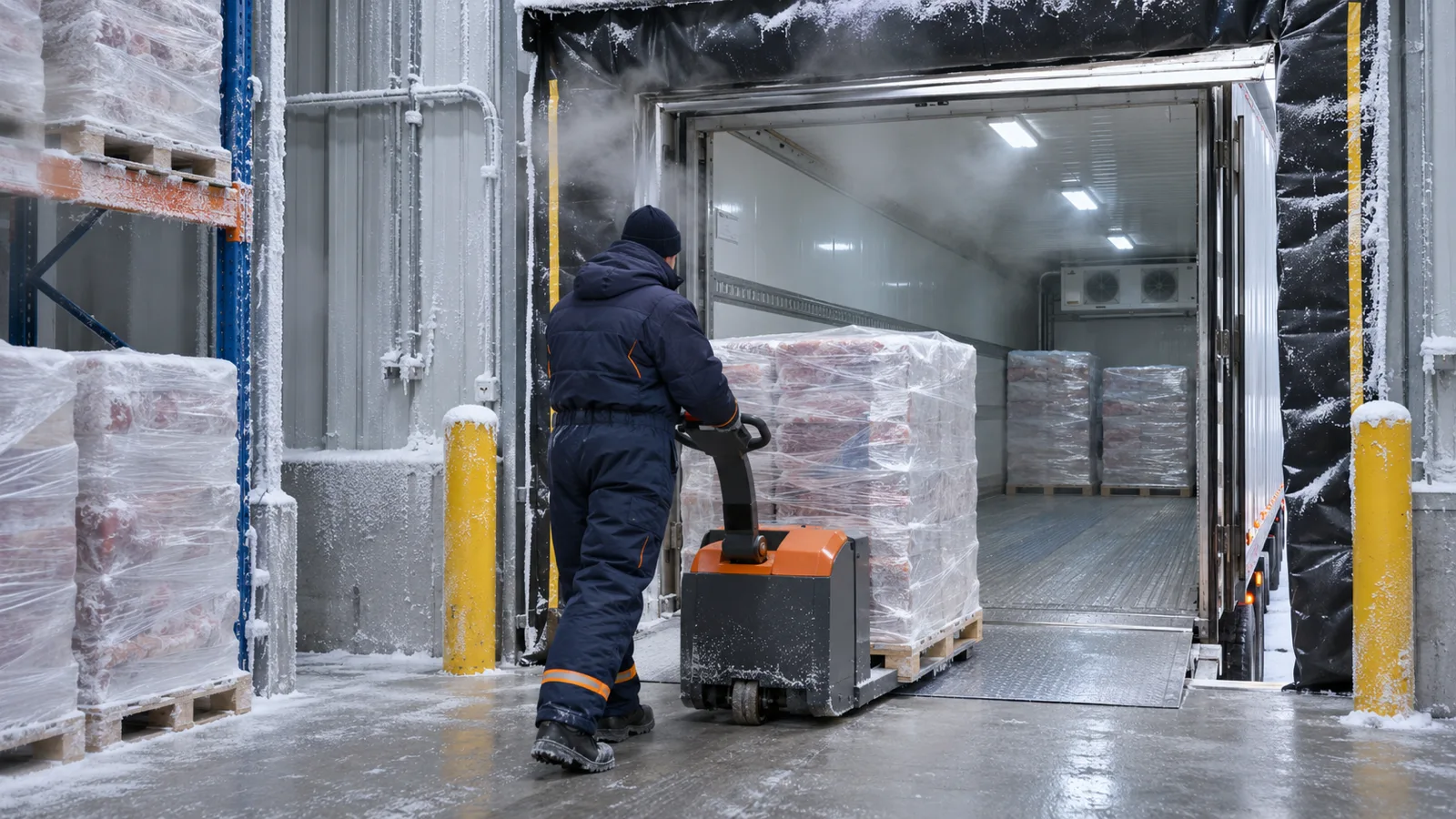
A frozen food brand that has done well in Quebec lands its first listing with a grocery chain in Western Canada. A meal kit company in Ontario wants to start delivering in Alberta. A specialty dairy producer in the Maritimes gets enquiries from distributors in British Columbia. In each case, the product is ready and the customers are waiting. The question is how to get chilled or frozen goods across thousands of kilometres without a single break in temperature.
Canada is one of the most demanding countries in the world for cold chain logistics. The distance by road from the Greater Toronto Area to Metro Vancouver is well over 4,000 kilometres, much of it through sparsely populated country. Temperatures on the same trip can swing from summer heat in the Okanagan to winter cold on the Prairies. And the population is concentrated in a handful of regions separated by long gaps, which shapes where cold storage makes sense and how freight moves between them.
Over the past year, the national vaccine rollout and the jump in online grocery orders during the pandemic have put cold chain logistics in the spotlight. But for food, beverage and health product businesses, the fundamentals have not changed. This article sets out the building blocks of a national cold chain and a practical way to think about designing one.
Start With Your Temperature Zones
Every cold chain decision flows from the temperature range your products need. In broad terms, shippers in Canada work with three zones:
- Frozen: products that must stay frozen solid, commonly held at around minus 18°C or colder. Ice cream, frozen meals, frozen seafood and frozen meat sit here.
- Chilled or refrigerated: products that must stay cold but not frozen, often in a range of roughly 0°C to 4°C, though this varies. Fresh dairy, fresh meat, many prepared foods and some pharmaceuticals sit here.
- Controlled ambient: products that must be kept within a moderate range, protected from both heat and freezing. Chocolate, some beverages, many health products and some medications fall here.
Always work from the specification on the product or from the manufacturer, not from general categories. Some products have tight ranges, and some are damaged by being too cold as easily as by being too warm. That second point is especially important in Canada, where chilled goods moving in winter may need heating to stay above freezing.
The Building Blocks of a National Cold Chain
1. Origin storage
Product leaves production and enters cold storage at or near the origin. This is where inventory is held, picked and staged for outbound loads. The storage needs to be qualified for your temperature zone, with monitoring and alarms.
2. Linehaul transport
The long-distance move between regions is usually by refrigerated truck. For the longest runs, carriers may use team drivers so the truck keeps moving within hours of service rules, which shortens transit time. Rail intermodal with refrigerated containers is another option on some lanes, generally slower but potentially more economical for products with longer shelf lives. Air freight is reserved for high-value, short-shelf-life or urgent products, and it brings its own temperature challenges on the ground at both ends.
3. Regional hubs
Rather than shipping every order from a single origin, many national brands hold inventory in two or more regional cold storage facilities. The most common pattern in Canada pairs a central Canada hub in the Greater Toronto Area or Montreal with a western hub in the Calgary or Vancouver area. Some add an Atlantic hub, often around Moncton or Halifax, to serve the Maritimes and Newfoundland more efficiently.
4. Final-mile delivery
From the regional hub, product goes to retail distribution centres, food service customers, clinics or consumers. B2B deliveries usually move in refrigerated trucks. Direct-to-consumer orders often use insulated packaging with gel packs or dry ice, shipped by parcel or by a dedicated cold delivery service in larger cities. Our guide to shipping frozen foods for ecommerce covers the packaging side in detail.
5. Monitoring and records
Data loggers in trailers and shipments, monitoring in storage, and documented procedures tie everything together. When a temperature excursion happens, the records show where, for how long and how far out of range, which drives the decision about whether product can still be used.
A Scenario: Taking a Frozen Product From Central Canada to the West
Consider a frozen dessert producer based in central Canada that has secured listings with retailers in Alberta and British Columbia. Here is how a national cold chain might come together:
- Demand planning: the producer estimates weekly volume for the western listings and decides whether that justifies holding stock in the West.
- Network choice: with steady volume, the producer moves full truckloads of frozen product from its central Canada cold store to a frozen warehouse in Calgary, which can reach Alberta stores quickly and supply British Columbia by truck through the mountain passes.
- Linehaul: each load travels in a reefer set to the frozen range, ideally with team drivers to reduce the number of days on the road, and with temperature recording throughout.
- Receiving: the western warehouse checks the trailer temperature record and product temperature on arrival before accepting the load.
- Distribution: the warehouse picks store and distribution centre orders and ships them in refrigerated trucks on scheduled delivery appointments.
- Review: the producer compares the cost of this setup with shipping every order from central Canada and adjusts as volume grows.
The same logic applies in reverse for a western producer entering Ontario and Quebec, or an Atlantic producer reaching the rest of the country.
Seasonal Challenges
Summer brings the obvious risk of heat. Long waits at docks, reefer unit failures or doors left open during loading can quickly push products out of range. Pre-cooling trailers before loading and keeping dock time short are basic but essential steps.
Winter brings a less obvious risk: chilled products freezing. A reefer moving fresh product through Saskatchewan in January will need to run in heating mode to hold a 2°C setpoint. Make sure carriers understand that your chilled freight must not be allowed to freeze. Our articles on heated trailer shipping and cold-weather freight protection explain winter strategies.
Shoulder seasons in spring and autumn can be the trickiest, because temperatures can swing from above to below freezing in a single trip, particularly through the Rockies.
Regulation Shapes the Design
Food businesses moving products between provinces need to account for the Safe Food for Canadians Regulations, which include requirements for preventive controls, licensing for many activities and traceability. Our guide to the Safe Food for Canadians licence explains who needs one. Health products have their own expectations, including Health Canada guidance on keeping drug products within labelled temperature conditions during storage and transportation. These rules affect your choice of partners, the records you keep and how you handle excursions.
Cost Drivers to Plan For
- Distance and transit days, since reefer equipment and fuel for the refrigeration unit cost more than dry freight
- Load density, as partial reefer loads are relatively expensive per unit
- Number of temperature zones, because mixing frozen and chilled product on one load requires multi-temperature equipment
- Inventory carrying at multiple regional hubs
- Packaging for direct-to-consumer shipments, including insulation and refrigerants
- Shrink and write-offs from temperature excursions, which a well-run chain keeps low
Costs vary widely by product and lane, so build a model using real quotes for your volumes rather than relying on averages. In that model, compare the total cost of a single national hub against two or three regional hubs. A single hub keeps inventory simple but pushes every order across long distances in expensive reefer equipment. Regional hubs add storage and inventory costs but shorten final-mile moves and protect shelf life. The right answer usually changes as your volume in each region grows, so revisit it once a year.
Choosing Cold Chain Partners
Few businesses own every link in their cold chain. Most combine a storage provider, one or more reefer carriers and, for consumer orders, a fulfillment partner and parcel carriers. When evaluating partners, look beyond rates:
- Temperature capability: can they hold your exact range, and do they have separate frozen, chilled and ambient areas?
- Monitoring: is temperature recorded continuously, and how quickly are you told about an alarm?
- Contingency: what happens when a reefer unit fails on the highway or a freezer goes down overnight? Ask about backup power and replacement equipment.
- Lot tracking: can they track inventory by lot and expiry date so first-expiring stock ships first and recalls can be handled quickly?
- Lane coverage: do their carriers regularly run the long-distance lanes you need, including through the Prairies and into Atlantic Canada?
Questions to Answer Before You Scale
- Which regions generate enough volume to justify holding stock locally?
- What is the shelf life of each product, and how much of it can transit consume?
- Will retail partners require specific delivery appointment windows or receiving standards?
- How will you detect and respond to a temperature excursion?
- Do your partners have the licensing and records your products require?
Build Your Cold Chain With ShipCarte
ShipCarte supports food, beverage and health product businesses across Canada with cold storage, cold chain fulfillment for direct-to-consumer orders and food and beverage logistics that connects production to retail. We help you plan where inventory should sit and how it should move between regions.
If you are expanding a chilled or frozen product line across the country, schedule a consultation to map out your cold chain with our team.