
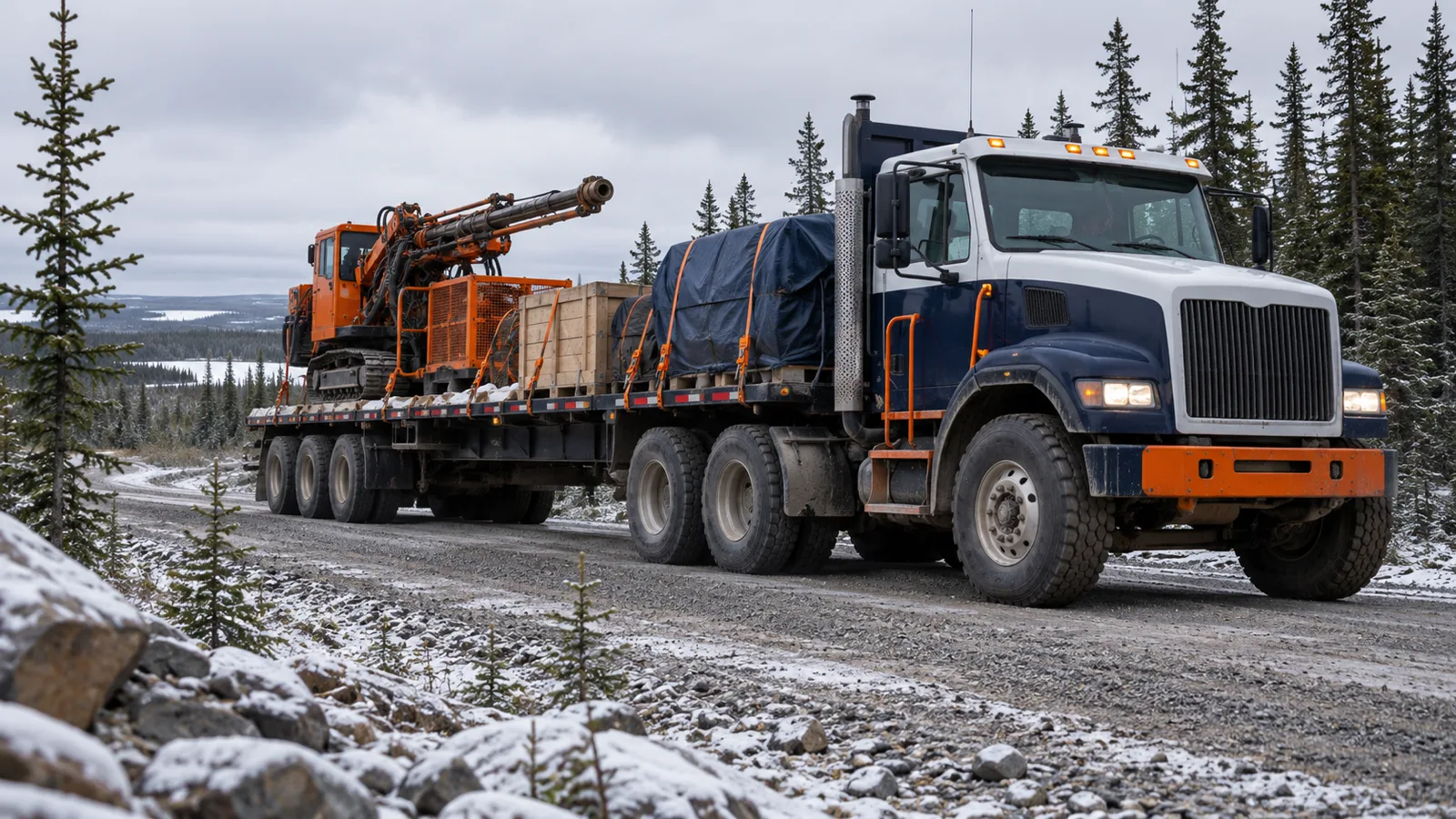
Picture a supplier in Edmonton who has just received a purchase order for pump parts, drill steel and several pallets of consumables destined for an underground mine in northern Saskatchewan. The site is reachable by an all-weather road, but it is a long drive past the last major town, the receiving window is limited to certain days, and the mine's warehouse has made it clear that a shipment without the right paperwork will be turned away at the gate.
Now change one variable. The same order is headed for a site in the Northwest Territories or Nunavut that has no year-round road at all. Suddenly the question is not which carrier is cheapest but whether the materials can make the winter road season, the summer sealift or a scheduled cargo flight. Miss the window and the next opportunity might be months away.
Mining supply logistics in Canada is defined by these kinds of constraints. Whether you are a supplier, a contractor or part of a mine's procurement team, the work is less about moving freight quickly and more about planning carefully so nothing critical is missing when it is needed.
How Remote Sites Are Supplied
Canadian mines operate in almost every province and territory, from the Abitibi gold belt in Quebec and Ontario to Sudbury's nickel operations, potash in Saskatchewan, coal and copper in British Columbia, and diamonds and gold in the North. Each location falls into one or more access categories, and each comes with its own logistics model.
All-season road access
Many operations in Ontario, Quebec, Saskatchewan and British Columbia are connected by year-round roads, sometimes long private haul roads off provincial highways. These sites can be served by truck all year, though distance, road conditions and seasonal weight restrictions affect transit times and load sizes. Regular full truckload runs and consolidated LTL freight are the main tools.
Rail access
Some mining regions are served by rail, which is well suited to bulk commodities and heavy materials. Rail typically handles outbound concentrate and inbound bulk supplies such as fuel or reagents, while trucks handle the final distance and smaller, time-sensitive items.
Winter roads
In parts of northern Manitoba, northern Ontario, the Northwest Territories and Nunavut, ice roads built over frozen lakes and muskeg open for a limited period each winter. The Tibbitt to Contwoyto Winter Road north of Yellowknife is one of the best-known examples, serving diamond mines in the Slave Geological Province. Winter road seasons depend on ice thickness and weather, so their opening and closing dates vary from year to year. Heavy fuel, equipment and annual supplies are often moved during this narrow window.
Sealift and barge
Coastal and river-accessible communities and sites in the Arctic receive much of their annual supply by sealift during the short summer open-water season. River barges also serve communities and projects along the Mackenzie River system. Cargo must be delivered to the departure point, often in Montreal or other southern ports for eastern Arctic sealift, well ahead of sailing dates.
Air cargo
Fly-in sites rely on scheduled or charter flights for people, perishables and urgent parts. Air is the most flexible option, but it is also the most expensive and is limited by aircraft size and weight. Hubs such as Yellowknife, Thompson, Timmins, Val-d'Or and Thunder Bay often serve as departure points for northern flights.
The Planning Cycle That Keeps Sites Supplied
Because many remote sites have limited access windows, mine supply runs on a cycle of forecasting, consolidation and timed movement. A typical approach looks like this:
- Annual forecasting. The site determines what it will need for the coming year, especially items that must move during a winter road or sealift window: fuel, explosives components, reagents, construction materials, large spares and non-perishable supplies.
- Supplier coordination. Purchase orders are placed with enough lead time for manufacturing and delivery to a southern staging point.
- Staging and consolidation. Materials from many suppliers are received at a staging warehouse, checked against purchase orders, labelled for the site and consolidated into loads.
- Timed dispatch. Loads leave the staging point in a planned sequence when the access window opens.
- Receiving and reconciliation. The site receives, checks and records goods, and discrepancies are resolved quickly while there is still time to correct them.
- Emergency supply. Anything that breaks or runs short outside the window moves by air or by the fastest available route.
The staging step deserves particular attention. Consolidating in a southern or regional hub such as Edmonton, Winnipeg, Sudbury or Montreal allows shipments to be inspected, repacked if necessary and loaded efficiently, which is far cheaper than discovering problems at the site. Distribution warehousing with cross-docking capability is well suited to this role.
Packaging and Labelling for Harsh Conditions
Freight bound for remote sites goes through more handling, colder temperatures and rougher roads than most commercial shipments. A few standards help:
- Use sturdy, well-built pallets and crates, as goods may be transferred multiple times between modes.
- Protect items from moisture and freezing, especially chemicals, electronics and anything with liquids.
- Label every piece clearly with the site name, purchase order number, contents and handling instructions so it can be identified even if separated from its paperwork.
- Follow weight and dimension limits for each mode; air charter and some winter road loads have strict limits.
- Include packing lists inside and outside each shipment.
Value-added work like repacking, crating and labelling can be handled during staging through value-added services, ensuring shipments from different suppliers arrive at the site in a consistent format.
Dangerous Goods and Regulated Materials
Mining uses many products that are regulated during transport: fuel, compressed gases, process chemicals, batteries, paints and solvents, and explosives. In Canada, the Transportation of Dangerous Goods Regulations administered by Transport Canada set out requirements for classification, packaging, documentation, safety marks and training. Explosives are additionally regulated under the federal Explosives Act, overseen by Natural Resources Canada, which covers areas such as storage, licensing and transport permits.
Practical implications for suppliers and logistics partners include:
- Ensuring every person who handles, offers or transports dangerous goods has appropriate training.
- Confirming which carriers and aircraft can accept each class of goods; many cannot carry certain materials at all.
- Separating incompatible materials during storage and loading.
- Preparing accurate shipping documents, which mine receiving staff will check.
When in doubt, consult a qualified dangerous goods specialist before shipping.
Site Access and Receiving Requirements
Mine sites are controlled environments. Suppliers and carriers should expect requirements such as advance booking of deliveries, driver safety orientations, vehicle inspections, specific personal protective equipment and restrictions on delivery hours. Many sites have tightened access procedures this year, including health screening for anyone arriving on site. Building these requirements into delivery planning avoids trucks waiting at the gate or being turned away.
Camp Supplies and Perishables
A mine is also a small community. Fly-in, fly-out operations house workers in camps that need food, linens, cleaning supplies and personal care products on a steady schedule. These items have different logistics needs from industrial freight.
- Fresh and frozen food must stay within safe temperature ranges from the supplier to the camp kitchen, which can be challenging when goods move by truck and then by aircraft. Insulated packaging, temperature-controlled staging and tight timing are essential.
- Dry goods and supplies can be consolidated with other freight, but they should be packed so they are not crushed under heavy industrial items.
- Weekly or rotation-based cycles are common, matching crew changes and scheduled flights.
Suppliers serving camps often combine ambient staging with cold storage close to the departure point, so perishables wait in controlled conditions until the truck or flight is ready.
Visibility From Order to Site
With so many handoffs and long transit times, visibility is essential. Site supply teams want to know what has been ordered, what has arrived at the staging warehouse, what is loaded on which truck or flight and when it will arrive. Without that information, they may reorder items that are already in transit or fail to notice a missing critical part until it is too late.
Integrated order management and reporting and analytics tools give procurement, suppliers and logistics partners a shared picture. Combined with shipment tracking for each load, they help everyone spot problems while there is still time to fix them.
Common Mistakes to Avoid
- Underestimating lead times. Southern transit time is only one part; staging, consolidation and access windows add weeks.
- Splitting orders unnecessarily. Multiple small shipments to the same site multiply handling and cost. Consolidate wherever possible.
- Incomplete paperwork. Missing purchase order numbers or dangerous goods documents can stop a shipment at a staging point or site gate.
- Ignoring seasonal road restrictions. Spring weight restrictions and winter road closures can halt planned truck moves.
- Relying on air for everything urgent. Air is invaluable for emergencies but expensive as a routine solution. Better planning reduces dependence on it.
For a refresher on freight fundamentals that apply here, our article on different types of freight services gives a useful overview, and our explainer on bills of lading covers the document that travels with every load.
Summary
Supplying a remote mine in Canada is a logistics challenge shaped by geography and seasons. The operations that do it well plan annually, consolidate at reliable staging points, package for harsh handling, respect dangerous goods rules and keep everyone informed with clear tracking. When access windows are short, preparation is what keeps the site running.
Plan Your Next Site Supply Move With ShipCarte
ShipCarte offers freight shipping, warehousing and consolidation services for businesses supplying industrial operations across Canada. To talk about staging, consolidation or regular freight to a remote site, schedule a consultation with our team.