
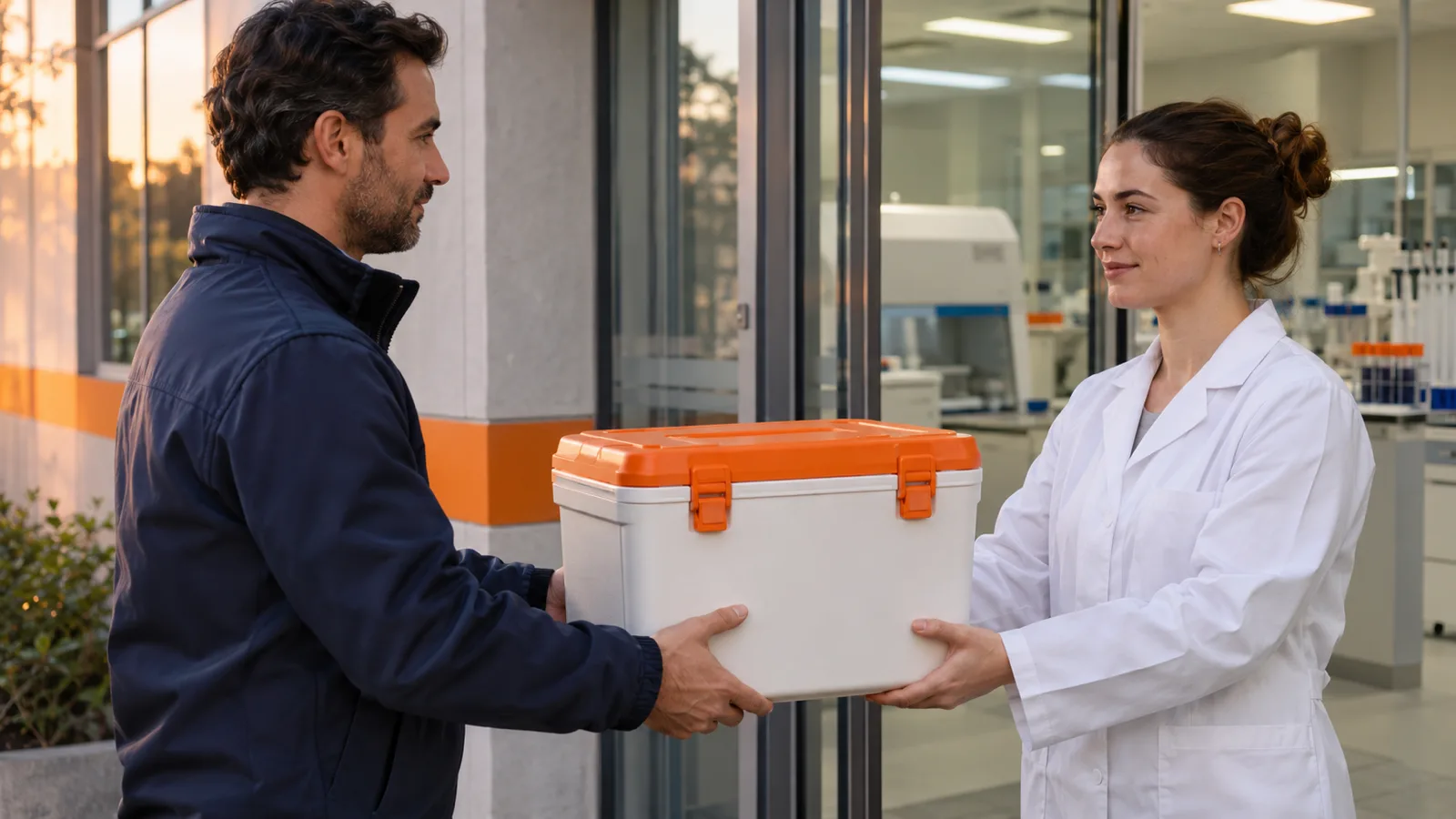
Every day, thousands of blood tubes, swabs, urine samples and tissue specimens leave clinics, long-term care homes, physicians' offices and collection sites across Canada, bound for laboratories that may be across town or several provinces away. Behind each one is a patient waiting for a result. If a specimen arrives warm when it should have been chilled, arrives too late to be tested within its stability window, or arrives with its paperwork missing, the patient may need to be recollected, and their diagnosis is delayed.
Specimen transport has been in the spotlight in recent weeks. As testing for the new coronavirus ramps up, public health labs and hospital labs are receiving far more samples than usual, and the logistics of moving them safely and quickly has become a public conversation rather than a back-office detail. But the fundamentals of specimen courier work were the same before this surge and will remain the same after it: correct classification, compliant packaging, the right temperature, documented custody, and speed.
This article explains what laboratory specimen courier services in Canada involve, the rules that govern them, and what clinics, labs and healthcare organisations should look for when choosing a provider.
Following a Specimen From Collection to Bench
It is easiest to understand specimen logistics by following a single sample. Imagine a blood specimen collected at a rural clinic in the morning, needing to reach a regional laboratory the same day.
1. Collection and preparation
The specimen is collected into a primary container, such as a sealed tube, labelled with patient identifiers and accompanied by a requisition. Depending on the test, it may need to be centrifuged, refrigerated, frozen or kept at room temperature. Stability requirements come from the laboratory, and they dictate everything that follows.
2. Packaging
The clinic packages the specimen according to its dangerous goods classification, using triple packaging, absorbent material and the correct markings. The requisition travels with the specimen, but separately from the primary container so it stays dry if anything leaks.
3. Pickup
A courier collects the package at a scheduled time or on demand. The driver checks the package is properly closed and marked, records the pickup and the number of packages, and places it in a temperature-appropriate transport container.
4. Transport
The package travels by road, sometimes transferring to a line-haul vehicle or an aircraft for longer distances. Northern and remote communities in Canada often rely on scheduled flights to get specimens to a lab, which makes coordination with flight times critical.
5. Delivery and receipt
The courier delivers to the laboratory's receiving area, where staff sign for the package. The chain of custody record is closed, and the lab checks condition and temperature before accessioning the specimen.
Each handoff in that chain is a place where things can go wrong. A good specimen courier is designed around making those handoffs reliable and documented.
How Specimens Are Classified for Transport
In Canada, the transport of infectious substances by road and rail is governed by the Transportation of Dangerous Goods (TDG) Regulations, administered by Transport Canada. Air transport follows the international air rules applied by carriers. Specimens generally fall into one of three groups:
- Category A infectious substances (UN2814 for those affecting humans, UN2900 for those affecting only animals). These are substances capable of causing permanent disability or life-threatening disease in otherwise healthy people or animals when exposure occurs. They require specialised packaging that meets performance standards, specific documentation, and trained, certified personnel. Some may also require an emergency response assistance plan.
- Category B, "Biological Substance, Category B" (UN3373). This covers infectious substances that do not meet the Category A criteria. Most diagnostic specimens that are reasonably believed to contain pathogens fall here. Requirements are less stringent but still include triple packaging and the UN3373 marking.
- Exempt specimens. Patient specimens with minimal likelihood of containing pathogens may be shipped under reduced requirements, though they still need triple packaging appropriate to the material and a suitable marking.
Classification is a professional judgement made by the person shipping the specimen, based on the patient's history, symptoms, local conditions and the suspected pathogen. Couriers should never be the ones deciding classification, but they must know enough to recognise and handle each category correctly and to refuse packages that are clearly non-compliant.
Separately, the Public Health Agency of Canada administers the Human Pathogens and Toxins Act and its regulations, which govern how facilities handle certain pathogens. Labs and some research facilities need licences under that framework, while transport itself is covered by TDG.
Triple Packaging, Explained
Triple packaging is the foundation of safe specimen transport:
- Primary receptacle: the leak-proof tube or container holding the specimen.
- Secondary packaging: a leak-proof bag or container that encloses the primary receptacle, with enough absorbent material to soak up the entire contents if it breaks.
- Outer packaging: a rigid outer container that protects the contents from physical damage, with the required markings on the outside.
Documents such as requisitions go between the secondary and outer packaging. Where refrigerants are used, they are placed outside the secondary packaging, and if dry ice is used, the outer packaging must allow carbon dioxide to vent. Our article on shipping temperature-sensitive products covers general refrigerant practice.
Temperature Control
Lab tests have different stability requirements. Common transport temperature ranges include:
- Ambient, typically around 15°C to 25°C, for many routine specimens.
- Refrigerated, typically 2°C to 8°C, for many specimens awaiting testing.
- Frozen, often using dry ice, for specimens that must not thaw.
Canada's climate makes "ambient" more complicated than it sounds. A specimen sitting in a courier vehicle on a February afternoon in Winnipeg or a July afternoon in Windsor can quickly leave its range. Specimen couriers use insulated transport boxes, temperature-controlled vehicle compartments, and validated packaging with gel packs or phase change materials to stay within range. Temperature data loggers or indicators provide evidence that the range was maintained. For more on dedicated temperature management, see our page on temperature-sensitive products.
Chain of Custody and Privacy
Specimens are linked to identifiable patients, and requisitions contain personal health information. That brings privacy obligations. Provinces have their own health information laws, such as Ontario's Personal Health Information Protection Act, and the federal Personal Information Protection and Electronic Documents Act applies to many private-sector organisations. Healthcare custodians remain responsible for the information, and their agreements with couriers should reflect that.
In practice, specimen couriers protect privacy and integrity by:
- Keeping packages sealed and never opening them.
- Recording each pickup and delivery with time, location, number of packages and signatures.
- Using locked or secured vehicle compartments.
- Training drivers in confidentiality and in what to do if a package is lost, damaged or leaking.
- Maintaining records that can be produced if a specimen goes missing or a result is questioned.
For forensic or legal specimens, such as some toxicology samples, chain of custody requirements are stricter and may involve tamper-evident seals and formal custody forms at every transfer.
Service Models
Scheduled routes
Most specimen transport runs on scheduled routes, with couriers stopping at clinics, collection centres and care homes at set times each day and timing the final delivery to fit lab processing schedules. Route design balances frequency with cost.
STAT and on-demand
Urgent specimens need immediate pickup and direct delivery. STAT services are more expensive but essential for time-critical tests.
After-hours and weekend coverage
Hospitals and labs operate around the clock, and some specimens cannot wait until Monday. Coverage outside business hours is a key question when choosing a provider.
Long-distance and air
Specialised tests are often performed only at certain reference labs, so specimens may need to travel across provinces. Air transport links remote communities in northern Canada, Labrador and the territories with regional labs. These shipments must meet air dangerous goods requirements and be timed to flight schedules.
Choosing a Specimen Courier: A Checklist
- Are drivers trained in TDG requirements for the categories you ship, with records available?
- Can the provider handle Category A shipments if needed, with appropriately trained personnel?
- What temperature ranges can they maintain, and how is temperature monitored and documented?
- How is chain of custody recorded, and can you access pickup and delivery records quickly?
- What are the procedures for spills, leaks, accidents and lost packages?
- Do their service hours match your collection and lab schedules, including weekends and holidays?
- How do they protect personal health information, and will they sign an agreement reflecting your privacy obligations?
- Can they scale quickly during surges in testing volume?
- Do they offer visibility, such as real-time tracking, for urgent shipments?
Beyond Specimens: The Wider Healthcare Supply Chain
Specimen transport is one piece of a larger healthcare logistics picture. The same organisations need collection kits, swabs, test supplies and personal protective equipment delivered on time, often while those supplies are scarce. Labs and clinics benefit when their supply partners can handle healthcare distribution and healthcare warehousing with the same discipline applied to specimens. Our healthcare industry page outlines the broader services involved.
Getting Specimens Where They Need to Be
Laboratory specimen courier services in Canada sit at the intersection of dangerous goods regulation, temperature control, privacy and time pressure. The right partner treats each specimen as a patient's result in transit: correctly packaged, kept within range, documented at every handoff and delivered within its stability window.
ShipCarte supports healthcare organisations across Canada with healthcare logistics, temperature-sensitive handling and distribution of medical supplies. To discuss your organisation's needs, schedule a consultation with our team.