
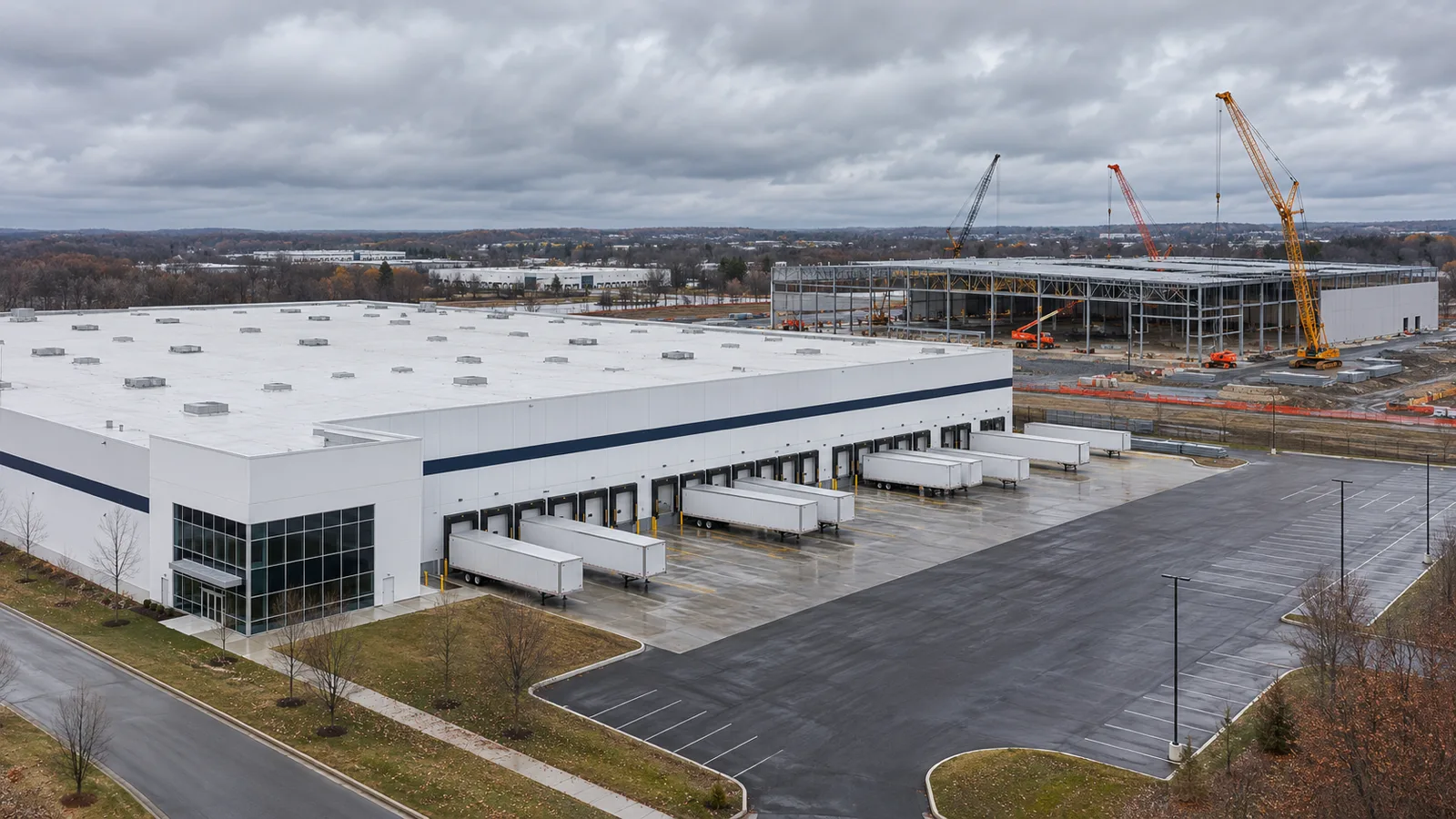
Ask anyone who has tried to lease warehouse space in Canada recently and you will hear a similar story. A growing brand outgrows its unit, calls a commercial real estate broker and learns that there is almost nothing available in the size range it needs. The few listings that exist attract several offers within days. Asking rents are well above what the brand paid on its last lease, landlords want longer terms, and the newest buildings were pre-leased before construction finished.
This is not a local problem. Commercial real estate brokerage reports over the past few years have consistently described industrial vacancy in the Greater Toronto Area and Metro Vancouver as among the tightest in North America, and markets such as Montreal, Ottawa and parts of the Prairies have tightened as well. The past year added more pressure as online shopping accelerated and companies tried to hold more inventory as a buffer against supply chain disruption.
For a business that needs somewhere to put its products, understanding why space is scarce helps you make better decisions about what to do next. This article explains the main forces behind the shortage and then walks through the realistic options available to brands, from optimizing the space you already have to sharing capacity with a third-party logistics provider.
What is driving the shortage
Ecommerce needs more space per dollar of sales
Online retail generally requires more warehouse space than store-based retail for the same volume of sales. Ecommerce inventory is held in many SKUs, ships in individual units rather than full cases, and needs room for packing stations, returns processing and staging. As Canadian consumers shifted more of their spending online, retailers, marketplaces, parcel carriers and fulfillment providers all competed for the same buildings.
Land is limited where people live
Canada's largest markets face real physical limits on new industrial land. In the GTA, the Greenbelt, the Oak Ridges Moraine and Lake Ontario constrain outward growth, and much of the remaining serviced land is far from the core. Metro Vancouver is boxed in by mountains, the ocean, the US border and the Agricultural Land Reserve, which protects farmland from development. Older industrial sites close to city centres are frequently being redeveloped into housing or mixed use, which removes supply instead of adding it.
Building takes time
New warehouses take years to move from land acquisition through zoning, permits and construction. Rising land and construction costs, along with municipal development charges, add to the price. Developers have been building, but much of the new supply is quickly leased, often to large occupants who sign up before the building is complete.
Companies are holding more inventory
The disruptions of the past year, from factory shutdowns to port congestion and container shortages, taught many companies that lean inventory can leave them with empty shelves. Holding more safety stock takes more space. Some businesses are also bringing production or final assembly closer to home, which creates demand for manufacturing and warehouse space at the same time.
Logistics hubs attract logistics tenants
Space near Highway 401 and the 400-series highways, near Pearson airport, around the CN and CPR intermodal terminals, and close to the ports of Vancouver and Montreal is in particularly high demand because it shortens drayage and delivery times. The same locations that make sense for one company make sense for everyone.
What this means for a growing brand
The consequences show up in a few predictable ways:
- Higher occupancy costs. Rent is only one piece; additional rent for property taxes, maintenance and insurance has also risen in many markets.
- Longer commitments. Landlords in a tight market can ask for five- or ten-year terms. That is a big bet for a business whose volume could double or halve in that time.
- Size mismatches. Brands often have to lease more space than they need now, or settle for less than they need and run out within a year.
- Fit-out costs. Racking, lighting, dock equipment, sprinklers suited to high-piled storage and warehouse systems all cost money before the first pallet arrives.
- Location compromises. The only available buildings may be further from customers or from your workforce.
Seven options for brands that need space
1. Use the space you have more intensively
Before looking for more square footage, look up. Many warehouses use only a fraction of their available clear height. Taller racking, narrow-aisle layouts, mezzanines for small-parts picking and better slotting can add significant capacity inside the same walls. Check with your landlord and local fire authority first, since higher storage often requires upgraded sprinkler protection.
2. Clean out slow and dead stock
Most warehouses contain inventory that has not moved in a long time: discontinued items, obsolete packaging, excess raw materials. Liquidating, donating or recycling it frees up locations immediately. Our article on how to liquidate ecommerce inventory covers the options. Good inventory management reporting will show you which SKUs are consuming space without earning their keep.
3. Improve inventory turns
Ordering smaller quantities more frequently reduces the space you need, though it can increase freight and purchasing costs. The right balance depends on lead times, supplier minimums and how predictable your demand is. Revisiting reorder points with current data often reveals room to reduce stock without hurting availability.
4. Separate storage from fulfillment
Not all inventory needs to sit in your most expensive, best-located building. Bulk reserve stock can be stored further away where space is more available, with regular transfers to a forward pick location close to customers. This two-tier approach keeps the expensive space for the activities that actually need it.
5. Share space with a third-party logistics provider
A 3PL leases and operates warehouse space and shares it across many clients. Instead of signing a long lease and fitting out a building, you pay for the storage and services you use, usually per pallet, per bin or per order. When your volume grows, you take more space within the provider's network; when it drops, you take less. Distribution warehousing on a shared basis is often the fastest way to add capacity in a tight market because the building, racking and systems already exist.
6. Consider dedicated space within a 3PL
Some businesses need their own area, their own processes or their own staff, but still do not want to lease a building. Dedicated warehousing gives you a defined footprint operated to your requirements, while the provider handles the lease, the equipment and day-to-day management.
7. Rethink your network across Canada
If space is tight and expensive in your home market, ask whether all your inventory needs to sit there. Placing some stock closer to customers in other regions can reduce both storage pressure and shipping costs. Our guide to splitting inventory east and west in Canada walks through when a second location pays off.
Questions to ask before you sign anything
Whether you are leasing a building or contracting with a 3PL, these questions help you compare options fairly:
- How much space do you need today, in a year and in three years? What happens if you are wrong in either direction?
- What is the total cost, including rent, additional rent, utilities, equipment, labour and systems, not just the headline rate per square foot?
- How far is the location from your customers, your suppliers' inbound routes and your workforce?
- Can the building support your product needs, such as temperature control, high-value security or dangerous goods storage?
- What warehouse management technology will you use, and how will it connect to your sales channels?
- How easily can you exit or scale the arrangement?
For businesses comparing a lease against a 3PL, it helps to model the full cost per unit shipped under each option. Our explainer on pallet-in, pallet-out services shows how 3PL storage pricing typically works.
Start earlier than you think you need to
In a tight market, timing is often the deciding factor. Searching for a building, negotiating a lease and fitting it out can easily take many months, and onboarding with a 3PL also takes planning: product data, receiving appointments, integrations and a test period. Brands that wait until the current space is overflowing tend to accept whatever is available on the worst terms. A simple rule of thumb is to start exploring options once you can see yourself running out of room within the next year, and to have a temporary overflow plan, such as short-term pallet storage with a provider, for seasonal peaks like the autumn build-up to the holidays.
Technology stretches every square metre
Whatever space you end up with, a warehouse management system helps you use it better. Directed putaway places items in the most suitable location, slotting rules keep fast movers close to packing and cycle counting keeps records accurate so you are not holding extra stock to cover for errors. In a market where every pallet position is expensive, those gains add up.
Find capacity without the long lease
The shortage of warehouse space in Canada is driven by deep, structural forces that are unlikely to reverse quickly. Brands that plan ahead, use their existing space more intelligently and stay flexible about how they access capacity will be in a far stronger position than those who wait until the building is full. ShipCarte offers shared and dedicated warehousing with fulfillment and distribution services for businesses across Canada. If you are running out of room, request a quote or schedule a consultation to talk through your options.