
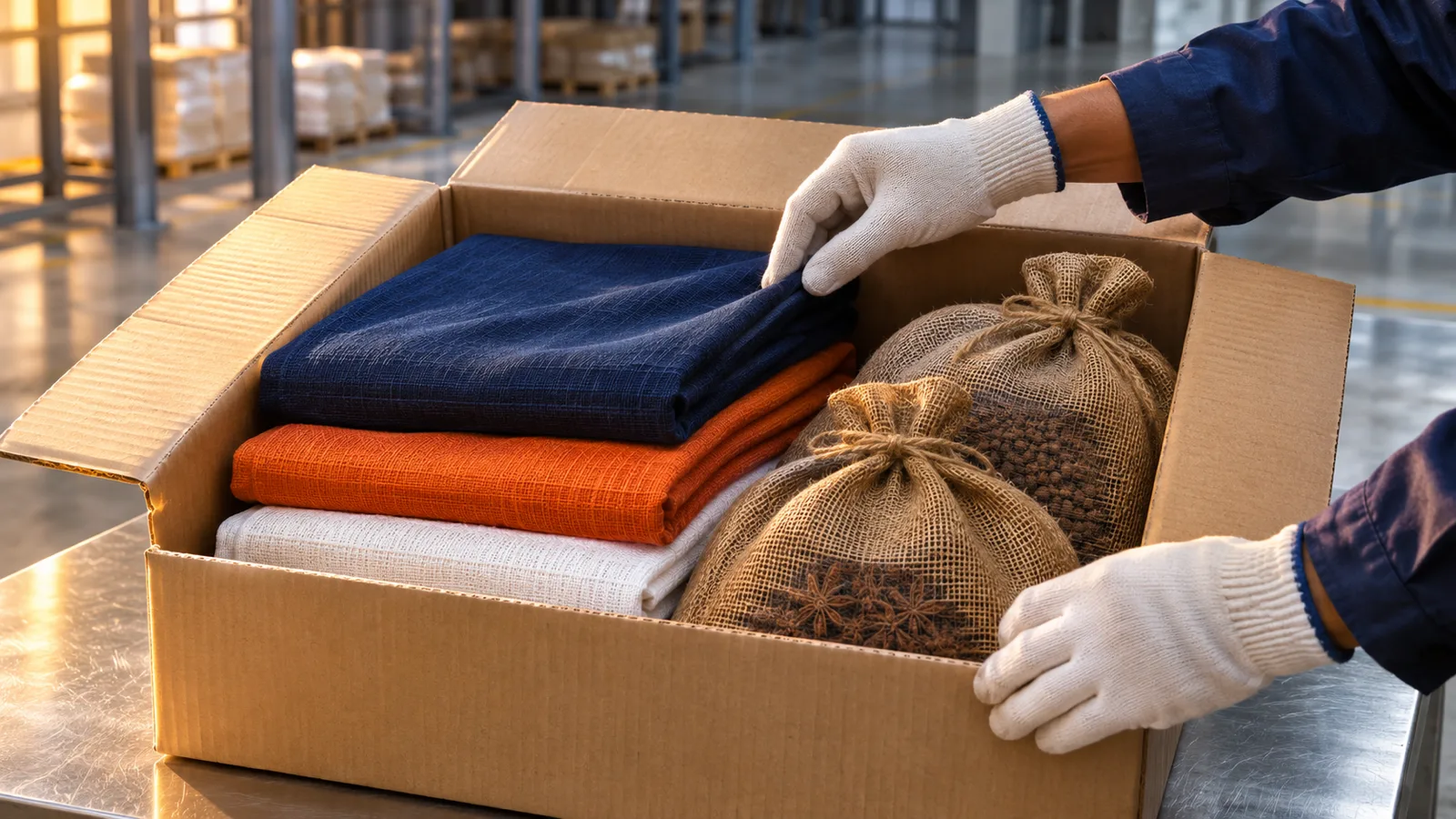
A boutique in Brampton wants to bring in a new line of block-printed cotton kurtas from Jaipur. A specialty grocer in Surrey has found a cooperative in Kerala selling whole cardamom and black pepper. An online home décor brand in Montreal is sourcing hand-loomed rugs and brass lamps from suppliers in Uttar Pradesh. All three are importing from India into Canada, and all three are about to learn that the product category shapes almost every step of the process.
India is a natural sourcing partner for many Canadian businesses. It has deep manufacturing traditions in textiles, apparel, leather, spices, tea, handicrafts and pharmaceuticals, and Canada has a large Indo-Canadian community with strong demand for authentic goods. Yet the route from an Indian supplier to a Canadian store shelf is long, and each product type triggers different Canadian rules.
This guide is organised around the products Canadian businesses most often import from India, followed by the shipping routes and the customs process that applies to all of them.
Before anything else: the importer setup
Every commercial importer needs a business number with an import-export account from the Canada Revenue Agency. Most importers also appoint a licensed customs broker who files entries with the Canada Border Services Agency (CBSA). Since CARM went live in October 2024, importers also need to register in the CARM Client Portal and either post their own security for release prior to payment or pay duties and taxes before goods are released. If you are bringing in food, you will likely need additional licensing, covered below.
Agree Incoterms with your Indian supplier at the outset. FOB at an Indian port is common and gives you control of the main freight leg. Ex Works from an inland town can be problematic because Indian export formalities are easier for the local exporter to handle. If you need a primer, read our guide to FOB.
Category 1: Textiles and apparel
Clothing, home textiles such as bedding and cushion covers, scarves and fabrics are among the most common imports from India.
Labelling
Canada's Textile Labelling Act and its regulations require most consumer textile articles to carry a label with:
- Fibre content by percentage, using generic fibre names, in both English and French.
- A dealer identity: either the name and postal address of a Canadian business, or a CA identification number registered with the Competition Bureau.
Care labelling follows a voluntary standard in Canada, but many retailers expect it. It is far cheaper to have labels sewn in by the supplier than to relabel goods after they land. Send your supplier a label specification with the exact wording.
Duties
Apparel and many made-up textiles carry some of the higher Most-Favoured-Nation duty rates in Canada's tariff. India has been a beneficiary of Canada's General Preferential Tariff, which offers reduced rates on many goods from eligible developing countries, but a number of textile and apparel lines are excluded from that preference and others require specific origin rules to be met. Have your broker confirm the classification and applicable rate for each style before you set retail prices.
Practical tips
- Specify fabric weight, shrinkage tolerance and colour fastness in writing; hand-dyed products can vary from lot to lot.
- Ask for each style to be folded and bagged individually with a size sticker and barcode, ready for pick and pack once received in Canada.
- Use moisture absorbers in cartons for long ocean voyages, especially during the Indian monsoon months.
Category 2: Spices, tea and other foods
Food imports are regulated more tightly than general merchandise.
Safe Food for Canadians licence
The Safe Food for Canadians Regulations have been in force since January 2019. Under them, most businesses that import food into Canada need a Safe Food for Canadians licence from the Canadian Food Inspection Agency (CFIA), along with a preventive control plan and traceability records. Some requirements were phased in by food category and business size, so check how they apply to your products. Importing spices or tea without the right licence can lead to shipments being held.
Food safety and quality
Spices can be affected by contamination, pests or undeclared additives, and the CFIA does test imported foods. Choose suppliers who can provide lab analysis and documented processing. Ask about fumigation and sterilisation methods, and make sure any treatment complies with Canadian rules.
Labelling
Prepackaged food sold in Canada needs bilingual labels with common name, net quantity in metric units, ingredient list, allergen declarations where applicable, a nutrition facts table for most products, and the name and address of the Canadian importer or dealer. Labels for bulk goods that will be repacked in Canada follow different rules.
Storage
Whole spices and tea store well, but they need cool, dry, clean conditions away from strong-smelling products that can taint them. Ground spices lose aroma faster. Rotate stock carefully. If you are bringing in perishable Indian foods such as frozen snacks or dairy-based sweets, you will need temperature-controlled warehousing and an unbroken cold chain from the origin.
Category 3: Handicrafts, furniture and home décor
Brass and copper ware, carved wood, hand-knotted rugs, ceramics and furniture are popular with Canadian retailers and ecommerce brands.
- Wood. Wooden products and wood packaging attract attention from the CFIA because of pest risk. Wood packaging, including pallets and crates, must meet ISPM 15 treatment and marking requirements. Some wooden articles may need treatment or bark-free certification.
- Plant materials. Items made with straw, grass, seeds or untreated plant fibres may have plant protection requirements.
- Fragility. Ceramics, glass and carved items need export-grade packing. Ocean shipments are handled several times, so specify double-wall cartons and internal protection.
- Bulky items. Furniture takes a lot of space relative to its weight, which affects freight and storage costs. Flat-pack designs, where practical, reduce both.
Category 4: Other common imports
Leather goods, jewellery, auto parts, industrial components and generic pharmaceuticals are also significant Indian exports. Leather and jewellery are fairly straightforward from a customs standpoint, though they need accurate material descriptions. Pharmaceuticals, natural health products such as Ayurvedic preparations, and cosmetics fall under Health Canada, which has strict requirements for licensing and product registration before sale. Do not assume a product sold freely in India can be sold in Canada.
Shipping routes from India to Canada
There is no single best route. The right choice depends on where in Canada your goods are going and how quickly you need them.
Ocean via Europe or the Mediterranean to Eastern Canada
Cargo from western Indian ports such as Nhava Sheva near Mumbai or Mundra in Gujarat often moves west through the Suez Canal, or around the Cape of Good Hope when Red Sea security problems force carriers to divert, transshipping at a Mediterranean or European hub, before crossing the Atlantic to Montreal or Halifax. From there, goods move by rail or truck to Ontario and Quebec. This is a common routing for importers in the Greater Toronto Area and Montreal.
Ocean via Asia to Western Canada
Cargo from southern and eastern ports such as Chennai may instead transship through hubs like Colombo or Singapore and cross the Pacific to Vancouver or Prince Rupert. This routing can suit importers in British Columbia and Alberta, or goods continuing by rail to the Prairies.
Air freight
Direct and one-stop air services connect major Indian cities with Toronto and Vancouver. Air is useful for samples, high-value textiles for a seasonal launch, or urgent restocking. It costs much more per kilogram, so most importers use ocean for regular stock.
Transit time considerations
Ocean shipments from India to Canada usually involve at least one transshipment, so door-to-door timelines run to several weeks and can vary. Build in buffer time for festival periods in India, such as Diwali, when factory output may slow, and for winter weather on Canadian rail and road legs.
Customs clearance in Canada
Whatever the product, your broker will need a detailed commercial invoice, packing list, bill of lading or air waybill, and any certificates for regulated goods. To claim the General Preferential Tariff, your goods must meet the origin rules and you need appropriate proof of origin. GST, and the provincial part of HST where applicable, is collected on import.
Shipments of food, plants and wood products may be referred to the CFIA for inspection, which can add time. Pre-checking documents with your broker before the vessel arrives is the best way to keep clearance smooth. For a broader overview of how duties and taxes are calculated, see understanding duties and taxes.
After clearance: receiving and distribution
Once goods arrive at your warehouse, they need to be checked, counted and stored correctly. Hand-made products often arrive with more variation than factory goods, so inspection on receipt is worthwhile. A 3PL can:
- Inspect a sample of each carton for quality and label compliance.
- Apply missing bilingual stickers or barcode labels through value-added services.
- Store food separately and rotate it by best-before date.
- Ship to retailers as retail fulfillment or directly to consumers.
Importer's checklist for India
- Business number and import-export account in place
- Customs broker appointed and briefed on your products
- Safe Food for Canadians licence if importing food
- Bilingual and textile labels specified to the supplier
- Origin documents for tariff preference arranged
- ISPM 15-compliant wood packaging confirmed
- Route and Incoterms agreed, with a realistic timeline
- Canadian warehouse ready to receive
Work with ShipCarte on your Indian imports
ShipCarte helps importers across Canada receive, store and distribute goods arriving from overseas, including food and beverage logistics for specialty grocers. Request a quote for your next inbound shipment, or book a consultation to plan storage and distribution.