
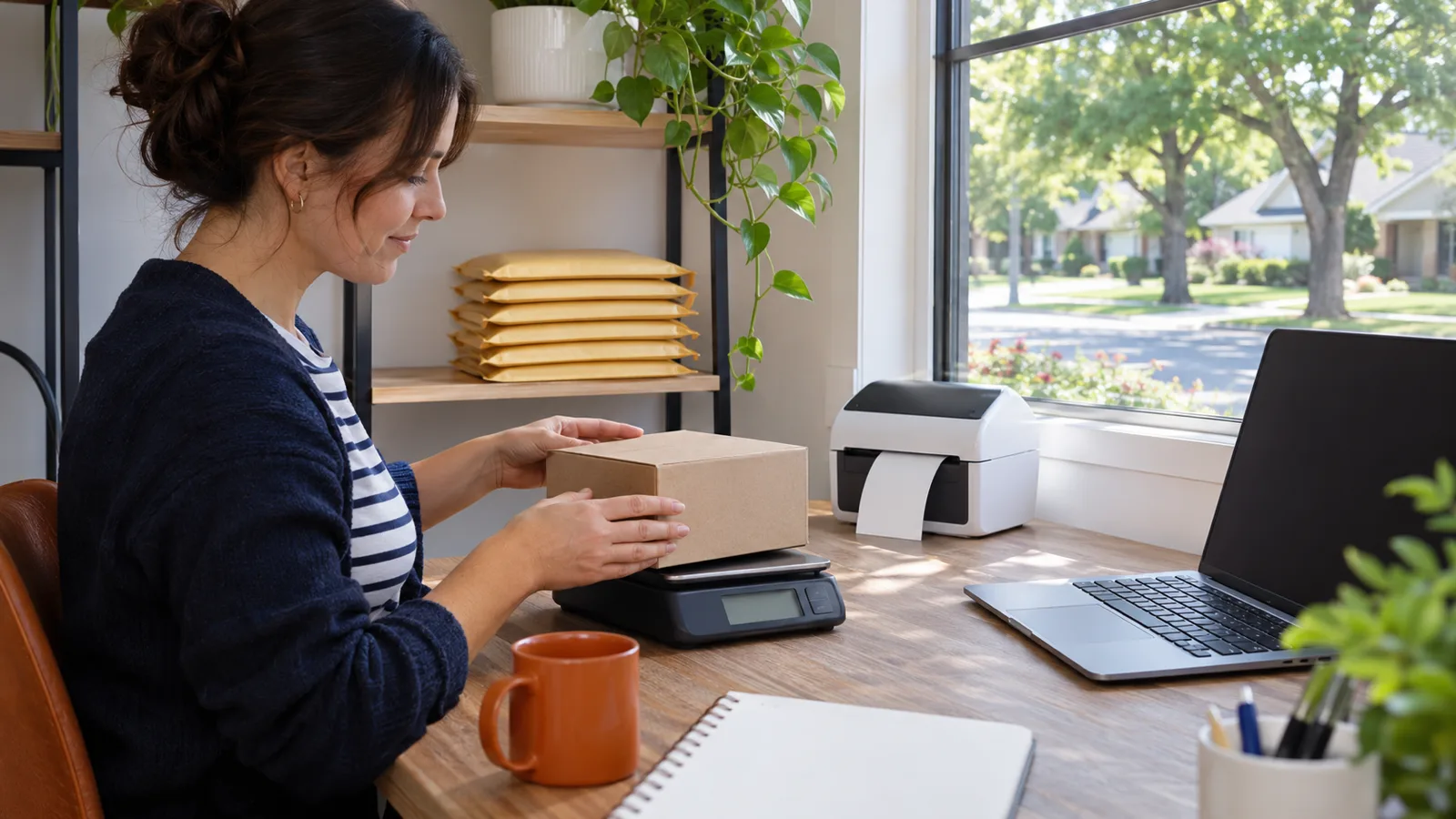
When the pandemic closed offices, a lot of Mississauga residents turned a spare bedroom into a business. A graphic designer in Churchill Meadows started selling art prints. A retired chef in Mineola launched a line of spice blends. A couple in a Square One condo built an online store for phone accessories. All of them quickly discovered that making and selling the product was only half the job. The other half was getting boxes out the door, every single day, without turning home into a mailroom.
Shipping from home has its own set of practical questions that shipping from a warehouse does not. Should you book pickups or drop off? Where do you store supplies? What happens when the courier comes and you are on a video call? Will your building or your neighbours mind?
This guide answers the questions home-based sellers in Mississauga ask most often, with practical tips for keeping shipping efficient, affordable and out of your living room.
Should I book carrier pickups or drop off my parcels?
Both have a place, and many home businesses use a mix.
Drop-offs make sense when
- You ship a few parcels a week and pass a post office or courier counter regularly anyway.
- You want the parcel scanned into the network immediately, with a receipt in hand.
- Pickup fees would add noticeably to your cost per order.
Mississauga has many postal outlets inside pharmacies and grocery stores, and courier drop-off counters at retail locations across the city, from Erin Mills to Malton. Choose one near your regular routes, and check its closing time and when the last daily collection happens, so your parcel actually leaves that day.
Pickups make sense when
- You ship most days and drop-off trips are eating into your working time.
- Your parcels are heavy or bulky.
- You have no car, or parking near drop-off points is a hassle.
Carriers handle pickup charges differently. Some charge per pickup, some include pickups at certain volumes, and some offer scheduled daily pickups for regular shippers. Ask each carrier about the options for your expected volume rather than assuming.
Tips for smooth home pickups
- Book pickups for a consistent time window and have parcels ready before it opens.
- Choose a pickup spot that is easy for the driver: a porch, a side door or a concierge desk.
- Leave clear instructions in the booking, especially for townhouse complexes and condos.
- Keep a log or take a photo of parcels left for pickup, in case one goes missing.
I live in a condo. What do I need to know?
Condo living adds a few extra considerations:
- Check your building's rules. Some condo corporations have rules about running a business from a unit, receiving large deliveries or daily courier traffic. Read your declaration and rules, and speak to management if you are unsure.
- Work with the concierge. If your building has a front desk, ask whether staff will hold outgoing parcels for pickup. Many will, within reason.
- Plan for inbound stock. Bulk supply deliveries may need a loading area or elevator booking, so order in sizes your building can handle.
- Watch your space. Inventory and supplies fill a small unit quickly. Measure before ordering in bulk.
What supplies do I actually need?
It is easy to over-buy supplies at the start. A lean but complete kit for most small product businesses includes:
- Two or three box or mailer sizes that fit most of your products. Standardising saves money and storage space.
- Protective fill suited to your products: kraft paper, air pillows or bubble wrap.
- Quality packing tape and a tape gun.
- A digital scale accurate enough for the weights you ship.
- A thermal label printer once you ship regularly, to stop wrestling with sheet labels and household printer ink.
- Branded touches if they fit your brand: stickers, thank-you cards or tissue paper.
Buy enough to avoid running out mid-week, but not so much that cartons take over the house. Our guides on where to buy shipping supplies and the best shipping label printers can help you choose.
Some carriers offer free branded packaging for specific services. These can work well for small items, but read the conditions, since free packaging is often tied to a particular service level.
How do I set up a packing space at home?
A dedicated space, however small, makes a dramatic difference. Even a folding table in a corner of the basement works if it is set up properly:
- Keep finished products on shelves, in labelled bins, so you can pick quickly and see what is running low.
- Arrange supplies in the order you use them: box, product, fill, insert, tape, label.
- Put the scale and label printer within arm's reach.
- Leave a clear spot for finished parcels waiting for pickup or drop-off.
- Keep products away from heat, humidity and pets, especially food, cosmetics and paper goods.
How can I keep shipping costs down?
- Weigh and measure every product once in its packaging, so shipping charged at checkout matches what you pay.
- Right-size your boxes to avoid dimensional weight charges. Our article on how package dimensions impact shipping prices explains why.
- Compare carriers. One carrier may be cheaper for small flat items and another for heavier boxes.
- Look into small business programs. Several carriers offer discounts or rate programs for small businesses that sign up.
- Use a multi-carrier shipping platform to compare rates and print labels in one place, rather than defaulting to retail counter prices.
Are there any rules for running a shipping business from home?
A few practical points are worth checking, though none is complicated:
- Municipal rules: the City of Mississauga has zoning rules about home-based businesses. Most small online sellers operate without issue, but check if you plan to have staff, customers visiting or significant delivery traffic.
- Insurance: a standard home insurance policy may not cover business inventory or equipment. Talk to your insurer about whether you need additional coverage.
- Sales tax: once your taxable sales pass the small supplier threshold set by the Canada Revenue Agency, you will need to register for and collect HST. Speak to an accountant about when that applies.
- Restricted products: some items, such as aerosols, lithium batteries, perfumes and certain liquids, have shipping restrictions or dangerous goods rules. Check carrier rules before listing them.
What about receiving inventory at home?
Shipping out is only half of it. Many home-based sellers also receive inventory: cartons of product from a manufacturer, rolls of fabric, jars and lids, or printed boxes. A few tips keep inbound deliveries from becoming a headache:
- Know the size of what is coming. A supplier's "one pallet" can be well over a metre tall and far too heavy to move by hand. Ask for carton counts and weights before you order.
- Ask for palletised freight to be broken down or delivered with a liftgate if you have no loading dock, which is almost certain at home. Residential freight deliveries usually cost extra, so factor it in.
- Be home, or arrange a safe spot. Freight drivers generally need someone to sign, and won't leave pallets unattended on a driveway.
- Count and inspect on arrival. Note damage on the delivery receipt before you sign. It is much harder to claim later.
- Consider a shared or rented space for bulk stock. Some sellers keep most inventory in a small storage unit or with a fulfillment partner, and keep only a week or two of stock at home.
How do I handle returns from home?
Returns are part of selling online, even for small shops. Decide your policy before you need it: how many days customers have, who pays return shipping and whether you offer refunds or exchanges. Ask customers to contact you before sending anything back, so you can provide a prepaid label if appropriate and know what to expect. When returns arrive, inspect them promptly, restock what is sellable and record what is not. A simple spreadsheet is fine at this stage; what matters is that returned items do not pile up in a corner, unprocessed and forgotten.
A simple daily shipping routine
Consistency is what keeps home shipping from feeling chaotic. A routine might look like this:
- Morning: check overnight orders and print labels in one batch.
- Pick and pack all orders in one session.
- Mark orders as shipped so customers receive tracking emails.
- Midday: hand parcels to the scheduled pickup, or drop them off on your way out.
- End of week: restock supplies and check inventory levels.
When does it make sense to stop shipping from home?
Home shipping works well until it does not. Common signs include parcels taking over shared living space, spending more time packing than growing the business, missing pickups or shipping late during busy weeks, and family members starting to ask when the basement will be theirs again. At that point, a small business can either rent a unit or work with a fulfillment partner that stores stock and ships orders on its behalf. Our explainer on what a 3PL does for an online business walks through that option, and our guide to home business shipping in Churchill Meadows looks at the same decision from one west-end neighbourhood's point of view.
How ShipCarte supports home-based sellers
ShipCarte helps small businesses in Mississauga and across the GTA at every stage. Our shipping platform lets you compare carrier rates and print labels from home, and our small parcel shipping service covers everyday orders. When you are ready to hand off packing altogether, our e-commerce fulfillment team can take it from there.
Keep your home a home
Shipping from home can be efficient and affordable with a little structure: the right pickup or drop-off habit, a lean set of supplies and a dedicated packing space. If you would like help comparing your shipping options or planning your next step, request a quote or book a consultation with ShipCarte.