
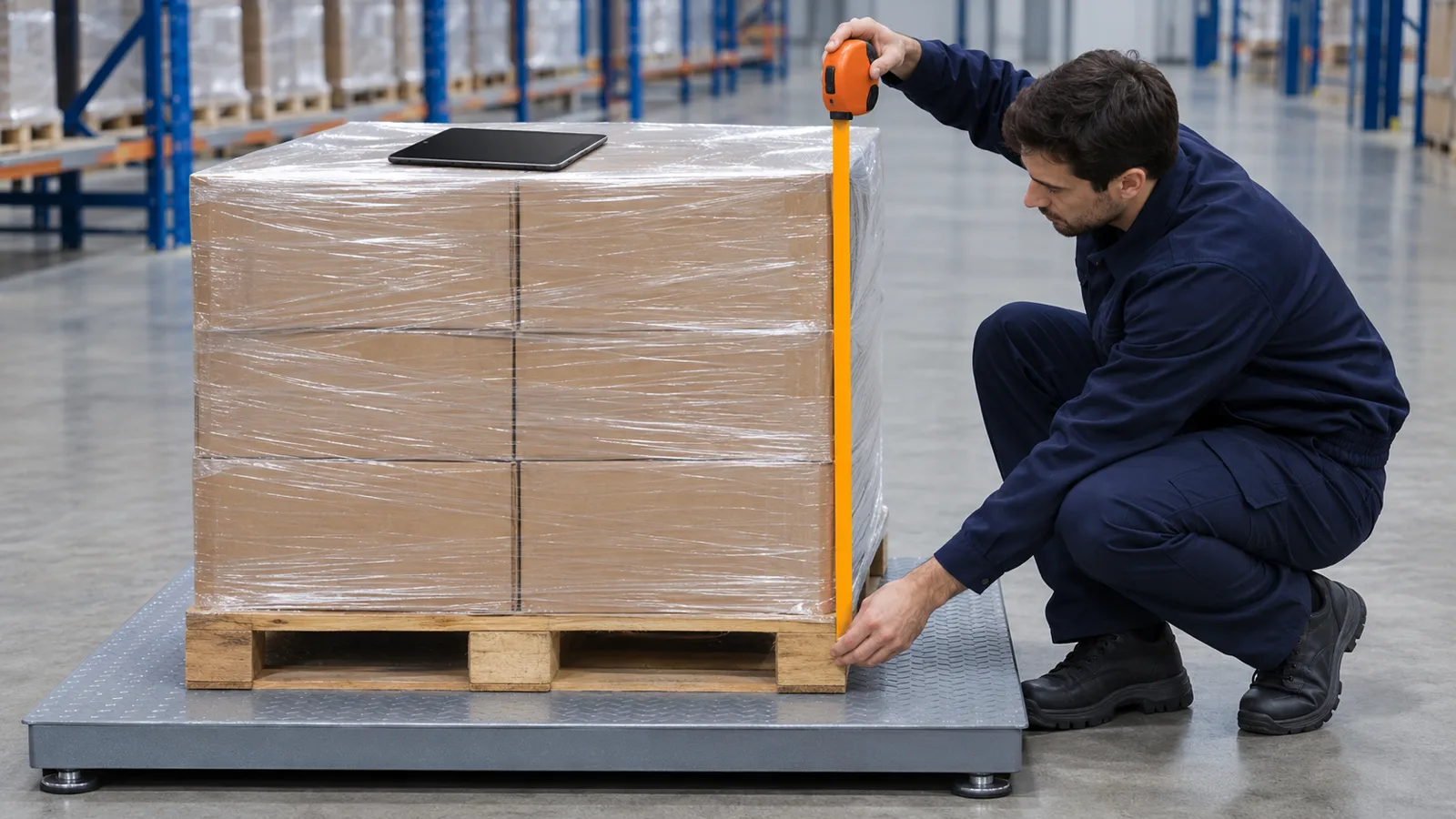
A furniture maker in Quebec books three pallets to a customer in Edmonton based on an online quote that looked reasonable. The invoice arrives a few weeks later, noticeably higher. The pallets were taller than the dimensions entered, the delivery address turned out to be a home-based business with no dock, and the driver had to wait while the customer found someone to help unload. None of those details were wrong on purpose. They just were not on the quote request.
This pattern repeats all over Canada. A freight quote is only as accurate as the information behind it, and carriers price what they are told, then bill what they actually find. The gap between the two is where re-weighs, re-class charges and surprise accessorials come from. The good news is that most of that gap is in your control.
This article breaks down what carriers need from you to give an accurate LTL or truckload quote, why each detail matters, and how to build a simple quote request that you can reuse every time you ship.
Why freight quotes change after pickup
Before getting into the checklist, it helps to understand how carriers verify shipments. Most LTL carriers in Canada run freight through terminals, and many of those terminals have equipment that measures and weighs pallets automatically as they move across the dock. If the measured dimensions or weight differ from what was on the bill of lading, the carrier adjusts the charge. Drivers also note conditions at pickup and delivery, such as the lack of a dock or a long wait, and those notes become accessorial charges.
So a quote is a starting point based on your description. An accurate description produces an invoice that matches the quote. An optimistic one produces adjustments.
The ten details carriers need
1. Full pickup and delivery addresses, including postal codes
Postal codes determine the lane, the terminals involved, and whether a location is in a carrier's direct service area or requires an interline partner. A shipment from Mississauga to downtown Vancouver prices differently from one going to a rural address in the BC Interior, even though both are in the same province. Provide full addresses, not just city names.
2. Accurate dimensions of every handling unit
Give the length, width and height of each pallet or crate, including the pallet itself. Height is the dimension most often underestimated because people measure the product and forget the 5 to 6 inches the pallet adds. If pallets cannot be stacked, say so, because a carrier cannot put anything on top of them and that affects how much trailer space they use.
3. Actual weight
Weigh the freight on a scale rather than estimating from product specs. Include pallet, packaging and wrap. Estimated weights are one of the most common reasons for invoice adjustments.
4. Number and type of handling units
Tell the carrier how many pallets, skids, crates, drums or loose cartons are in the shipment. Loose cartons are handled differently from palletised freight and are more prone to damage and loss.
5. Description of the commodity
What is it? Carriers need to know whether goods are fragile, high value, temperature sensitive, regulated as dangerous goods, or unusually shaped. For shipments to the United States, a commodity description also helps determine freight class.
6. Stackability and orientation
Can other freight be placed on top? Does the freight need to stay upright? These details affect space and handling and help prevent damage claims later.
7. Location type at both ends
A commercial business with a dock and regular hours is the default. Anything else should be flagged:
- Residential addresses, including home-based businesses
- Locations without a loading dock (liftgate needed)
- Limited-access sites such as farms, construction sites, schools, military bases, mines, remote work camps and some retail malls
- Trade show venues, which often have strict marshalling rules
- Locations that require an appointment or have narrow receiving windows
8. Special services
Inside delivery, tailgate-only delivery, notification before delivery, protective service from freezing in winter, temperature control, or dangerous goods handling should all be mentioned up front. Protection from freezing is especially relevant when shipping liquids or sensitive goods across the Prairies or northern Ontario in winter.
9. Pickup timing and required delivery date
Standard LTL transit times vary by lane. If you need delivery by a specific date, ask about guaranteed or expedited options. A rushed shipment booked as standard and then upgraded costs more than one quoted correctly from the start.
10. Value and insurance needs
Carrier liability is generally limited unless you declare a higher value. If the goods are worth a lot per kilogram, discuss declared value or cargo insurance during quoting. Our post on freight insurance covers the options.
A quick comparison: vague versus complete quote requests
Here is how the same shipment looks when described two different ways.
Vague request: "Two skids, about 800 pounds, Toronto to Halifax, need a price."
Complete request: "Two 48 x 40 inch pallets, 62 inches high including pallet, 410 and 385 pounds respectively, total 795 pounds. Boxed kitchen cabinet hardware, not fragile, not dangerous goods, stackable. Pickup from a commercial warehouse in Toronto with a dock, Monday to Friday 8 a.m. to 4 p.m. Delivery to a retail store in Halifax with no dock, liftgate required, delivery appointment required. Ready for pickup Thursday. Needs to arrive within the standard transit time. Declared value requested."
The first request will get you a number. The second will get you the right number. It also lets you compare quotes from different carriers fairly, because each one is pricing the same thing.
Mistakes that inflate freight bills
- Rounding dimensions down. If a pallet is 52 inches high, do not call it 48. The terminal scanner will not round in your favour.
- Overhang. Product hanging over the edges of a pallet increases its footprint and invites damage. Build pallets so cartons stay within the deck.
- Forgetting the delivery conditions. Many accessorial charges come from delivery details that only the consignee knew. Ask your customer before you book.
- Booking the wrong mode. A shipment that would fit neatly in a dedicated truck may cost more in LTL once linear foot or cube rules kick in. If you are shipping large volumes, ask for both LTL and volume or truckload pricing.
- Ignoring the season. Winter weather in many parts of Canada can slow transit, and some regions have seasonal road restrictions in spring that affect capacity. Build that into your expectations.
- Using poor packaging. Weak pallets and loose wrap lead to damage, rework and claims. Freight that arrives in good shape is cheaper over time even if the packaging costs a little more.
How to compare quotes fairly
When you collect quotes from several carriers, check that each one includes the same things. Look for:
- The base rate and fuel surcharge, shown separately or together
- Accessorials you asked for, listed individually
- Transit time in business days, and whether it is guaranteed
- The carrier's liability coverage and declared value cost
- Whether the carrier serves both ends directly or uses an interline partner
- Quote validity period
The cheapest quote is not always the best value. A carrier that serves your destination directly may deliver faster and with less handling than one that hands freight off to a partner partway through the trip.
Domestic versus cross-border quotes
Quoting freight to the United States adds a few more requirements. Carriers will ask for freight class or enough information to determine it, and you will need to know who is handling customs on both sides of the border. Shipments leaving Canada need the right export documentation, and the US side requires advance information so the truck can clear. Make sure the commercial invoice, customs broker details and any NAFTA certificate of origin are ready before pickup. Delays at the border are a common source of unplanned charges. Our cross-border shipping page explains how ShipCarte supports these moves.
Tell carriers about your volume, not just this shipment
Spot quotes for one-off shipments are priced on the day, based on the carrier's capacity in that lane. If you ship regularly, carriers can often offer more consistent pricing, but only if they understand the pattern. When you request quotes, it helps to share:
- How often you ship and roughly how many pallets per week or month
- Your most common lanes, for example Ontario to Western Canada or Quebec to the Maritimes
- Seasonal peaks, such as heavier shipping before the holidays or during spring planting
- Whether your freight is consistent in size and weight or varies widely
Carriers value freight that fits their networks. A steady flow of well-packaged pallets from a dock-equipped warehouse into a lane where they need backhaul freight is attractive business, and that can show up in the rates you are offered.
Build a reusable quote template
If you ship regularly, create a simple quote template your team fills out for every shipment. Include fields for every item in the checklist above and make the consignee details mandatory. Over time, keep a library of your regular pickup and delivery locations with notes on docks, hours and access. That one step eliminates many of the surprises that come with occasional shipping.
Better still, use a platform that stores this information for you. ShipCarte's shipping platform lets you enter shipment details once, compare rates from multiple carriers, and book without retyping addresses or dimensions. Your history becomes a record you can use to spot patterns in costs or recurring accessorials.
When the quote is right but the shipment is complex
Some shipments are simply hard to quote: mixed loads with different handling needs, multi-stop deliveries, or projects that need warehousing before final delivery. In those cases, a single conversation with a logistics partner who can see the whole picture is often faster than collecting a dozen online quotes. ShipCarte's carrier management team can look at the full scope, recommend the right mode, and coordinate with carriers on your behalf. For broader context on choosing between options, read our guide on choosing the right freight solutions.
Get a quote that matches the invoice
Accurate freight quotes in Canada come down to accurate information: real dimensions, real weights, and an honest picture of the pickup and delivery sites. Take the time to gather those details and you will spend far less time disputing invoices. When you are ready, request a freight quote from ShipCarte with your shipment details and we will match it with the right carrier and service for your lane.