
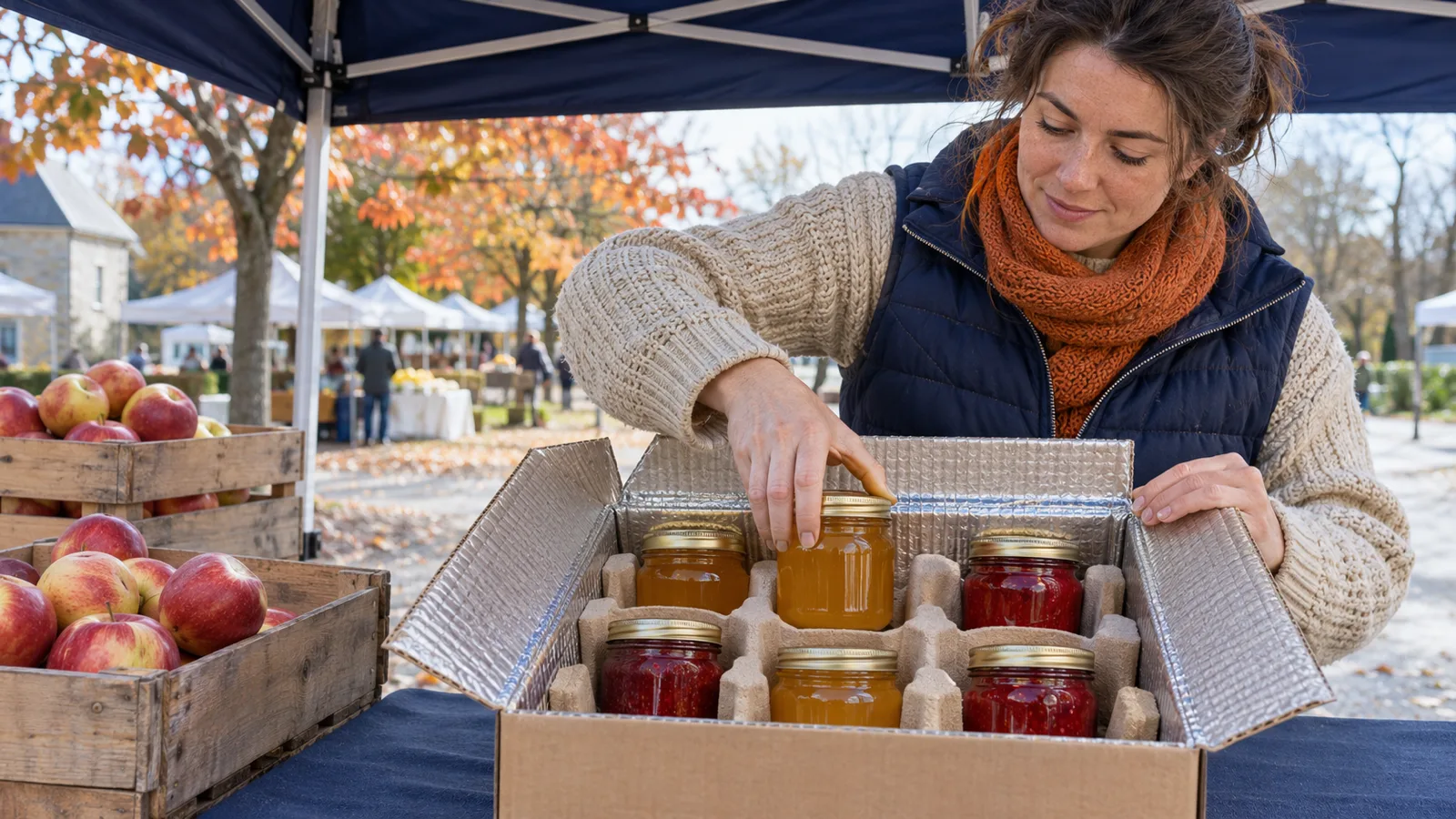
For many small food producers in Canada, the farmers' market is the business. Saturday mornings at the stall are where customers taste the new hot sauce, buy three jars of jam, and come back every week for bread or honey. But a market season is short, a rainy Saturday can wipe out a week's sales, and loyal customers move away or simply cannot make it every week. Sooner or later, a lot of producers find themselves asking a question they have put off for years: should we sell online and ship?
Selling food online opens up customers far beyond your local market. Someone in Edmonton who tasted your maple butter on a trip to Quebec can order it again. A family in Halifax can subscribe to your monthly tea blend. But food is one of the more complicated categories to ship. It is regulated, it can spoil, it can break, and it has to arrive in a condition you would be proud to hand across a market table.
This roadmap walks through the move from market stall to online store in five phases, from checking the rules to choosing how you will ship.
Phase 1: Check Which Rules Apply to You
Food rules in Canada operate at both the federal and provincial levels, and the distinction matters as soon as you start shipping.
Selling Within Your Province
Food sold only within a province is generally regulated by that province and, in some cases, the local public health unit. Many farmers' market vendors operate under provincial or municipal rules that may be quite different from federal ones, and some products allowed at a market stall may have conditions or exemptions that apply specifically to market sales. Moving to online sales within your province may change what applies, so check with your provincial agriculture ministry or local health authority.
Shipping to Other Provinces
Once you send food across provincial borders, federal rules come into play. The Safe Food for Canadians Regulations, which came into force in January 2019 and were phased in for different businesses over the following years, require many food businesses that trade interprovincially or import or export to hold a licence from the Canadian Food Inspection Agency, have preventive controls in place, and keep traceability records. Some products, such as meat, have specific requirements about where they can be processed if they are to be sold outside the province. The CFIA website has tools to help you determine whether you need a licence. Take this step seriously before you open orders to the whole country.
Labelling
Prepackaged food sold in Canada generally needs bilingual labelling in English and French, a common name, net quantity, ingredient list, allergen declarations, a dealer name and address, and in many cases a Nutrition Facts table and durable life date. Some exemptions exist for products sold at farmers' markets or roadside stands, but those exemptions may not carry over to online sales. Health Canada has also updated nutrition labelling and list-of-ingredients requirements in recent years, and many foods high in sodium, sugars or saturated fat now need a front-of-package nutrition symbol. If you are reprinting labels for online sales anyway, make sure they follow the current format.
This is not legal advice, and requirements vary by product. A conversation with your provincial food safety office or a food regulatory consultant is a sensible investment before launch.
Phase 2: Sort Your Products by Shipping Difficulty
Not everything on your market table is equally suited to shipping. Sort your products into three groups:
- Shelf-stable and sturdy. Dry goods, spice blends, teas, coffee, honey, maple syrup in tins, crackers, granola, dried fruit. These are the easiest place to start.
- Shelf-stable but fragile. Preserves, pickles, sauces and syrups in glass jars. These ship well with careful packing but need protection against breakage and leaks.
- Perishable. Fresh baked goods, cheese, cured or fresh meat, chocolate in warm months, fresh produce. These need fast transit, insulation and refrigerants, and carry the highest risk and cost.
Many producers launch online with the first group only, add the second once packaging is tested, and only move into perishables once they have the systems and volume to justify the extra cost.
Phase 3: Design Packaging That Survives the Trip
Glass Jars
Jars are the most common breakage problem for food sellers. Use moulded pulp or corrugated dividers so jars cannot touch each other, wrap individually, and make sure lids are tight and sealed with a shrink band or tape. Place each jar in a sealed plastic bag so a single break does not ruin the whole parcel, or the parcels near it in the carrier's truck. Test by packing a box and dropping it from waist height a few times before you start selling.
Temperature-Sensitive Food
Perishables need insulated shippers, such as foam coolers inside corrugated boxes or recyclable insulated liners, plus gel packs or other refrigerants sized for the expected transit time. Dry ice is effective for frozen goods but is regulated as a dangerous good for air transport and has specific packaging and labelling requirements; check carrier rules before using it. Our guides on shipping frozen foods and handling perishable goods go into more detail.
Seasonal Swings
Canada's climate cuts both ways. Summer heat can melt chocolate and spoil cheese, while winter can freeze sauces and crack jars. Plan packaging for both seasons, and consider pausing certain products during heat waves or deep cold rather than risking damaged shipments.
Phase 4: Choose How Orders Will Reach Customers
You do not have to ship everything nationwide from day one. Consider a mix:
- Local pickup. Customers order online and collect at your farm, kitchen or the market. This keeps costs low and is popular with existing customers.
- Local delivery. Delivering yourself or with a local courier within your city or region works well for perishables and bulkier orders.
- Regional shipping. Ground parcel service within your province or neighbouring provinces is often affordable and reasonably fast for shelf-stable goods.
- National shipping. Ship shelf-stable products anywhere in Canada by ground, and perishables only by express services to destinations you can reach within your safe transit window.
When pricing shipping, be realistic. A box of jars is heavy, and insulated shippers with gel packs add weight and volume. Building part of the shipping cost into product prices, offering bundles, or setting a free shipping threshold can help. Our article on economy ground shipping in Canada explains when slower, cheaper services make sense.
Recreating the Market Experience in a Box
At the market, customers meet you, taste samples and hear the story behind each product. Online, the parcel has to do some of that work. Small touches help without adding much cost or weight:
- A short card explaining where the product was grown or made, and by whom.
- Storage and serving suggestions, such as "refrigerate after opening" or a recipe idea, which also reduce complaints about spoiled product.
- A note about which market you sell at, so local customers can find you in person.
- A small sample of another product, chosen so it does not need special packing.
Keep in mind that anything you include should still meet labelling rules if it is a food product in its own right.
When Something Goes Wrong
A broken jar or a melted box of chocolates is disappointing for the customer and costly for you. Decide in advance how you will respond. Many small food businesses simply replace or refund damaged orders quickly, ask for a photo, and use what they learn to improve packaging. Track every incident by product, destination and season. Patterns, such as more breakage on parcels to the Maritimes or more spoilage in July, show you where to adjust packing or delivery options.
Food safety concerns are different from transit damage. If a customer reports illness or a possible contamination issue, take it seriously, keep records, and know how you would contact customers who bought from the same batch. Good lot coding makes that possible.
Phase 5: Plan for Growth
If online sales take off, the kitchen table or back of the barn quickly becomes a bottleneck. Signs you may need more structure include running out of storage space, spending more time packing than producing, struggling to keep track of stock across market and online channels, or wanting to sell to grocery stores or online marketplaces that require specific labelling and shipping standards.
At that point, options include:
- Inventory software that tracks stock across market sales and your online store, so you do not sell what you do not have. Our inventory management tools are one example.
- A fulfillment partner with food handling experience, which can store shelf-stable products and ship orders on your behalf.
- Temperature-controlled storage and fulfillment for perishable lines, through a provider offering food and beverage logistics or cold storage.
- Pallet shipping to retailers and distributors, once wholesale becomes part of the mix.
A Pre-Launch Checklist
Before you open your online store to orders, confirm the following:
- You know which provincial and federal rules apply to each product and each destination.
- Your labels meet requirements for the way you are selling, including bilingual text and allergens.
- Packaging for each product has been tested with drop tests and, for perishables, timed temperature tests.
- Your website states clearly which products ship where, expected delivery times and how damaged parcels are handled.
- You have a process for recording lot numbers or production dates, so you can trace and recall product if needed.
- Shipping prices cover your actual costs, including packaging and refrigerants.
Bring Your Market Online With Support
Moving from a market stall to an online store is a big step, but it can open your products to customers across Canada. ShipCarte supports food and beverage businesses with shipping, storage and fulfillment, including temperature-controlled options. Learn more about our work in the food and beverage industry, or schedule a consultation to talk about your products.