
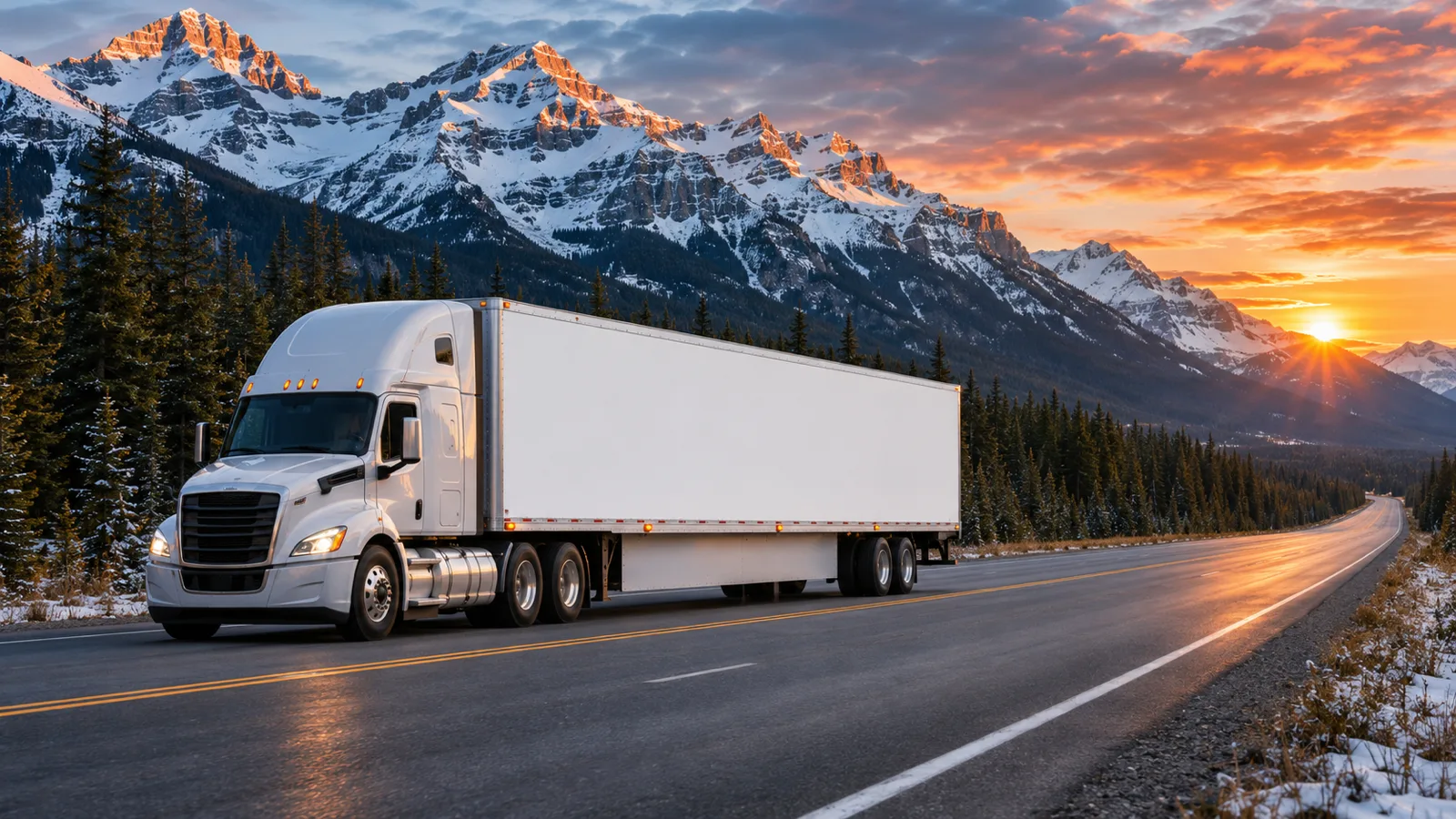
Most Canadian ecommerce and wholesale businesses start with one warehouse, and for most of them it sits in Ontario or Quebec. That makes sense: the Quebec City to Windsor corridor holds a large share of the country's population, and a single facility near Toronto or Montreal can reach much of it in a day or two. The trouble starts when the business grows in the West. Orders from Calgary, Edmonton, Vancouver and the Okanagan pile up, and each one rides a truck across the Canadian Shield and the Prairies for days before it arrives.
Customers in British Columbia and Alberta notice. They see "ships in one business day" and then wait about a week. They compare that with retailers who have stock in the region. Meanwhile, the finance team notices that parcel costs to the West are noticeably higher than to the East, and that winter storms on the Trans-Canada Highway can add days to transit with no warning.
At some point, every growing Canadian brand asks the question: should we put inventory in a second warehouse out West? This article walks through how to answer it, what the trade-offs look like and how to start without betting the business.
The geography behind the question
Canada is unusual among large markets because its population is strung out in a long, thin band along the US border, with large gaps between regional clusters. Toronto to Winnipeg is roughly two thousand kilometres of highway, much of it through Northern Ontario. Winnipeg to Calgary is another long stretch across the Prairies, and Calgary to Vancouver crosses the Rocky Mountains and the Coast Mountains, where mountain passes can close in winter.
For a parcel, that distance means a ground service from the Greater Toronto Area to Vancouver commonly takes around a week, depending on the carrier and conditions, while air services are much more expensive. Freight moves the same way: by truck along Highway 17 and the Trans-Canada, or by intermodal rail on the CN and CPR networks, with terminals in the major cities.
A western warehouse, typically in the Calgary or Edmonton area or in the Lower Mainland around Vancouver, changes that equation. Stock arrives in bulk by truckload or rail, and individual orders travel only a short distance to customers in the region.
What a second warehouse gets you
- Faster delivery in the West. Western customers move from about a week to one or two days for many destinations, which can improve conversion and repeat purchase rates.
- Lower parcel costs per order. Shipping zones are based on distance. Shipping a parcel across Alberta is usually cheaper than shipping it from Ontario.
- Freight efficiency. Moving stock West in full pallets or full truckloads is often cheaper per unit than moving it one parcel at a time.
- Resilience. If one warehouse is disrupted by weather, a labour issue or a systems problem, the other can keep shipping.
- Better access to Pacific imports. Goods arriving through the ports of Vancouver or Prince Rupert can be received in the West and only the eastern share sent across the country.
What it costs you
A second location is not free, and the costs are easy to underestimate:
- More total inventory. Each location needs its own safety stock. Splitting the same sales across two buildings almost always requires holding more units in total, which ties up cash.
- Transfer freight. Replenishing the western warehouse means paying for LTL freight or full truckload moves across the country.
- Split shipments. If a customer orders two items and only one is in the West, you either ship from both warehouses and pay for two parcels, or ship everything from the East and lose the speed benefit.
- Fixed costs and management time. Account fees, systems, receiving and reporting all multiply.
- Forecasting complexity. You now need to predict not just how much will sell, but where.
Signals that a western location may pay off
There is no single threshold that applies to every business, but these signals suggest it is time to run the numbers seriously:
- A meaningful share of orders ship west of Ontario. If British Columbia, Alberta, Saskatchewan and Manitoba together represent a substantial portion of your orders, the savings start to add up.
- Your catalogue is concentrated. If a relatively small number of SKUs make up most of your sales, you can stock just those in the West and keep the long tail in one place.
- Products are heavy or bulky. The bigger the parcel, the more the distance-based shipping cost hurts and the more a western location saves.
- Western customers complain about speed, or conversion rates from western provinces trail those from Ontario and Quebec.
- You import through the West Coast. If containers land in Vancouver and are trucked or railed to Ontario before many of the goods are shipped back west, there is waste in the network.
- You have wholesale or retail accounts out West that need regular pallet deliveries.
How to run the numbers
A simple model can tell you a lot. Start with the last six to twelve months of order data and work through these steps:
- Group orders by destination province or region.
- For western orders, compare what you paid to ship them from your current warehouse with what the same parcels would cost from a western location. Carriers or your fulfillment partner can provide rate estimates.
- Estimate the freight cost to move the equivalent stock West in bulk, per unit.
- Estimate additional storage, account and handling fees for the second location.
- Estimate the extra safety stock you would need and the carrying cost of that inventory.
- Estimate how many orders would still need to ship from the East because of stock-outs or split items.
If parcel savings comfortably exceed transfer freight plus extra fees and carrying costs, the case is strong on cost alone. If they roughly break even, the decision rests on how much you value faster delivery. Reporting and analytics that break down orders, costs and transit times by region make this exercise much easier.
A worked scenario
Consider a hypothetical home goods brand with one warehouse near Toronto. Its western customers are growing, and it sells a mix of small accessories and larger, heavier items. After looking at a year of orders, the team finds that most western demand is concentrated in a few dozen SKUs, mostly the heavier products, while the small accessories sell evenly across the country.
The brand decides to stock only those western best sellers in Calgary, replenishing every few weeks by LTL, and to keep the full catalogue in Ontario. Orders that contain only western-stocked items ship from Calgary; mixed orders ship from Ontario as one parcel. The heavier items now travel a much shorter distance, which is where the parcel savings are largest, and the small accessories that are cheap to ship from anywhere stay centralized.
This kind of partial split is often a better first step than mirroring the entire catalogue in two places.
Making a two-warehouse network work day to day
Order routing
Your systems need to decide automatically which warehouse fulfils each order, based on the customer's location and stock availability. An order management system can apply rules such as "ship from the nearest location that has every item; otherwise ship from the primary location."
Inventory visibility
You need a single view of stock across both buildings, including units in transit between them. Without it, you will oversell in one place while stock sits idle in the other. Centralized inventory management software keeps the numbers in sync with your sales channels.
Replenishment rhythm
Set a regular replenishment cycle and stick to it. Transfers that are too infrequent cause stock-outs in the West; transfers that are too frequent waste freight on partial loads. Watch for winter disruptions on the mountain passes and Northern Ontario highways and build a little extra lead time into the cold months.
Consistent processes
Packaging, inserts, labelling and carrier services should look the same to the customer regardless of which warehouse shipped the order. Working with one fulfillment provider that operates in both regions, or with providers using the same systems, makes that easier.
What about the Atlantic provinces?
The same logic applies on the East Coast, though the numbers are usually smaller. Atlantic Canada has a smaller population spread across four provinces, and Newfoundland requires a ferry crossing or air service. For most brands, serving the Maritimes from Ontario or Quebec remains the practical choice, with a separate location justified only when volume or wholesale commitments in the region are substantial.
Starting small
You do not have to sign a lease in Calgary to test a western location. Many businesses begin by placing a limited assortment with a 3PL that already operates there, paying only for the storage and orders used. If the results justify it, the assortment grows. If not, the stock can be pulled back east with little long-term commitment. Distribution warehousing on a shared basis is designed for exactly this kind of experiment. For more on adjusting inventory levels through the year, see our article on the role of a 3PL in seasonal inventory management.
Plan your Canadian network with confidence
A second warehouse can be one of the best investments a growing Canadian brand makes, or an expensive distraction, depending on where your customers are and what you sell. ShipCarte helps businesses across Canada analyse order data, plan distribution and move inventory between regions. Schedule a consultation and we will help you work out whether splitting your inventory makes sense for you, or request a quote to compare costs.