
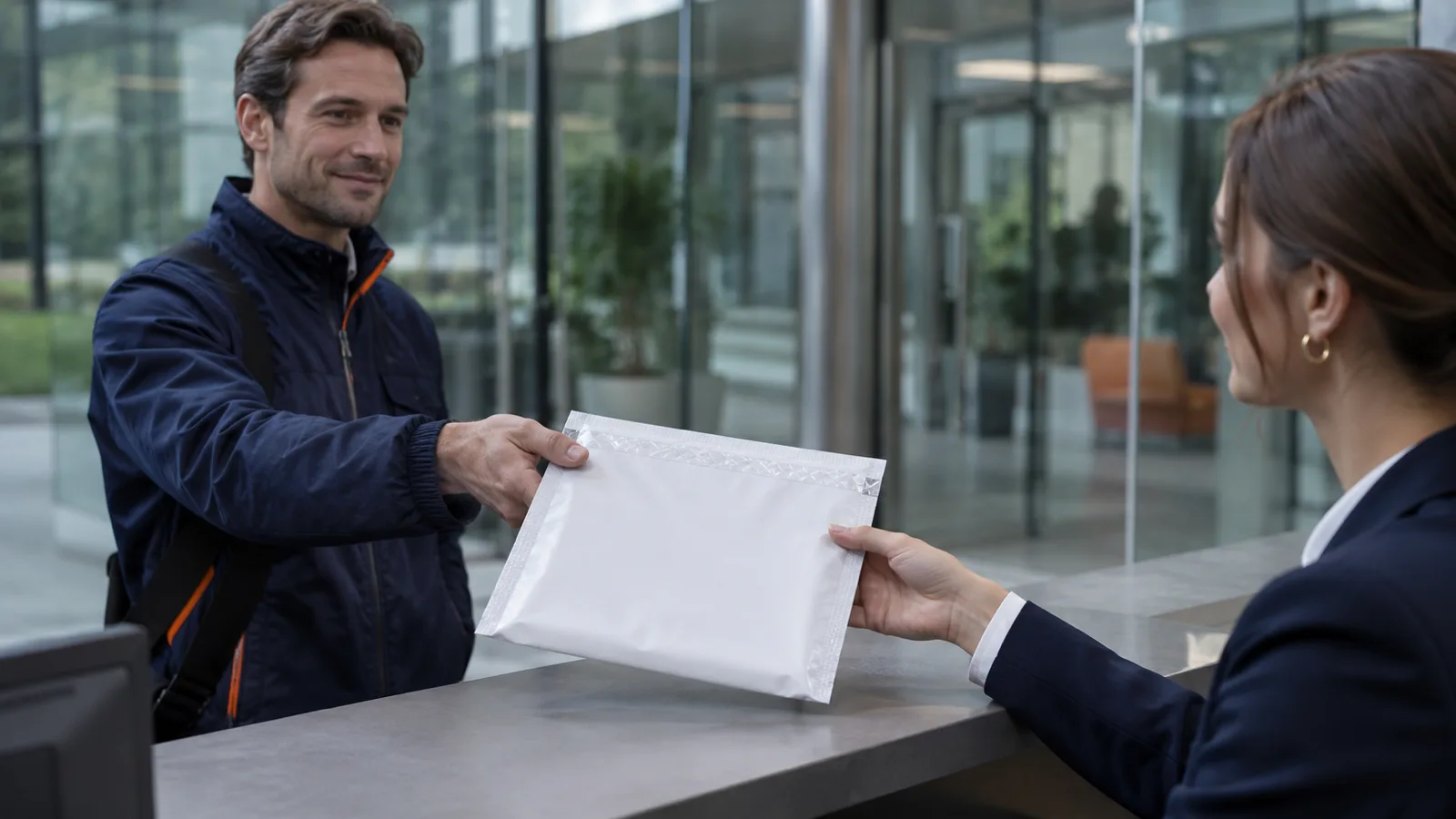
It's 3:40 on a Thursday afternoon at a law office near Square One. A set of closing documents for a commercial real estate deal has to be signed by a client in Burlington and back on a lawyer's desk in downtown Toronto before the end of the next business day. An email attachment won't do, because the lender requires wet-ink signatures. The paralegal on the file needs to know three things: who will carry the envelope, how quickly it will get there, and how she'll prove, if asked, exactly who handled it along the way.
Most of the world has moved to digital documents, but plenty of legal, financial and corporate work still depends on paper. Original wills, notarized affidavits, share certificates, loan agreements, court filings, cheques, payroll records and sealed tender submissions all routinely travel in envelopes. When they go missing or arrive late, the consequences range from embarrassing to genuinely costly.
This guide explains how secure document delivery works in Mississauga, what separates a reliable document courier from an ordinary parcel service, and how offices can set up a process that protects both the documents and the people responsible for them.
Why Document Delivery Is Different From Parcel Shipping
A box of T-shirts that arrives a day late is an inconvenience. An envelope of signed closing documents that arrives a day late can delay a transaction, trigger penalty clauses or put a filing deadline at risk. Document delivery also raises issues that most parcel shipments don't:
- Confidentiality. Contents often include personal information, financial data or privileged communications. Canadian privacy law, including PIPEDA for many private-sector organizations, expects reasonable safeguards for personal information, and professional regulators set their own expectations for lawyers, accountants and financial advisors.
- Proof of delivery. It's often not enough to know a package was "delivered." You may need a named recipient's signature, a time stamp and sometimes a photo.
- Time sensitivity. Court filing deadlines, closing dates and tender submission times are fixed. Delivery windows matter more than the price difference between services.
- Irreplaceability. Many documents are originals. A lost original will or share certificate can take considerable time and expense to replace, if it can be replaced at all.
Types of Document Delivery Service
Direct, dedicated delivery
A single courier picks up your envelope and drives it straight to the recipient, with no stops or sortation in between. This is the most secure and fastest option for local and regional runs, such as Mississauga to Toronto's financial district, the courthouses in Brampton or Milton, or a client's office in Oakville. It's also typically the most expensive, because the driver is dedicated to your job.
Same-day rush
Similar to direct delivery but sometimes consolidated with a small number of other urgent jobs heading in the same direction. Turnaround is usually within a few hours, depending on distance and traffic on the 401, 403 or QEW.
Same-day regular or scheduled routes
For offices that send documents regularly between the same locations, such as a branch office in Meadowvale and a head office downtown, scheduled daily runs can be more cost-effective than booking individual trips.
Overnight courier
For documents going farther afield, such as Ottawa, Montreal or Vancouver, national overnight services with signature options are common. Envelopes travel through the carrier's sortation network, which is reliable but involves more handoffs than a direct run. Choosing an early morning delivery option can help when a meeting or filing depends on it.
Cross-border document shipping
Documents sent to the U.S. are generally simpler than goods, but carriers still require basic declarations, and transit times can vary. For anything urgent across the border, build in a buffer.
What Secure Handling Looks Like
When people talk about "secure" document delivery, they usually mean a combination of practices that reduce the chance of loss, tampering or misdelivery and that create a record if something does go wrong.
Chain of custody
Every person who handles the envelope is recorded, along with when they received it and when they handed it on. For direct deliveries there may be only two entries: pickup and delivery. For overnight shipments the carrier's scan history serves a similar purpose.
Tamper-evident packaging
Security envelopes with adhesive seals that show visible damage if opened make it obvious whether contents have been accessed. They don't prevent theft, but they do prevent undetected tampering, which is often the bigger concern.
Signature and identity confirmation
Requiring a signature from a named person, rather than anyone at the address, ensures the document reaches the right hands. For especially sensitive deliveries, couriers can be instructed to check identification.
Real-time tracking and notifications
Both sender and recipient benefit from knowing where an envelope is. Status updates at pickup and delivery reduce anxious phone calls and allow quick action if something is delayed. Senders can check shipment status through tools like a tracking page.
Vetted, accountable drivers
Ask how couriers are screened, whether they're employees or contractors, and what happens if a delivery is mishandled. A reputable provider will answer these questions directly. Our article on qualities to look for in a courier company covers this in more depth.
Common Mississauga Document Routes
Mississauga's mix of corporate offices, professional firms and public institutions creates some well-travelled document routes:
- City Centre to Bay Street. Law firms, accountants and corporate head offices around Square One and Hurontario Street regularly exchange documents with Toronto's financial district.
- Airport Corporate Centre and Meadowvale business parks. Corporate offices in these areas send contracts, HR files and financial reports to partners, auditors and regional offices.
- Courthouses. Filings for matters in Peel Region often go to the courthouse in Brampton, while Halton matters may go to Milton, and others to Toronto.
- Real estate closings. Brokerages, lawyers, lenders and clients across Port Credit, Erin Mills, Churchill Meadows and surrounding communities exchange documents around closing dates.
- Healthcare and pharmacy. Clinics and pharmacies sometimes need to send records or prescriptions securely, though many of these have moved to electronic systems.
Rush-hour traffic on the 401, the Gardiner Expressway and the QEW is the biggest variable on these routes. A run that takes thirty minutes at midday can take well over an hour at 5 p.m. Experienced couriers plan around this, and smart senders book early when they can.
A Checklist for Offices That Send Sensitive Documents
Whether you send one envelope a month or a dozen a day, a simple internal process helps:
- Keep a copy or scan of everything sent, unless the document must not be copied.
- Use tamper-evident envelopes for confidential material, and seal them in front of a second staff member for high-value items.
- Record the tracking number, service level and expected delivery time in the client or matter file.
- Specify the named recipient and require their signature where appropriate.
- Confirm delivery with the recipient by phone or email for critical documents, rather than relying solely on the courier's notice.
- Avoid writing sensitive information on the outside of the envelope. A file reference number is usually enough.
- Build buffer time into deadlines, especially in winter and around long weekends.
- Review your courier invoices periodically to spot unexpected surcharges, such as waiting time, after-hours or extra-stop fees, as well as any service failures that may qualify for a credit.
Choosing Between Speed and Cost
Not every envelope needs a dedicated driver. A sensible approach is to match the service to the consequences of delay:
- Critical and local: direct, dedicated delivery. The cost is small compared with the risk.
- Important but not same-day: overnight courier with signature required and an early delivery option.
- Routine and recurring: scheduled routes or standard overnight service.
- Non-sensitive: regular mail or standard parcel services, where appropriate.
Businesses that send a mix of documents and parcels often benefit from consolidating their accounts so that rates, tracking and invoices sit in one place. ShipCarte's carrier management and shipping platform help companies compare services and keep shipment records organized across carriers.
When Documents Are Part of a Larger Shipment
Some businesses ship documents alongside goods: certificates of analysis with a pharmaceutical delivery, compliance paperwork with a medical device, or commercial invoices and bills of lading with a freight shipment. In those cases, the documents need to stay with the goods and be accessible to whoever needs them, whether that's the receiving dock, a customs officer or an inspector. If you handle regulated products, ShipCarte's healthcare distribution services include attention to the paperwork that travels with sensitive shipments. For freight documents, our explainer on the bill of lading is a useful reference.
Frequently Asked Questions
Is a document courier really safer than registered mail?
Both create a delivery record, but they work differently. Registered or signature-required mail travels through a large sortation network alongside everything else, with tracking at key points. A direct courier keeps the envelope in one person's hands from pickup to delivery. For local, time-critical or irreplaceable documents in and around Mississauga, direct delivery generally offers more control. For routine items going long distances, a signature-required overnight service is usually adequate.
Can a courier deliver after business hours?
Many local couriers offer evening and weekend delivery, usually at a premium. Make sure someone authorized will be there to sign, because an unattended after-hours delivery defeats the purpose of a secure service.
What should I do if a document doesn't arrive?
Contact the courier immediately with the tracking or job number, and check the chain of custody record to see where the envelope was last confirmed. Notify the intended recipient and, if personal information is involved, review your organization's privacy breach procedures. Acting quickly gives the best chance of locating the item.
Should I insure document shipments?
Carrier liability for documents is often limited, and the cost of re-creating a document rarely matches its declared value. Insurance can help with some costs, but prevention, through the right service level and good internal processes, matters far more for irreplaceable originals.
Get Your Documents Where They Need to Go
Sensitive documents deserve a process that's as careful as the work that went into them. If your Mississauga office sends contracts, filings or financial records regularly, ShipCarte can help you compare service levels, organize your carrier accounts and keep a clear record of every shipment. Request a quote or schedule a consultation to talk about your delivery needs.