
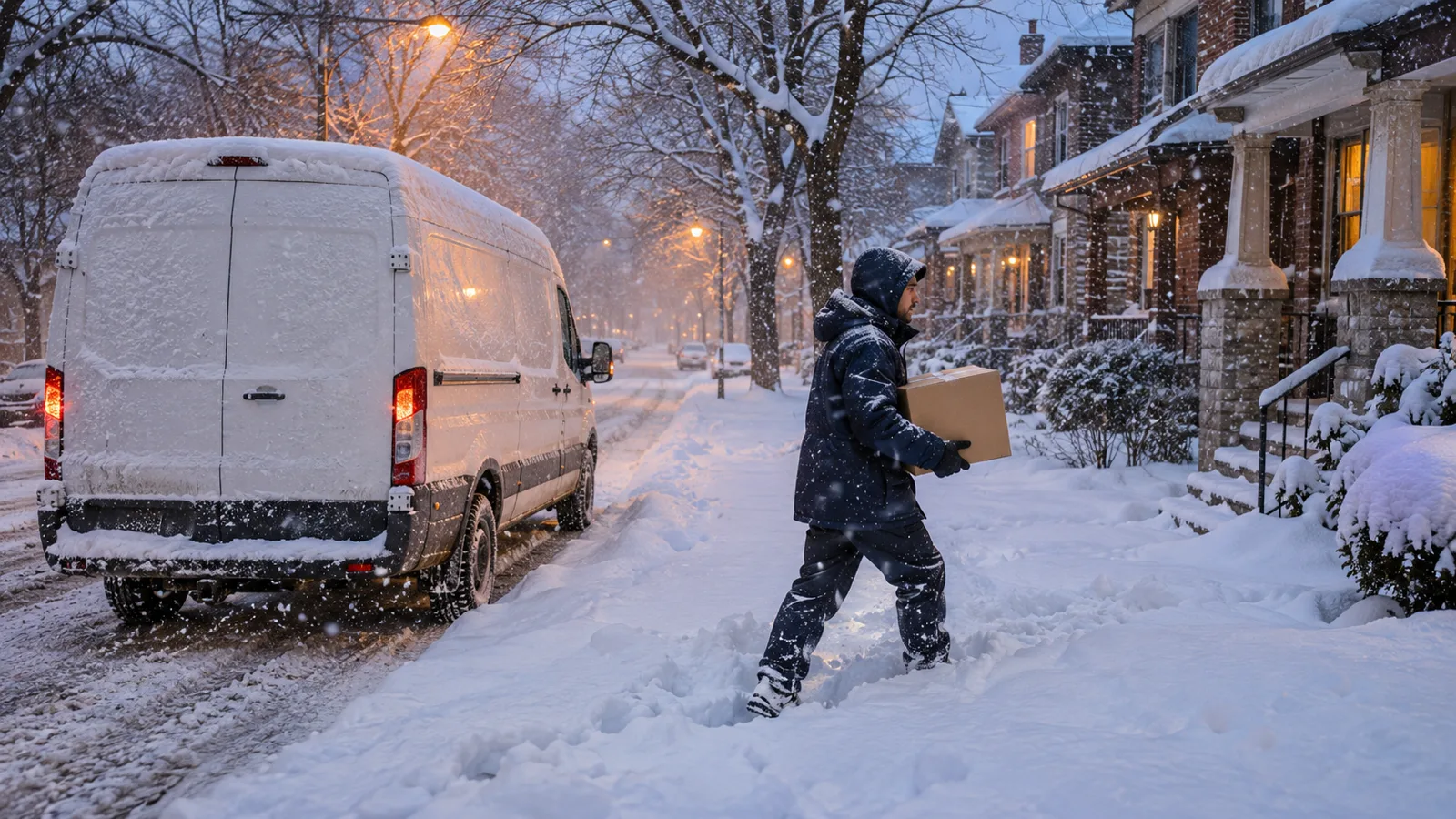
It is August, and planning for snow feels a long way off. But the merchants who sail through a Canadian winter are the ones who build their weather plan in summer, when there is time to write customer messages properly, test tracking alerts and agree on policies with carriers. The ones who wait usually discover their plan in December, at the worst possible time, while a storm closes Highway 401 and the support inbox fills with "where is my order?" emails.
Weather is the single most predictable source of unpredictable delays in Canada. Every region has its own pattern: freezing rain in Ottawa and Montreal, lake-effect squalls around London and Barrie, mountain pass closures in British Columbia, Prairie blizzards and deep cold, and nor'easters that stop ferries and bridges in Atlantic Canada. You cannot control any of it. You can control how ready your systems are and how clearly you talk to customers.
This guide explains the common delivery exceptions carriers use, maps out the weather risks across the country by season, and lays out a communication playbook you can put in place now.
Understanding Delivery Exception Scans
An exception is any event that interrupts the normal path of a parcel. Carriers word them differently, but most fall into a handful of types. Knowing which is which tells you whether to wait, act or contact the customer.
Weather or natural disaster delay
The parcel is safe but cannot move. Linehaul trucks are held, flights are grounded or local delivery routes are suspended. Usually resolves itself once conditions improve. Your job is communication, not action.
Missed connection or delayed in transit
The parcel missed a planned trailer or flight, often because an earlier leg ran late. Common after a storm when networks are catching up. Typically adds a day or two.
Attempted delivery or recipient not available
The driver could not complete delivery. In winter this often happens because driveways and walkways are unsafe, or the driver could not reach a rural property. The parcel may be carded to a pickup location. The customer needs to act, so make sure they know.
Address or access problem
Incorrect address, missing buzzer code or unit number, or a business closed for the day. Requires you or the customer to correct the information.
Damage or temperature exposure
Less often scanned explicitly, but in winter a parcel sitting on a cold trailer or porch can freeze. Liquids, cosmetics, some foods, batteries and plants are all vulnerable. This is a packaging and routing problem as much as a communication one.
A Year of Canadian Weather Risk, Region by Region
Winter gets the attention, but delivery exceptions happen in every season. Mapping the risks by region and month lets you set realistic delivery promises and schedule extra buffer when it is needed.
British Columbia
Coastal BC sees relatively little snow, but when the Lower Mainland does get a storm, the region is less equipped to deal with it than inland cities, and local deliveries can stall for days. Inland, the Coquihalla, the Trans-Canada through Rogers Pass and other mountain routes close periodically for avalanche control, collisions and heavy snow, cutting the main truck lanes between Vancouver and the rest of Canada. Summer brings wildfire risk in the Interior, which in recent years has closed highways and slowed deliveries to affected communities.
The Prairies
Alberta, Saskatchewan and Manitoba face blizzards that close highways with little warning, and extended stretches of extreme cold that strain vehicles and make some goods impossible to ship without protection. In spring, seasonal road restrictions on secondary highways limit truck weights during the thaw, which can affect freight into smaller communities. Flooding is a recurring spring risk along several Prairie rivers.
Ontario
The Highway 401 corridor carries a huge share of the country's freight, so a major storm between Windsor and the Quebec border ripples through national networks. Lake-effect snow off Lake Huron, Georgian Bay and Lake Ontario creates intense, localised squalls. Northern Ontario adds long distances, limited alternate routes and stretches of the Trans-Canada that close in bad weather.
Quebec
Freezing rain is the signature risk, from the Ottawa Valley through Montreal and along the St. Lawrence. Heavy snowfall events can also close roads in the Eastern Townships, the Laurentians and the Gaspé. Spring flooding has affected communities along several rivers in recent years.
Atlantic Canada
Nor'easters and winter storms bring heavy snow, rain and wind. Marine Atlantic ferry crossings to Newfoundland are cancelled in rough seas, and the Confederation Bridge to Prince Edward Island restricts high-sided vehicles in strong winds. Hurricane season in late summer and autumn can also disrupt deliveries. Because many parcels and trucks into the region route through New Brunswick, a storm in Moncton can delay deliveries in all four provinces.
The North
Deliveries to the territories and remote northern communities depend heavily on air freight, winter roads and seasonal sealift. Weather that grounds flights for a few days creates backlogs that can take much longer to clear. Delivery promises to these areas should always carry generous buffers.
The Customer Communication Playbook
Customers are remarkably forgiving about weather. They are much less forgiving about silence. The goal of your playbook is to tell them before they have to ask.
1. Set expectations at checkout
Show estimated delivery dates by region rather than a single national promise. From November through March, add a short line on the cart or shipping page noting that winter weather can affect delivery times in some areas. Avoid promising specific dates for remote addresses during winter.
2. Turn on proactive exception alerts
Your shipping platform or tracking tool should send an email or text when a parcel receives a weather or delay exception, not just when it ships and delivers. If you use branded tracking pages, add a banner for active weather events in specific regions.
3. Write your weather messages now
Draft short, specific templates in English and French for the situations you will face:
- Regional storm affecting deliveries (with the region named)
- Parcel carded to a pickup location because delivery was unsafe
- Temperature-sensitive order held until conditions improve
- Holiday orders at risk of missing a cut-off date
Templates written calmly in August read far better than ones written in a hurry in January.
4. Post a service status update
When a major storm hits, put a notice on your website and social channels. Link to the relevant carrier service alerts. This one step can significantly reduce duplicate tickets.
5. Give support a decision tree
When should an agent reship, offer a discount or simply reassure? Define it ahead of time. For example: reassure for weather delays under a set number of days; offer a goodwill gesture after that; reship only once the carrier confirms loss or damage.
6. Close the loop
When the storm clears and parcels start moving, send a short "your order is on its way again" message to affected customers. It turns a frustrating experience into a reason to trust you.
Operational Steps That Reduce Weather Exceptions
Communication handles the delays you cannot avoid. These operational habits reduce how many you face in the first place:
- Position inventory closer to customers. Shipping to western customers from a western warehouse avoids mountain passes for most orders. Splitting stock between central and western Canada is one of the most effective weather-proofing moves a national brand can make. See our distribution warehousing options.
- Hold freeze-sensitive goods. Pause or reroute liquids and other vulnerable SKUs during extreme cold, or ship them with insulated packaging and faster services. Our guide to shipping temperature-sensitive products covers the packaging side.
- Ship early in the week. Parcels that would otherwise sit in a depot over a weekend are more exposed to cold and storms.
- Use more than one carrier. When one network is backed up in a region, being able to switch helps. That is one of the core benefits of a multi-carrier strategy.
- Move holiday cut-offs earlier. Peak season and winter weather overlap in December. Earlier cut-offs for distant regions reduce disappointed customers.
This Year Is Different
Winter 2020–21 will arrive on top of a parcel network already carrying far more ecommerce volume than usual because of the pandemic. Carriers have been managing capacity carefully, and some have set volume limits for shippers or suspended service guarantees. Combine that with ordinary storms and a busy holiday season, and delivery exceptions are likely to be more frequent than in previous years. That makes the preparation above even more valuable. Our post on preparing for peak season pairs well with this one.
What to Measure
After each winter, review the data so next year's plan is better:
- Exception rate by carrier, region and month
- Average delay added by weather exceptions
- Support tickets per hundred orders during weather events versus normal weeks
- Reshipments and refunds attributed to weather
- Freeze damage claims by SKU
Good reporting and analytics make this review a quick exercise rather than a spreadsheet project.
Get Ready Before the First Storm
Snow, ice and wind are part of doing business in Canada. With inventory in the right places, clear exception alerts and calm, pre-written customer messages, weather becomes an inconvenience instead of a crisis. ShipCarte helps businesses across the country plan carrier mix, inventory placement and customer tracking for every season. Request a quote and start your winter plan while the weather is still warm.