
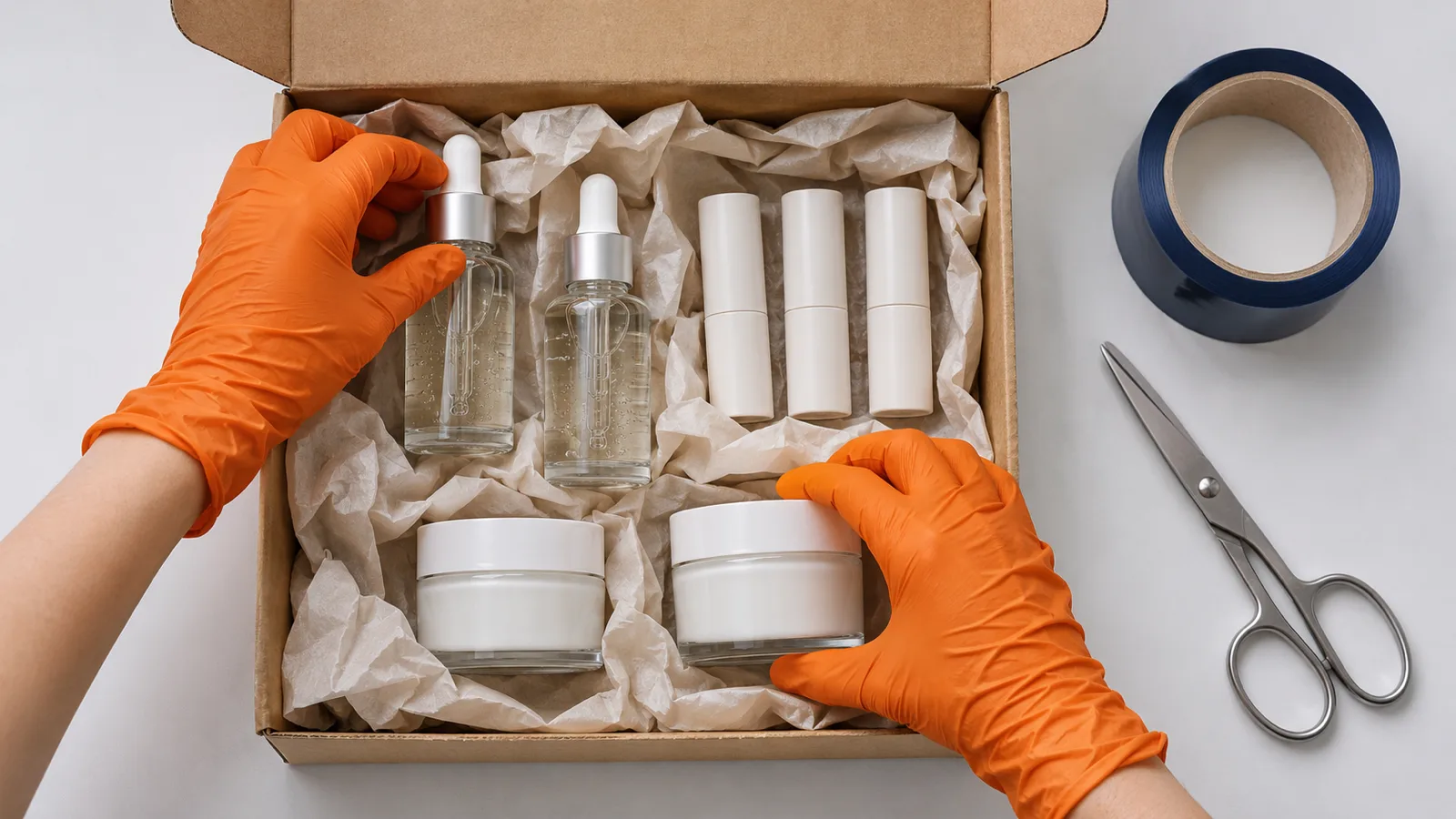
A skincare startup in British Columbia has a hero product, a cleaner ingredient story and a waiting list from its social media following. Its American contract manufacturer has shipped the first run, and the founder is ready to open the online store and start shipping across Canada. Before the first order goes out, though, there are questions to answer: has the product been notified to Health Canada? Is the ingredient list in the right format? Is the label bilingual? Can that nail polish or setting spray even go by air?
Cosmetics are one of the more accessible product categories for new Canadian brands. Unlike natural health products or drugs, they do not need a pre-market licence. But "no licence" does not mean "no rules." Health Canada regulates cosmetics under the Food and Drugs Act and the Cosmetic Regulations, packaging is also covered by consumer labelling laws, and some formulations are classed as dangerous goods for transport.
This guide covers what new and growing beauty brands need to know about notification, labelling and fulfillment when selling cosmetics in Canada.
First, is it actually a cosmetic?
In Canada, a cosmetic is a product used to cleanse, improve or alter the complexion, skin, hair or teeth, including deodorants and perfumes. Makeup, moisturisers without therapeutic claims, shampoo, conditioner, body wash, fragrance, nail polish and most hair styling products are cosmetics.
The classification changes when a product makes a therapeutic claim or contains certain active ingredients. Some examples that are generally regulated as drugs or natural health products instead of cosmetics:
- Sunscreens and moisturisers with an SPF claim
- Antiperspirants (as opposed to deodorants)
- Anti-dandruff shampoos with medicinal ingredients
- Acne treatments
- Fluoride toothpastes
- Products claiming to treat eczema, heal skin or regrow hair
Those products need a Drug Identification Number (DIN) or a Natural Product Number (NPN) before sale. If your marketing copy says your cream "repairs damaged skin barrier," you may have moved out of cosmetics territory without meaning to. Our companion article on shipping natural health products in Canada explains the NPN side.
The Cosmetic Notification Form
Every cosmetic sold in Canada must be notified to Health Canada using the Cosmetic Notification Form (CNF). The key points:
- Timing. The manufacturer or importer must submit the CNF within 10 days after the product is first sold in Canada.
- Content. The form lists the product's ingredients and their concentration ranges, the product's form and intended use, and the company's contact details.
- Updates. If you change the formula, add shades, or stop selling the product, you need to update or notify Health Canada accordingly.
- Who files. If you are importing a product made abroad, make sure someone (you or the manufacturer) has filed a Canadian CNF. A US or EU registration does not count.
Notification is not an approval. Health Canada reviews the information and may contact you if an ingredient is prohibited or restricted, or if the product appears to be a drug.
Check the Cosmetic Ingredient Hotlist
Health Canada maintains the Cosmetic Ingredient Hotlist, a list of substances that are prohibited in cosmetics or restricted to certain concentrations, uses or warning statements. Formulas that are legal in another country can still include something on the Hotlist, so review every ingredient before production rather than after the stock lands in your warehouse. Reformulating or relabelling a full production run is a painful way to learn this.
What goes on a Canadian cosmetic label
Cosmetic labels are governed by the Cosmetic Regulations and by the Consumer Packaging and Labelling Act and its regulations. The main elements are:
- Product identity in English and French, describing what the product is (for example, "face moisturizer / hydratant pour le visage").
- Net quantity in metric units, on the principal display panel.
- Name and address of the dealer, meaning the manufacturer or the Canadian company responsible for the product.
- Ingredient list on the outer label, generally using International Nomenclature of Cosmetic Ingredients (INCI) names, in descending order of concentration, with ingredients under 1% allowed in any order after the rest. Fragrance and flavour can be listed under general terms.
- Directions and warnings where needed for safe use, in English and French. Some products, such as aerosols, also need specific hazard warnings and symbols.
Very small packages, such as lipsticks or sample sachets, have some flexibility; for example, the ingredient list can sometimes appear on a tag, leaflet or outer carton. Quebec's Charter of the French Language also applies to products sold there, which in practice means French text should be at least as prominent as English.
Using a supplier's US label and slapping a sticker on the back is common for initial imports, but stickers can peel, cover required information or look unprofessional. For long-term sales in Canada, design labels that meet Canadian rules from the start.
Shipping cosmetics: the dangerous goods question
Many beauty products contain flammable or pressurised components. That matters both for warehouse storage and for transport, which in Canada is regulated under Transport Canada's Transportation of Dangerous Goods (TDG) rules, with additional rules for air shipments.
- Aerosols such as dry shampoo, hairspray and setting spray are typically regulated as dangerous goods.
- Nail polish and nail polish remover are often flammable liquids.
- Perfumes and colognes with high alcohol content are usually flammable liquids.
- Some hair dyes and peroxide developers may be regulated as oxidisers or corrosives.
Small consumer-sized quantities can often ship by ground under limited quantity provisions, with specific packaging and marking requirements. Air shipping is more restrictive, and some carriers or services will not accept certain items at all. This affects which shipping options you can offer customers in the North, Newfoundland or remote parts of British Columbia, where ground service may be slow or limited.
Your fulfillment partner should flag dangerous goods SKUs in its system so they are packed, marked and routed correctly. See our guide to shipping perfume safely for packing specifics.
Fulfillment practices that suit beauty brands
Batch and shelf-life tracking
Cosmetics typically carry batch codes and, depending on the product, best-before dates or period-after-opening symbols. Tracking stock by batch at receiving makes it possible to rotate inventory properly and respond quickly if a batch has a quality problem.
Temperature awareness
Balms, lipsticks and some creams soften or separate in summer heat; water-based products can freeze in a Canadian winter. Store stock indoors at controlled temperatures and consider seasonal packaging for long transit routes.
Presentation matters
Beauty customers notice packaging. Tissue paper, branded inserts, sample sachets and careful placement are part of the product experience. Kitting and assembly services handle gift sets, holiday bundles and influencer packages, while subscription box fulfillment suits brands running monthly or seasonal boxes.
Leak and breakage prevention
Pump bottles should be locked or taped, droppers sealed in bags, and glass protected with dividers or wraps. A single leaking foundation bottle can ruin every other item in the box.
Returns policy that protects hygiene
Most beauty brands do not resell opened products. Decide in advance which returns can be restocked (sealed, undamaged), which go to destruction, and which might be donated where allowed. A clear returns management process stops opened items from slipping back into sellable stock.
Getting stock into Canada
Brands that manufacture outside the country need to plan the import step as carefully as the launch. The commercial invoice should describe each product clearly ("face moisturizer, 50 mL jars" rather than "skincare"), and your customs broker will need to classify the goods correctly, since tariff treatment varies by product type and origin. Goods that qualify under a trade agreement, such as CUSMA for qualifying North American products or CETA for qualifying European products, may enter at reduced or zero duty if the paperwork supports the claim. GST, and any applicable provincial tax, is payable on import.
Dangerous goods rules apply to inbound freight as well. A pallet of aerosol dry shampoo or perfume coming across the border by truck must be classified, packaged and documented for transport, and the carrier must be prepared to accept it. Telling your forwarder about these SKUs before pickup avoids freight being refused at origin or held at the border.
Frequently asked questions
Do I need to file a CNF for samples or influencer kits?
Cosmetics distributed in Canada, including free samples, are generally expected to be notified and properly labelled. Check with Health Canada guidance or a regulatory adviser if you plan large sampling campaigns before launch.
Can I sell to Canada from a US warehouse?
Yes, but the products must still meet Canadian notification and labelling requirements, and your customers may face duties, taxes and brokerage fees at delivery. Many brands move stock into Canada so domestic customers get faster, duty-free delivery, which our cross-border shipping team can help with.
Do sales taxes differ by province?
Yes. Cosmetics are generally taxable, and the rate depends on the province of delivery: HST in Ontario and the Atlantic provinces, GST plus provincial sales tax in British Columbia, Saskatchewan and Manitoba, GST plus QST in Quebec, and GST alone in Alberta and the territories. Your ecommerce platform should calculate tax based on the shipping address.
Launch with logistics that look as good as your product
Notification and labelling get your cosmetics into the Canadian market; fulfillment determines whether customers come back. ShipCarte helps beauty and personal care brands across Canada with ecommerce fulfillment, kitting and nationwide shipping. Request a quote to see how we would handle your catalogue.