
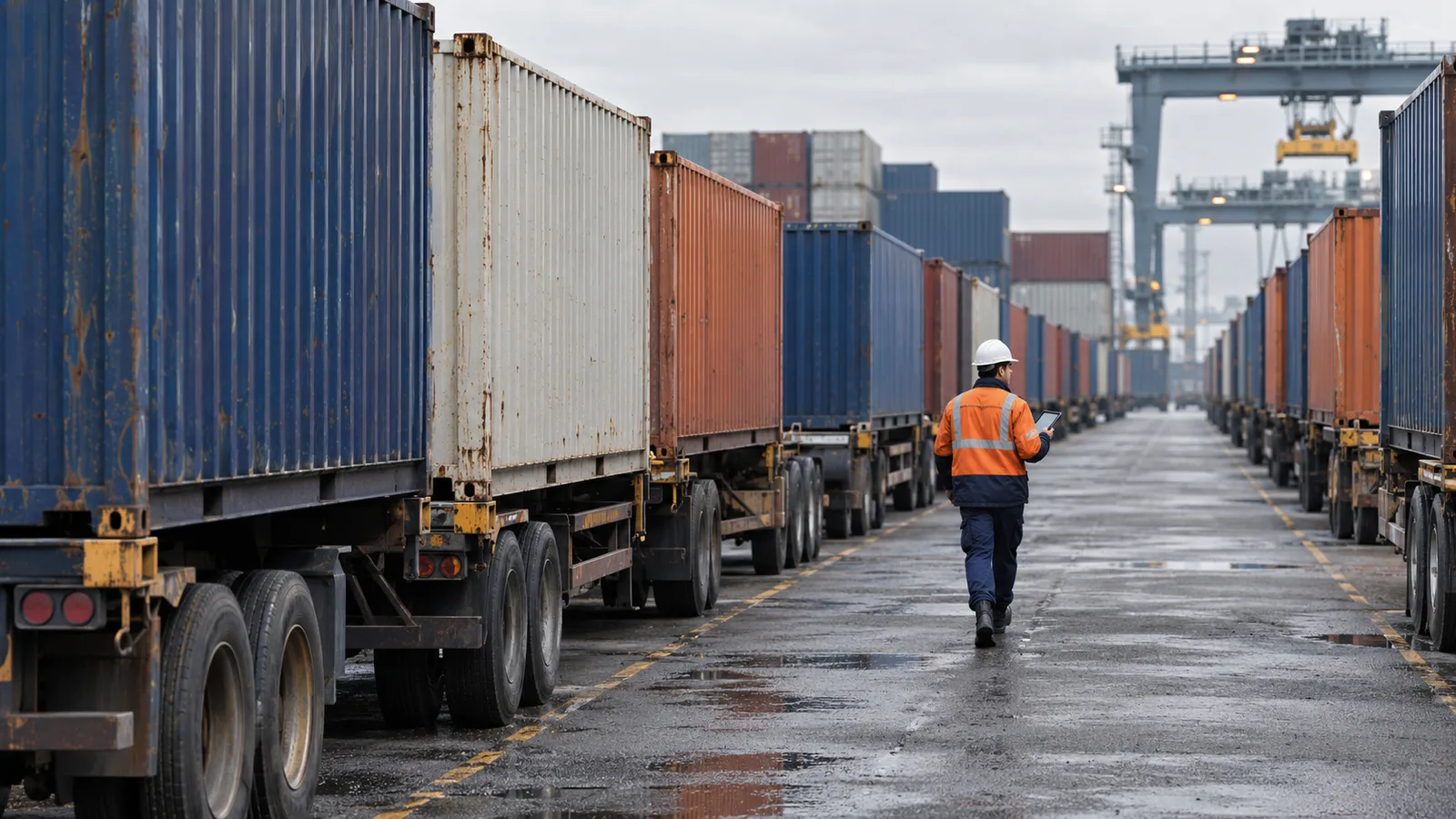
The invoice arrives a month after the goods were sold. It lists a container number, a string of dates, and a daily rate multiplied by a number of days nobody remembers agreeing to. Detention. Demurrage. Storage. For a small Canadian importer, a single delayed container can generate fees that rival the ocean freight itself, and they almost always come as a surprise.
Detention and demurrage are not hidden or arbitrary charges, even if they feel that way. They are the price shipping lines, terminals and railways charge for holding their equipment and space beyond an agreed free period. They exist to keep containers circulating. The good news is that they are largely avoidable with planning. The bad news is that, after several years of congestion and port and rail labour disruptions, the margin for error remains thin on many lanes into Canada.
This article explains the terms, walks through how the clocks run on a typical import, and sets out the practical steps that keep these charges off your books.
The Terms, Defined Plainly
Usage varies a little between carriers and countries, and some lines combine the charges into a single fee. In Canada, the following definitions are the most common:
- Demurrage is charged by the ocean carrier when a loaded import container stays inside the port terminal beyond the free time allowed after discharge. In other words, it is the cost of not picking up the box.
- Detention, sometimes called per diem, is charged by the ocean carrier when the container is outside the terminal, at your warehouse or a drayage yard, beyond the free time allowed. It is the cost of not returning the box.
- Storage is a separate charge some terminals and inland rail ramps apply for occupying their space, sometimes in addition to the carrier's demurrage.
- Merged or combined free time is a single allowance covering both inside and outside time. Some carriers and contracts use this structure instead of separate clocks.
Rates usually escalate the longer the delay lasts: a lower daily charge for the first few days after free time, then higher tiers. Refrigerated, open-top and other special containers typically carry higher rates than standard dry boxes.
How the Clocks Run: A Day-by-Day Example
Consider a hypothetical 40-foot container of furniture shipped from Asia to a retailer's warehouse in the Greater Toronto Area via the Port of Vancouver and rail. The exact free time and rates will depend on the contract, but the sequence is typical.
Day 0: discharge in Vancouver
The container comes off the ship. Because it is moving inland by rail under the ocean carrier's through bill of lading, it is loaded onto a train rather than collected by a local truck. Free time arrangements for rail-bound containers usually begin at the inland destination rather than at the coast, but confirm this in your contract.
Day 6: arrival at the GTA rail ramp
The railway notifies that the container is available at the ramp. The free time clock for pickup starts. The importer's customs broker has not yet obtained release because the commercial invoice from the supplier was missing a product description, so the broker cannot submit an accurate declaration.
Day 9: release, but no truck
Customs release finally arrives. The importer calls the drayage carrier, who has no capacity for two days during a busy week.
Day 11: pickup
The container leaves the ramp. Depending on the free time at the ramp, the importer may have already incurred storage or demurrage. The detention clock for time outside the terminal now begins.
Days 11 to 16: waiting at the dock
The warehouse is full, and the container sits on its chassis in the yard, waiting to be unloaded. Chassis rental adds up daily. Once unloaded, the empty must be returned to a depot designated by the carrier. The depot is full and the driver is redirected. The empty finally goes back on day 17.
Each delay in that story, from the missing invoice detail to the full warehouse, was predictable. None of them was caused by the carrier or the railway. That is typical: most detention and demurrage results from the importer's own process gaps.
The Most Common Causes in Canada
- Incomplete or late documentation. Missing commercial invoices, unclear descriptions, missing permits, or no ACI eManifest data from the forwarder.
- Customs or agency examinations. A CBSA examination or a CFIA inspection can take days, during which the clock keeps running.
- Unpaid freight or destination charges, which prevent carrier release.
- Lack of trucking capacity or appointment slots at busy terminals and ramps, especially during peak season.
- Insufficient receiving capacity, so containers are dropped and left waiting for unloading.
- Floor-loaded cartons that take much longer to unload than palletised freight.
- Empty return problems, including full depots or last-minute changes to return locations.
- Weather and rail disruption, particularly in winter on routes through the Rockies.
A Checklist for Keeping Fees at Zero
Before the container sails
- Negotiate free time with your forwarder or carrier as part of the freight contract. Extra days are often easier to secure upfront than as a concession after the fact.
- Get a complete commercial invoice and packing list from the supplier, and send them to your customs broker well before arrival.
- Confirm any permits or agency requirements in advance, especially for food, health products and regulated goods.
- Ask your supplier to palletise where practical, or plan for faster unloading if goods are floor-loaded.
While the container is on the water
- Pre-clear the shipment with your broker so release is ready on arrival.
- Pay freight and destination invoices early.
- Book drayage in advance and share expected arrival dates, weights and dock availability.
- Reserve receiving capacity at your warehouse for the expected delivery window.
Once the container arrives
- Track the last free day for each container and prioritise pickups accordingly.
- Unload promptly, and return empties the same day where possible.
- Confirm the empty return location before the driver leaves your dock.
- Keep records of every delay outside your control, such as terminal closures or carrier-caused issues, for disputes.
Strategies That Go Further
Transloading near the port or ramp
If your inventory is destined for several locations, or if your own warehouse is slow to receive, unloading the ocean container at a facility close to the terminal and moving the goods onward in domestic trailers can stop the detention clock quickly. Transloading is particularly common around the Port of Vancouver and major inland ramps. Our article on transload warehousing in Canada covers how it works.
Using a warehouse partner with dock capacity
Many importers incur detention because their own facility cannot unload containers fast enough during peak periods. Outsourcing receiving to a warehouse with spare dock doors and labour, through distribution warehousing or dedicated warehousing, can be cheaper than paying per diem. If you pay for storage per pallet, our guide to pallet-in, pallet-out services explains a common pricing model.
Visibility tools
Simple tracking spreadsheets work for a handful of containers, but they break down quickly as volumes grow. A system that consolidates container status, last free day and dock appointments, linked to reporting and analytics, makes it easier to spot the boxes at risk before charges start.
Making Fees Visible Inside Your Business
One reason detention and demurrage persist is that nobody inside the importing company owns them. The purchasing team books the order, the forwarder moves the freight, the warehouse receives it, and finance pays the invoice weeks later without connecting it to the delay that caused it. A few internal habits change that:
- Assign an owner for every inbound container, someone responsible for its last free day.
- Code the charges separately in your accounts so you can see how much you spend on delay each month, by supplier, port and lane.
- Include them in landed cost. A product that regularly attracts detention is more expensive than its purchase price and freight suggest. Our guide to landed cost per unit shows how to account for that.
- Review the causes quarterly with your forwarder, broker and warehouse, and fix the most frequent ones first.
- Feed supplier performance back into purchasing decisions. A supplier whose paperwork routinely arrives late is costing you money at the Canadian end.
Disputing Charges
If you believe a charge is unfair, for example because the terminal was closed, the carrier failed to provide an appointment, or the release was delayed by the carrier's own error, raise it promptly with your forwarder or the carrier, with documentation. Carriers will sometimes waive or reduce charges where the delay was outside the importer's control, though there is no guarantee. Your freight contract terms will determine what is possible, which is another reason to read them before you sign.
Frequently Asked Questions
Who pays detention and demurrage?
Usually the party responsible for the container at destination, which for most imports is the importer, billed through the forwarder. Incoterms and your contract with the supplier can shift some responsibility, but in practice the Canadian importer usually receives the invoice.
Does LCL cargo attract these charges?
Not directly in the same way, because the consolidator controls the container. But container freight stations charge storage if you do not collect LCL cargo within their free period, so similar principles apply.
Can I negotiate more free time?
Often, yes, particularly with regular volume and when negotiated in advance as part of a contract. It may come at a slightly higher freight rate, so weigh the trade-off.
Are these fees the same at every Canadian port?
No. They vary by carrier, terminal, railway, container type and contract. Always ask for the specific free time and tariff that applies to your shipment.
Stop Paying for Waiting Time
ShipCarte helps importers across Canada receive containers quickly, store inventory and move goods on to customers without unnecessary delays. If detention and demurrage are eating into your margins, we can help you plan receiving and distribution so containers move on time. Schedule a consultation or request a quote to get started.