
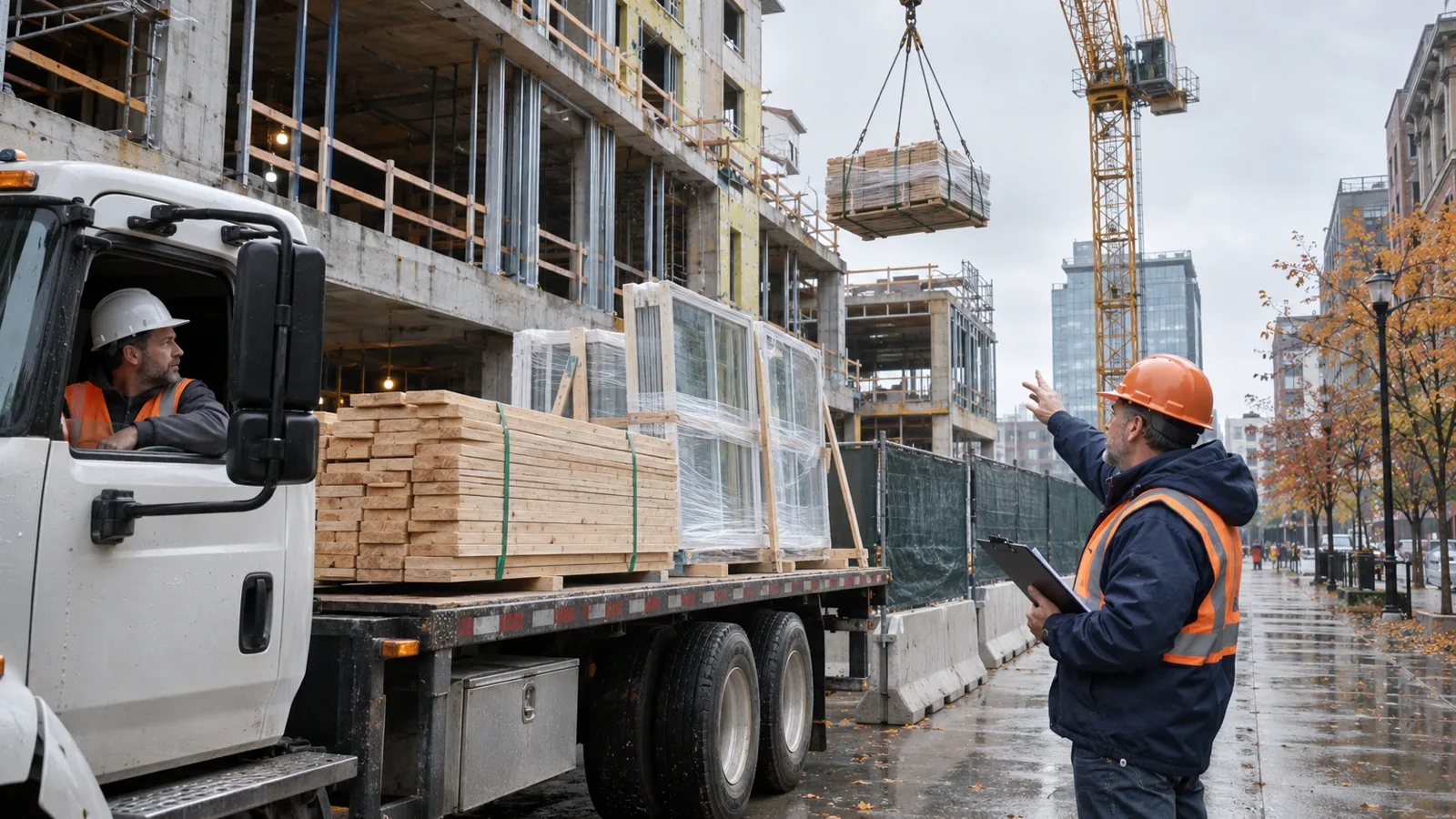
On a mid-rise residential project in a busy Canadian downtown, the site has no laydown area to speak of. The crane is booked for specific hours, the street permit allows deliveries only during a narrow morning window, and the framing crew is standing by. If the truck carrying the next floor's materials arrives late, or arrives with the wrong load on top, a full crew can lose half a day. Multiply that by a few incidents a month and the schedule starts to slip in ways that are hard to recover.
Now consider the opposite situation: a commercial building going up in a smaller community in northern British Columbia or rural Nova Scotia. There is plenty of space on site, but the nearest building supply distribution centre is hours away, specialty products come from Ontario or the United States, and winter weather can close highways for days at a time.
Both projects depend on the same thing: a construction supply chain that delivers the right materials, in the right order, at the right time. This article looks at how contractors, suppliers and manufacturers in Canada can plan materials logistics so projects stay on schedule.
Why Construction Logistics Is So Unforgiving
Construction projects are sequenced. Foundations come before framing, framing before mechanical rough-ins, rough-ins before drywall, and so on. A late delivery at one stage pushes back every stage that follows. Several factors make that sequence fragile:
- Limited space on urban sites. Many projects in Toronto, Vancouver, Montreal, Calgary and Ottawa have almost no room to store materials, so deliveries must arrive just in time.
- Long lead times for some products. Windows, elevators, structural steel, custom millwork and mechanical equipment can take weeks or months to manufacture.
- Bulky, heavy and awkward materials. Lumber, steel, drywall, insulation and precast concrete need flatbeds, boom trucks or cranes to unload.
- Weather. Canadian winters, spring thaw and wildfire seasons all affect road conditions and site access.
- Price and availability swings. This year has shown how quickly things can change, with lumber prices rising sharply over the summer and some products on longer lead times as manufacturers adjusted to the disruptions of the spring.
Mapping Materials to Project Phases
A practical way to plan is to break the project into phases and identify, for each one, what must be ordered, when it must arrive and where it will be stored.
Site preparation and foundations
Rebar, formwork, drainage materials, waterproofing and ready-mix concrete. Ready-mix is usually delivered locally on tight schedules, but rebar and formwork can be staged in advance.
Structure
Lumber packages, engineered wood, structural steel, precast elements or mass timber panels. These are heavy, high-volume deliveries that often need to arrive in a specific order matching the erection sequence. For steel and precast, piece-by-piece sequencing on each truck is common.
Envelope
Windows, doors, cladding, roofing and insulation. Windows in particular are often custom-made with long lead times and are vulnerable to damage, so storage and careful handling matter.
Mechanical, electrical and plumbing
HVAC units, ductwork, piping, wire, fixtures and panels. Large mechanical equipment may need cranes and road permits; smaller items arrive in high volumes and need organized storage.
Interior finishes
Drywall, flooring, cabinets, countertops, appliances, lighting and hardware. On multi-unit residential projects, finishes are often installed unit by unit, which means hundreds of small, coordinated deliveries.
Staging Warehouses: The Missing Link
One of the most effective tools for construction logistics is a staging or consolidation warehouse located within reasonable driving distance of the site. Instead of having every supplier deliver directly to a cramped job site, materials are delivered to the warehouse, checked, stored and then released to site as needed.
Benefits include:
- Protection. Windows, cabinetry, appliances and finishes stay clean and dry instead of sitting under a tarp on site.
- Inspection before installation. Damage and shortages are found weeks before the product is needed, not on the day of installation.
- Flexible release. Materials go to site in the exact quantities and order crews need, often on a floor-by-floor or unit-by-unit basis.
- Fewer trucks on site. Consolidating many suppliers' goods into fewer, well-loaded deliveries reduces congestion and crane time.
- Buying flexibility. Contractors can buy ahead when prices or availability are favourable without worrying about where to store the goods.
Services like distribution warehousing and dedicated warehousing can play this role, while value-added services can handle tasks such as kitting fixtures by unit or labelling materials by floor.
Delivery Planning for Busy Sites
Good delivery planning is the difference between a smooth site and a congested one. Contractors and suppliers who coordinate well typically follow a few principles.
- Book delivery windows in advance. Assign each delivery a specific time slot, matched to crane availability and street permit hours.
- Load trucks in installation order. Materials needed first should come off first. A load built in the wrong order costs crane time and can damage goods.
- Specify equipment requirements. State whether the delivery needs a flatbed, boom truck, moffett or liftgate and whether unloading equipment will be available on site.
- Share site rules with carriers. Access routes, safety requirements, contact names and municipal restrictions should travel with every booking.
- Confirm the day before. A quick confirmation call or message avoids trucks arriving when the site is not ready.
- Track in real time. Knowing that a truck is delayed lets the site reassign crews before they stand idle. Shared shipment tracking makes that possible.
Our article on delivery appointments in freight covers how scheduled deliveries work from the carrier side.
Choosing the Right Transportation
Construction materials move by a mix of modes.
- Full truckload and flatbed. Lumber, steel, drywall and other bulk materials generally travel in full loads directly from manufacturers or distribution yards. Full truckload service suits these moves.
- LTL freight. Smaller quantities of fixtures, hardware, specialty products and finishes travel efficiently by LTL freight, especially when consolidated through a staging warehouse.
- Rail. Lumber from mills in British Columbia, Alberta and Quebec and steel from Ontario often travel long distances by rail before final delivery by truck.
- Parcel. Small, urgent items such as replacement hardware, fasteners or control components move by parcel courier.
Remote and Northern Projects
For construction in remote and northern communities, the supply chain needs to be planned around access windows. Projects in Nunavut, the Northwest Territories and parts of northern Quebec, Manitoba and Ontario often rely on annual sealift, winter roads or air cargo. Materials must be ordered, consolidated and shipped months ahead of construction. Missing the sealift can delay a project by a year.
Even for road-accessible projects in rural areas, seasonal weight restrictions during spring thaw and winter highway closures in mountain passes can affect delivery schedules. Building buffer time into the plan, and staging critical materials closer to the site before the season changes, reduces the risk.
Imported Materials and the Border
Many building products used in Canada are imported, from US-made windows and HVAC equipment to tile, fixtures and hardware from overseas. With CUSMA in effect since July 1, importers of qualifying North American products should confirm their certification of origin documents are up to date. Goods from outside North America are subject to the applicable duties and GST on import. Delays at the border can disrupt construction schedules, so working with experienced customs brokers and a partner familiar with cross-border shipping is worthwhile. Accurate paperwork, including clear product descriptions and tariff classifications, is essential.
Receiving on Site: Catching Problems Early
A delivery that arrives on time but damaged or incomplete can be just as disruptive as one that arrives late. Construction sites are busy, and it is tempting to sign for a load and move on. A short, consistent receiving routine avoids that trap:
- Check piece counts against the packing list before the driver leaves.
- Inspect visible damage, especially on glazing, finished panels, cabinetry and mechanical units, and note it on the delivery receipt.
- Photograph damaged items and the load as it arrived.
- Report shortages and damage to the supplier the same day, while replacement lead time can still be managed.
- Move materials into protected storage promptly rather than leaving them exposed to rain, snow or theft.
Freight claims are much easier to resolve when damage is noted at the time of delivery. A clean signature on a receipt makes it difficult to show later that the carrier was responsible. Our guide to freight insurance explains how coverage works for high-value materials in transit.
Visibility and Communication
The common thread in successful construction logistics is shared information. When the general contractor, trades, suppliers and logistics partners all see the same schedule and the same shipment status, problems surface early. Simple tools such as shared delivery calendars, combined with order and inventory visibility from systems like ShipCarte's order management platform, help everyone stay aligned.
A Site Manager's Logistics Checklist
- Do we have a materials schedule tied to the construction schedule?
- Are long-lead items ordered with buffer time?
- Do we have a staging location for materials that cannot be stored on site?
- Are delivery windows booked and shared with all suppliers?
- Are loads built in installation order?
- Are site access rules and contacts shared with carriers?
- Are we inspecting deliveries on arrival and documenting damage?
- Do we have a plan for weather delays?
For more on how freight choices affect timing and cost, see our guide on how freight differs from small package shipping.
Keep Your Project Moving With ShipCarte
ShipCarte helps suppliers, manufacturers and contractors across Canada with freight shipping, staging and warehousing. If you want to reduce site delays and better coordinate material deliveries, schedule a consultation with our team.