
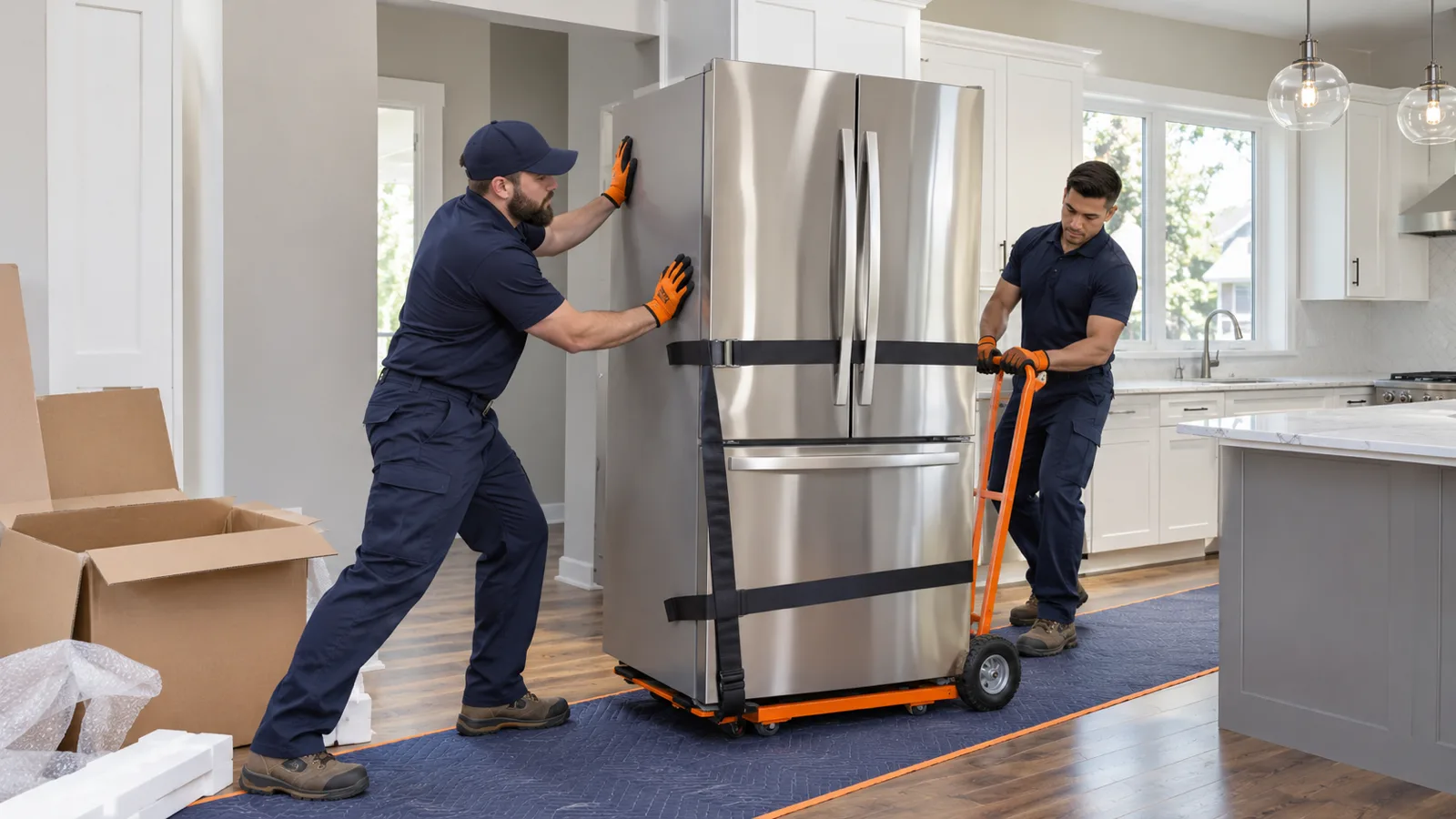
When someone buys a washer, a range or a 75-inch television, the purchase is not finished when the payment goes through. It is finished when the product is standing in the right room, connected, working, and the old one is gone. For the retailer or brand, every step between the warehouse and that moment is an opportunity to delight the customer or to generate a support call, a damage claim and a one-star review.
Across Canada, more appliances and large electronics are being bought online or through hybrid models where a customer browses in store and has the product delivered from a regional warehouse. This year has accelerated that trend, as many households spent more time at home and upgraded kitchens, laundry rooms and home entertainment setups. Sellers that once relied on in-store pickup or a single local delivery partner now need a delivery program that works from Victoria to St. John's.
This article breaks down what a reliable two-person delivery and installation program looks like, step by step, and what Canadian sellers should consider when building one or choosing a partner.
Why Large Appliances and Electronics Need a Different Approach
These products share a few traits that make standard parcel shipping a poor fit:
- Weight and size. Refrigerators, ranges and washers often weigh well over what one person can safely lift, and they exceed parcel size limits.
- Orientation sensitivity. Many refrigerators and freezers should be kept upright, and large-screen TVs are vulnerable to panel damage if laid flat or stressed at the corners.
- Hidden damage. Internal damage, such as a cracked TV panel or a bent compressor line, may not be visible on the outside of the carton.
- Installation requirements. Water lines, venting, electrical connections and wall mounting all affect whether the product actually works once delivered.
- Disposal of old units. Customers usually expect the old appliance or TV to be taken away, which brings recycling and stewardship rules into play.
The Delivery Journey, Step by Step
A well-run program treats delivery as a sequence of controlled handoffs. Here is how a typical order should flow.
Step 1: Capture the right information at checkout
Most failed deliveries can be traced to missing information. Before the order is accepted, collect:
- Dwelling type (house, townhouse, condo, apartment) and floor number
- Stairs, elevator access and any building booking rules
- Doorway and hallway widths along the route to the installation spot
- Existing hookups (gas or electric range, hot and cold water lines, dryer venting)
- Whether haul-away of an old unit is required
- Preferred delivery days and a reliable phone number
Condo towers in Toronto, Vancouver, Calgary and Montreal commonly require elevator bookings and, in some cases, proof of insurance from the delivery company. Knowing this before dispatch avoids wasted trips.
Step 2: Inspect and stage at the warehouse
Before a product leaves the warehouse, it should be visually inspected, matched to the order by model and serial number, and staged in the route sequence for the delivery truck. Recording serial numbers matters for warranty registration and for any later claim. A warehouse management system that captures serials at pick time makes this consistent instead of relying on handwritten notes.
Step 3: Move product to the delivery market
If your inventory sits in a central warehouse in the Greater Toronto Area and the customer lives in Edmonton, the product first needs a linehaul move. Large appliances generally travel palletized via LTL freight or in consolidated truckloads to a regional cross-dock, where a local two-person team picks them up for final delivery. Fewer handoffs means fewer chances for damage, so consolidating volume into regular scheduled loads is usually safer than sending many single-unit shipments.
Step 4: Schedule the appointment
Customers should receive a delivery window, ideally narrowed the day before with a call or text and updated on the day. The best programs give customers a way to reschedule without calling a support line. Our article on delivery appointments in freight explains how scheduling works on the carrier side.
Step 5: Deliver, unbox and place
The crew carries the item to the room of choice, protects floors and door frames, unpacks it and removes packaging. Taking away cardboard, foam and wrap is something customers value highly, especially in apartments where large boxes are difficult to dispose of.
Step 6: Install and test
Installation levels vary. Basic installation might include connecting a washer to existing water lines and plugging it in, levelling a fridge, or setting a TV on a stand. Advanced work such as wall-mounting, connecting dishwashers to plumbing or adding new outlets requires appropriately skilled installers. Gas appliance connections are regulated provincially and typically must be performed by licensed gas technicians, so many sellers either partner with licensed contractors or limit their service to electric connections.
Step 7: Confirm and capture proof of delivery
Photos of the installed product, a customer signature or electronic confirmation, and notes on any issues close the loop. If something went wrong, this record is what support and claims teams rely on. Since the spring, many crews have also adopted low-contact delivery practices, such as confirming delivery electronically and keeping distance where possible; customers appreciate clear communication about what to expect on the day.
Step 8: Haul away the old unit
The removed appliance or TV needs to go somewhere responsible. Large appliances are often taken to scrap metal recyclers, where refrigerants must be handled properly. Electronics such as TVs fall under provincial recycling programs in most provinces, with environmental handling fees collected at the point of sale that vary by province. Make sure your delivery partner knows which drop-off points and rules apply in each region.
Choosing Service Levels
Not every product needs the full white glove treatment. Offering tiers lets customers choose and keeps your costs aligned with what they value.
- Curbside or threshold. Suitable for small appliances or customers comfortable moving items themselves. Lower cost, higher risk of in-home damage.
- Room of choice. Two-person carry-in to the room, without unboxing.
- White glove. Room of choice plus unboxing, placement, and packaging removal.
- Install. White glove plus connection and basic testing.
- Install and haul-away. The complete service most appliance buyers expect.
For smaller electronics such as soundbars, monitors and countertop appliances, standard small parcel shipping is usually the right tool, as long as the packaging is solid.
Reducing Damage Before It Happens
Most damage in this category comes from handling rather than from the road. A few practical safeguards make a measurable difference:
- Keep products palletized as long as possible. Pallets protect bases and keep products upright through cross-docks.
- Use the right equipment. Appliance dollies with straps, stair-climbing hand trucks and padded blankets are basic requirements for crews.
- Respect orientation markings. Refrigerators transported on their side may need time to settle before being plugged in, according to manufacturer instructions.
- Do not double-stack TVs beyond the manufacturer's limit. Carton markings usually specify maximum stacking.
- Train for winter. In much of Canada, crews handle products on icy steps and driveways for months each year. Sand, salt and proper footwear prevent both injuries and dropped goods.
- Allow cold electronics to warm up. TVs and electronics delivered in very cold weather should generally acclimatize before power-on to avoid condensation issues, as per manufacturer guidance.
For more general damage-prevention techniques, see our guide on choosing a courier for fragile items.
Handling Damage, Returns and Exchanges
Despite best efforts, some units will arrive damaged or defective. The key is a fast, predictable process.
- Refuse at the door when damage is obvious. It is easier to send a unit back on the same truck than to arrange a second pickup.
- Coordinate with manufacturer warranty programs. Many functional issues are repaired in home by authorized service providers rather than returned.
- Grade returns on arrival. Undamaged returns can be resold as open-box; damaged units may go back to the manufacturer for credit or to liquidation.
A structured returns management process ensures returned units are inspected, recorded by serial number and dispositioned quickly instead of piling up in a corner of the warehouse.
Serving Rural and Remote Canada
Two-person delivery networks tend to be strongest in and around major cities. Outside those areas, coverage may depend on regional partners who run scheduled routes on certain days of the week. For customers in rural Saskatchewan, northern Ontario or parts of Atlantic Canada, options include:
- Longer, clearly communicated lead times
- Delivery to a regional terminal for customer pickup
- Threshold-only delivery with installation arranged through a local contractor
Customers in these areas are usually understanding when expectations are clear from the start. Problems arise when the checkout page promises the same service everywhere.
Questions to Ask a Delivery Partner
Whether you are evaluating a 3PL, a regional delivery company or a national network, these questions will tell you a lot:
- Which postal codes do you serve with two-person crews, and which through partners?
- What installation services can your crews perform, and who handles licensed work?
- How do you handle haul-away and recycling in each province?
- What proof of delivery do you capture, and how quickly can we access it?
- How do customers receive tracking and appointment updates?
- What is your process and timeline for damage claims?
Visibility is a theme in all of these. A shared view of every order, such as ShipCarte's shipment tracking and reporting and analytics, lets your support team answer questions without chasing the carrier.
Final Thoughts
Delivering appliances and large electronics across Canada is as much a service business as a logistics one. Getting the right information at checkout, minimizing handoffs, offering clear service tiers and closing the loop with proof of delivery and responsible haul-away will set your brand apart in a category where customers remember the delivery experience as clearly as the product.
Plan Your Big-and-Bulky Program With ShipCarte
ShipCarte supports retailers and brands across Canada with warehousing, freight, parcel shipping and distribution services. If you are building or improving a delivery program for appliances or large electronics, request a quote and we will help you map out the right mix of services.