
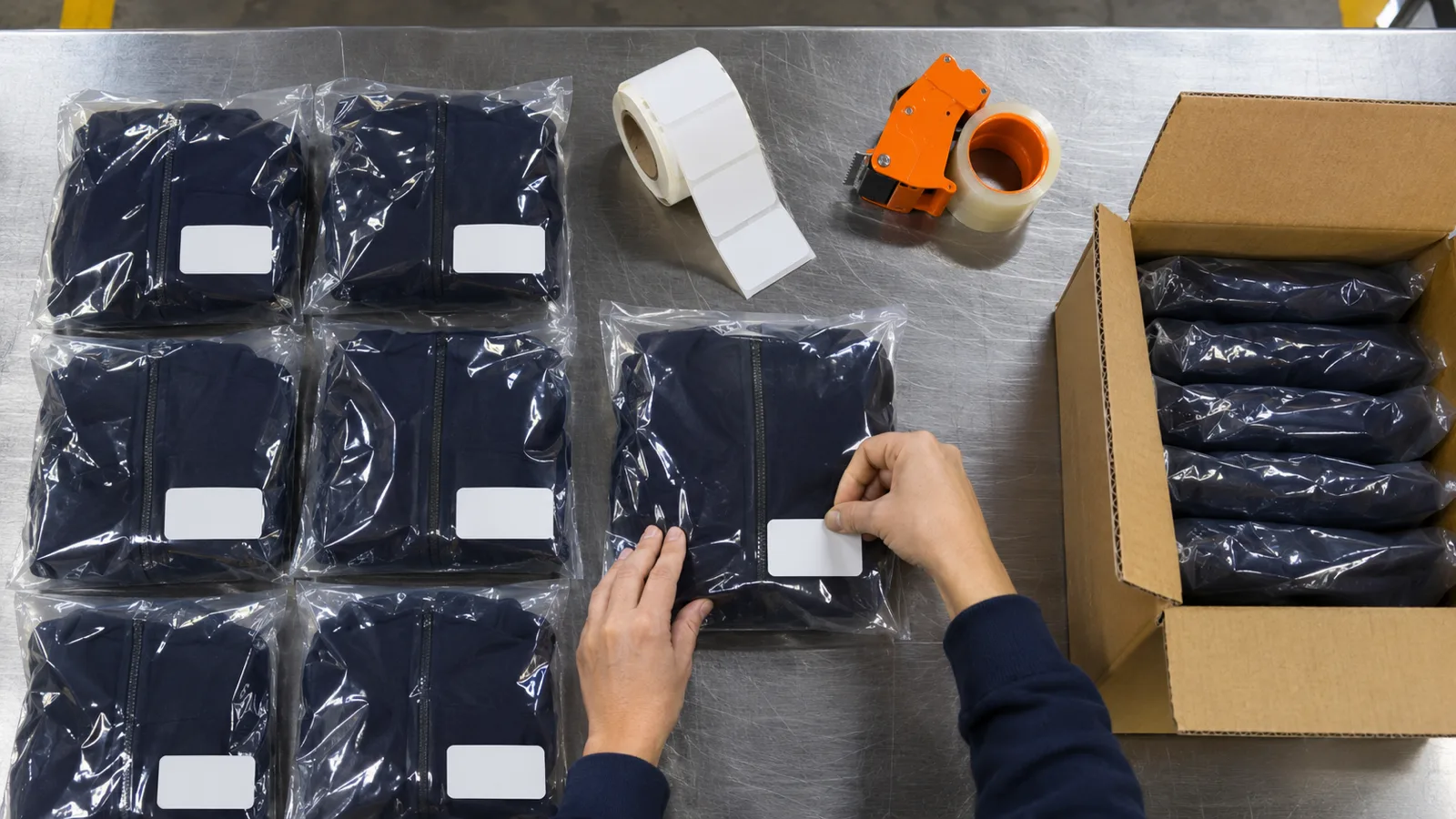
A kitchen gadget seller in Meadowvale sends their first big shipment into Amazon's fulfillment network: twelve cartons of silicone utensil sets, packed in the garage over a weekend. Two weeks later, the units still show as "receiving" in Seller Central. When they finally go live, a handful are flagged as unfulfillable because the barcode on the manufacturer packaging scanned instead of the FNSKU label. Some units are stuck in a problem-receive queue. Meanwhile, the listing has been out of stock through a period when it was ranking well.
Stories like this are why FBA prep exists as a service. Amazon is precise about how inventory must arrive, and its fulfillment centres process enormous volumes. Anything that does not match the requirements slows down, gets set aside, gets prepped by Amazon for a fee, or in some cases gets refused. For sellers in Mississauga, the upside is that Amazon operates several fulfillment centres around the western GTA, so inbound shipments can be short truck runs rather than cross-country trips. But a short trip does not help if the shipment is not prepped properly.
This guide covers the most common reasons FBA inventory gets delayed or rejected, how to fix each one, and how to decide whether to prep in-house or work with a prep partner. Amazon updates its requirements regularly, so always cross-check the current Seller Central guidance for your category.
Why prep matters more than it looks
When your shipment reaches an Amazon fulfillment centre, it is scanned, checked and stowed by associates who handle thousands of units an hour. The system expects every carton to be labelled correctly, every unit to have a scannable FNSKU or eligible manufacturer barcode, and every item to be protected according to its type. When something does not fit, it gets pulled from the normal flow. That leads to:
- Slower check-in, which means stock goes live later
- Unplanned prep or labelling charges added to your account
- Units marked unfulfillable or damaged
- Potential restrictions on future shipments if problems repeat
Every day your inventory sits in receiving is a day you could be losing sales and ranking. Good prep is cheaper than lost momentum.
The seven mistakes that cause most problems
1. Wrong or missing unit labels
Each unit needs to be identifiable. If your listing uses Amazon barcodes, every unit needs an FNSKU label, and any other scannable barcode on the packaging, such as the manufacturer's UPC, must be covered completely. If a scanner reads the UPC instead of the FNSKU, the unit may be received against the wrong record or not at all.
Fix: Print FNSKU labels on a thermal printer with the right label size, check that they scan, and apply them flat on a smooth surface. Do not wrap labels around curves or corners. If you are unclear on the difference between product identifiers, our post on SKU vs UPC numbers explains it.
2. Poly bags without proper warnings or thickness
Items that need poly bagging, such as clothing, plush toys or products with loose parts, must go in transparent bags that meet Amazon's thickness requirements. Bags with a large opening also need a suffocation warning printed on or affixed to the bag. Products sold in Canada may also have bilingual labelling obligations under Canadian packaging rules, so check what applies to your category.
Fix: Buy bags that already carry the warning, seal them fully and make sure the FNSKU label is scannable through or on the bag.
3. Sets sold as one unit but not bundled
If your listing is a set of three, the three items must be bundled so they cannot separate, and the bundle must be clearly marked as a set that should not be broken apart. Otherwise an associate might receive three separate units against a one-unit listing.
Fix: Shrink wrap or bag the set, add a "sold as set" sticker, and cover individual barcodes on the components. A kitting and assembly service can handle this at volume.
4. Fragile items without protection
Glass, ceramics and other breakables need to survive a drop test. If they arrive damaged or are judged to be at risk, they will not be received normally.
Fix: Use bubble wrap or a sturdy box so the item can withstand a drop without damage, and make sure the packaging does not hide the barcode. Our guide to packing fragile items covers the basics.
5. Expiry dates missing or unreadable
Food, supplements, cosmetics and other dated products need the expiration date clearly printed on each unit and on the carton, in the format Amazon specifies. Products that arrive too close to expiry may be refused or disposed of.
Fix: Confirm the date format before printing labels, and plan shipments so units have plenty of shelf life remaining when they arrive. Using first-expired, first-out rotation in your own warehouse helps; see what FIFO means for more.
6. Overweight or oversized cartons
Amazon sets limits on standard carton weight and dimensions to protect associates and equipment. Cartons over the weight limit generally need a team-lift or mechanical-lift label, and some combinations are not accepted at all unless the single item itself is oversized.
Fix: Weigh and measure every carton before it is sealed. Split loads across more cartons rather than squeezing everything into a few heavy ones.
7. Box contents that do not match the plan
When you create a shipment in Seller Central, you tell Amazon what is in each box. If the physical contents differ, receiving slows down, and if box content information is missing, you may face manual processing fees.
Fix: Pack from the plan, not from memory. Scan each unit into its carton and print carton labels only once the carton is complete.
Booking the inbound trip from Mississauga
Once prep is done, the shipment needs to reach the assigned fulfillment centre. Amazon may split a shipment across several facilities depending on its placement logic, so a single plan can turn into several smaller shipments. Because several Amazon facilities sit in Mississauga, Brampton and nearby communities, many inbound moves from a local prep centre are short drives along the 401, 407 or 410. Others may be routed further afield, such as to facilities in other provinces, so do not assume every shipment stays local.
Small parcel or LTL?
Smaller shipments are usually sent as individual cartons by small parcel carrier. Larger shipments go as pallets by LTL freight or full truckload. Amazon has specific pallet requirements, including pallet type, height limits and labelling on each side, and loads usually need a delivery appointment. Our explainer on delivery appointments in freight covers why those slots matter.
Watch the timing
Amazon fulfillment centres can be congested before Prime events and the holiday season, and appointment slots can tighten. Plan inbound shipments well ahead of these periods so your stock is live before demand peaks. Our guide on preparing for peak season has a broader timeline.
In-house prep vs a prep partner
Many sellers start by prepping at home or in a small unit. That works when volumes are modest and the products are simple. It becomes harder as you add SKUs, bundles, dated products or several inbound shipments a month.
| Consideration | Prepping yourself | Using a prep partner |
|---|---|---|
| Upfront cost | Label printer, supplies, space | Usually per-unit or per-task fees |
| Time | Your hours, often evenings and weekends | Handled by trained staff |
| Error risk | Higher when rushed or inexperienced | Lower with established processes |
| Scaling | Limited by space and people | Flexes with your volume |
| Supplier receiving | Shipments come to you | Suppliers ship directly to the prep centre |
A prep partner also gives you a place to receive bulk inventory from overseas suppliers, inspect it, and send only what Amazon needs in each shipment. Keeping the rest in a Mississauga warehouse can help you manage Amazon storage limits and long-term storage fees, and it gives you stock to fulfill orders from your own website or other marketplaces too.
Inspection before prep
A step many sellers skip is checking inventory when it arrives from the supplier, before it is prepped. Opening a sample of cartons to check counts, quality and packaging can catch problems such as a defective batch, the wrong colour or missing parts before they reach Amazon and turn into customer complaints and returns. It is much easier to deal with a supplier dispute while the goods are still in your possession.
Running a hybrid model
Many Mississauga sellers end up with a hybrid: some stock in FBA for Prime-eligible marketplace orders, and some held in a 3PL for website orders, wholesale accounts and FBA replenishment. That model has real advantages. You are not entirely dependent on Amazon's inventory limits, you can send smaller, more frequent replenishments, and you can keep selling elsewhere if an FBA shipment is delayed.
It does require good inventory visibility, because the same products sit in two places. A connected inventory system that shows what is in the warehouse and what is in transit to Amazon helps you avoid running out in either channel.
A pre-shipment checklist
- Every unit has a scannable FNSKU or eligible barcode; other barcodes covered
- Poly bags meet thickness rules and carry warnings where required
- Sets bundled and marked as sold together
- Fragile items protected to survive a drop
- Expiry dates printed in the right format on units and cartons
- Cartons within weight and size limits, with lift labels where needed
- Box contents match the shipment plan exactly
- Pallets built and labelled to Amazon's specifications
- Delivery appointment booked if shipping freight
Get your next FBA shipment right
ShipCarte offers Amazon FBA prep from the Mississauga area, along with storage, multi-channel fulfillment and freight to Amazon facilities. If rejected or delayed shipments are costing you sales, schedule a consultation and we can review your products and current process to find where things are going wrong.