
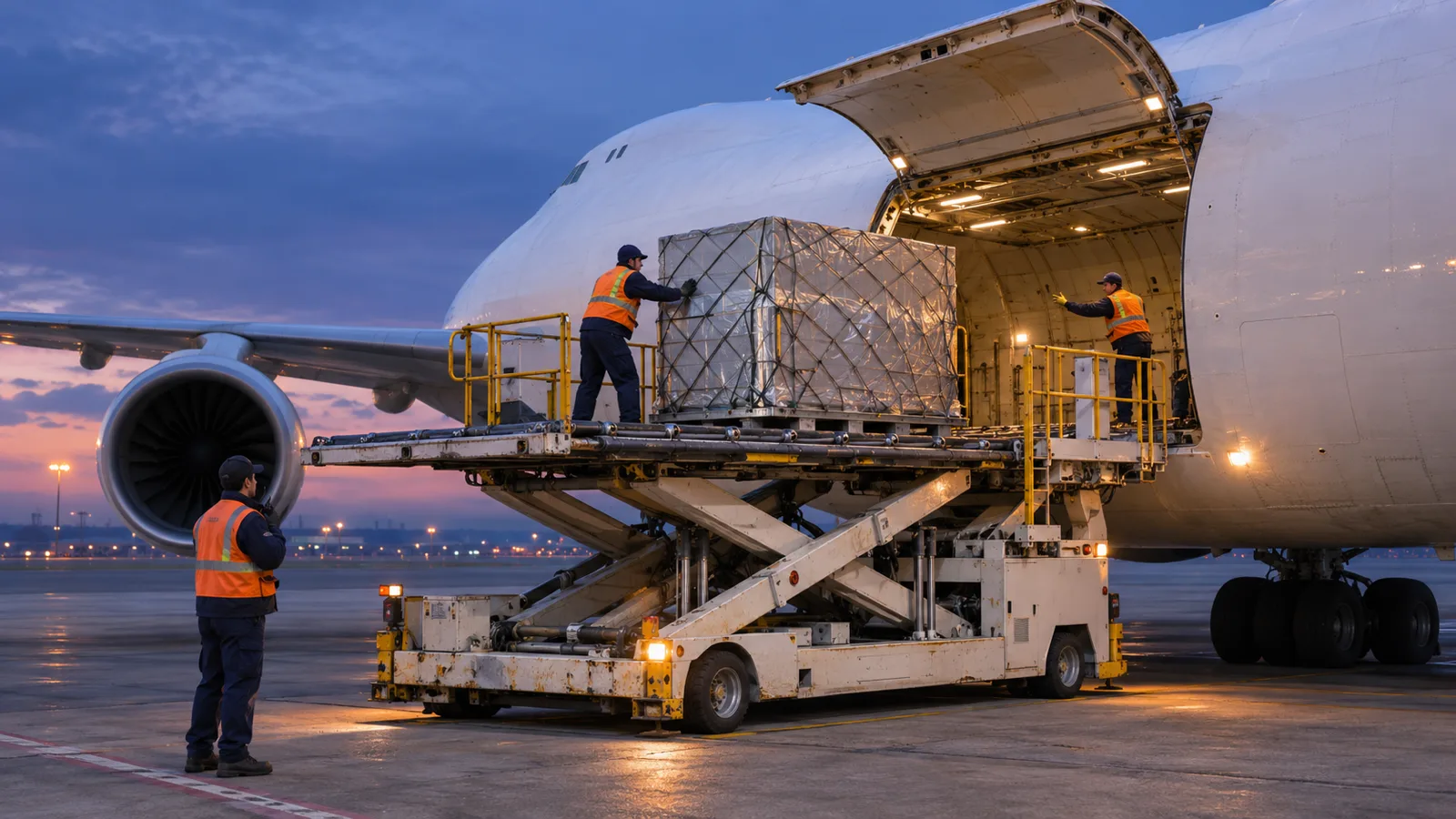
It is a Thursday afternoon at a contract manufacturer in Malton. A critical machine part has failed, the replacement is sitting at a supplier in Germany, and every day the line stays down costs far more than any freight bill. Ocean freight is out of the question. The plant manager needs the part on the floor by Monday. The answer, almost certainly, is air cargo into Toronto Pearson, a few minutes' drive from the plant.
Mississauga has an unusual advantage here. Pearson is Canada's busiest airport and one of its most important cargo gateways, and it sits inside the city's boundaries. Cargo terminals, freight forwarders, customs brokers and bonded warehouses cluster around the airport, in Malton, the Airport Corporate Centre and the industrial areas along Airport Road, Dixie Road and Derry Road. For businesses based here, air freight isn't a distant option. It is part of the neighbourhood.
That doesn't mean air is always the right choice. It is the most expensive way to move most goods, and it comes with its own rules. This article explains when air freight makes sense for Mississauga shippers, how a typical shipment moves through Pearson, what drives cost, and how to avoid the delays that undermine the point of paying for speed.
When air freight earns its cost
Air freight is typically several times more expensive per kilogram than ocean or truck. It makes financial sense when the cost of waiting is higher than the cost of flying. Common situations include:
- Production emergencies. A missing part, tool or component that is stopping a line. The cost of downtime dwarfs the freight bill.
- High-value, low-weight goods. Electronics, pharmaceuticals, jewellery, precision instruments and luxury goods often carry enough value per kilogram that air freight is a small percentage of the product cost.
- Perishable and temperature-sensitive products. Fresh foods, flowers, biologics and some medical products have short shelf lives that ocean transit can't accommodate.
- Launch and replenishment timing. A product launch date, a retailer's set date or a sudden sellout during peak season can justify flying a portion of inventory while the rest travels by sea.
- Samples and prototypes. Small shipments where speed of decision-making matters more than unit cost.
A useful rule of thumb is to compare the freight cost against the cost of the alternative: lost sales, overtime, penalties, missed launch windows or idle staff. If you can't name a meaningful cost of waiting, slower modes are probably the better choice.
How a shipment moves through Pearson
Here is a typical import walkthrough, using the Malton manufacturer's replacement part as the example.
1. Booking at origin
The supplier or a freight forwarder books space on a flight, either on a dedicated freighter or in the belly hold of a passenger aircraft. Much of the world's air cargo travels in passenger aircraft holds, which is one reason routes with frequent passenger service also tend to have good cargo options.
2. Documentation and security screening
The shipment is issued an air waybill, which acts as the contract of carriage and the tracking reference. Commercial invoices and packing lists travel with it. Before loading, cargo goes through security controls required by aviation rules. Shipments from known or regulated shippers with proper security programs generally move more smoothly through this step.
3. Flight and arrival
After the flight lands, cargo is unloaded and moved to the airline's or ground handler's cargo facility at Pearson. Many shipments travel on a consolidated basis, meaning the forwarder groups several customers' cargo under a master air waybill, and it has to be broken down before individual shipments can be released.
4. Customs clearance
Your customs broker submits import data to the CBSA, ideally before the goods arrive. With CARM now in place, importers need their CBSA business account set up and their security and payment arrangements sorted. If CBSA or another government department, such as the Canadian Food Inspection Agency or Health Canada, needs to review the shipment, it may be held for examination. Clean, accurate paperwork is the best way to avoid that.
5. Pickup and delivery
Once released, the shipment is collected from the cargo terminal and trucked to its destination. For a business in Malton, Mississauga's Gateway area or Brampton, that final leg can be very short. For goods headed elsewhere in Ontario, the 401, 427 and 407 connect quickly to the rest of the province.
Exports follow the same pattern in reverse: goods are trucked to the forwarder or airline at Pearson, screened, documented and loaded, with export reporting completed where required.
What drives the cost of air freight
Air freight quotes can vary considerably, and understanding the components helps you compare them properly.
Chargeable weight
Airlines bill on the greater of actual weight or volumetric weight. The commonly used air cargo standard calculates volumetric weight by dividing the volume in cubic centimetres by 6,000, though forwarders may apply their own factors. Light, bulky cargo is billed on its volume, so tight packaging and efficient palletizing matter a great deal. If you want a deeper look at how volume-based pricing works, our explainer on how package dimensions impact shipping costs applies here too.
Rate components
- The base air freight rate, often tiered by weight break.
- Fuel and security surcharges.
- Origin charges, including pickup, export handling and screening.
- Destination charges, including terminal handling and storage if cargo isn't collected promptly.
- Customs brokerage fees, duties and taxes, including GST or HST on imports.
- Special handling for dangerous goods, temperature control or oversized pieces.
Service level
Next-flight-out and express services cost more than standard or deferred air services. Not every shipment needs the fastest option. A deferred air service that arrives in five days instead of two can still be far faster than ocean freight at a noticeably lower cost.
Rules that catch shippers off guard
Dangerous goods
Many everyday products are regulated as dangerous goods in air transport: lithium batteries, aerosols, perfumes and other flammable liquids, some cleaning products, certain adhesives and magnetized materials. Air shipments of dangerous goods must follow the International Civil Aviation Organization's technical instructions and the IATA Dangerous Goods Regulations, and in Canada the Transportation of Dangerous Goods rules also apply. That means proper classification, packaging, marking, labelling and declarations, prepared by trained people. Undeclared dangerous goods can result in refused shipments and penalties. Our article on shipping perfume safely shows how even a familiar consumer product falls into this category.
Packaging and palletizing
Air cargo is handled differently from road freight. Pallets may need to fit aircraft contours, wood packaging must meet international phytosanitary standards, and shrink-wrap and strapping need to hold up to repeated handling. Overhanging cartons or unstable loads can be rejected or re-worked at your cost.
Temperature control
Aircraft holds and tarmacs aren't climate-controlled warehouses. A shipment of vaccines or fresh food can sit on an apron in a Mississauga January or a hot July afternoon. Temperature-sensitive cargo needs qualified packaging, data loggers and clear handling instructions, plus a plan for what happens on arrival. That is where a dedicated cold storage position close to the airport becomes valuable.
How to avoid paying for speed and getting delays
The most frustrating outcome is paying air freight rates only to have cargo sit at the terminal. The most common causes are avoidable:
- Incomplete commercial invoices. Vague descriptions, missing values or missing country of origin lead to customs queries. Our guide to common international shipping mistakes covers the usual culprits.
- Late customs data. Brokers who receive documents after the goods land start the clearance clock late.
- Regulated products without permits. Food, health products and certain controlled goods may need permits or other government approvals before release.
- No one ready to collect. Cargo that clears customs but isn't picked up begins to accumulate storage charges.
- Unclear delivery instructions. Receiving hours, dock access and appointment requirements at the final destination should be known before the flight lands.
A pre-flight checklist for shippers
Before you book, run through these questions with your supplier, forwarder and broker:
- Is the commercial invoice complete, with clear descriptions, values, origin and terms of sale?
- Does anything in the shipment count as dangerous goods, including batteries inside equipment?
- Are permits or licences needed for this product, and are they ready?
- Is the packaging air-worthy, with compliant wood packaging and stable, properly sized pallets?
- Who is collecting the freight at Pearson, and when?
- Does the final destination have receiving hours, a dock and a delivery appointment booked?
- If the product is temperature-sensitive, where will it go the moment it clears?
Air freight as part of a broader plan
The smartest Mississauga shippers don't treat air freight as a habit. They use it selectively alongside ocean, rail and truck. A common pattern is to fly a small first batch of a new product to catch a launch window, then follow with the bulk of the order by ocean. Another is to fly only the fastest-selling SKUs during peak while slower items travel by sea.
Once goods land, they need somewhere to go. A warehouse close to Pearson can receive air shipments quickly, break them down, and push product into fulfillment or onward distribution the same day. ShipCarte provides distribution warehousing and distribution services from Mississauga, and our full truckload and LTL freight options handle the road legs that air cargo depends on.
Get time-critical cargo moving
If you are bringing goods in through Pearson, or need to get them out fast, ShipCarte can help you plan the full journey from the cargo terminal to your customer. Request a quote with your shipment details, or schedule a consultation to talk through how air freight fits into your supply chain in Mississauga.