
The parcel left the warehouse on time, the label printed cleanly and tracking showed it moving across the country. Then, on day six, the status changed to "Address information incomplete." The customer had typed a condo address without the unit number. The driver could not get past the lobby, the parcel went back to the depot, and by the time support reached the customer, it was already on its way back to the sender.
Address problems are one of the most avoidable causes of failed deliveries in Canada, and they are expensive. A bad address can mean an address correction fee from the carrier, a return-to-sender charge, a second outbound shipment, a frustrated customer and a support agent's time. In rural areas and the North, it can mean a parcel bouncing between depots for weeks.
This guide explains how Canadian addresses are structured, the specific patterns that cause trouble and the checks you can build into checkout and fulfillment to catch problems before a label is printed.
How a Canadian postal code works
Canadian postal codes follow the format letter-number-letter, space, number-letter-number, such as K1A 0B1. Understanding the parts helps with validation.
- The first letter identifies a province, territory or major region. For example, A is Newfoundland and Labrador, B is Nova Scotia, C is Prince Edward Island, E is New Brunswick, G, H and J are Quebec, K through P are Ontario, R is Manitoba, S is Saskatchewan, T is Alberta, V is British Columbia, X covers the Northwest Territories and Nunavut, and Y is Yukon.
- The first three characters form the forward sortation area (FSA), which carriers use to route parcels to a region or part of a city. A zero in the second position usually indicates a rural area.
- The last three characters form the local delivery unit, which narrows the address to a specific delivery area, block face, building or group of mailboxes.
Some letters are never used in postal codes because they are easily confused with numbers or other letters, including D, F, I, O, Q and U. Simple format checks at checkout can catch many typos, such as a zero typed in place of the letter O.
The most common address problems
Missing unit or suite numbers
Condominiums and apartment buildings in Toronto, Vancouver, Montreal, Calgary and other cities are a major source of failed deliveries. Canada Post's preferred format puts the unit number before the civic number with a hyphen, such as 1503-250 Front St W, but many customers type "Unit 1503" on the second address line, or leave it off entirely. Either the order form or validation tool should flag addresses that match a multi-unit building but have no unit number.
Postal code and city mismatches
Customers moving between cities, typing quickly or using autofill sometimes pair a postal code with the wrong municipality. Many Canadian suburbs share a postal region with a neighbouring city, and amalgamated municipalities may still be known by older names. A mismatch can send a parcel to the wrong depot.
Rural routes, sites and compartments
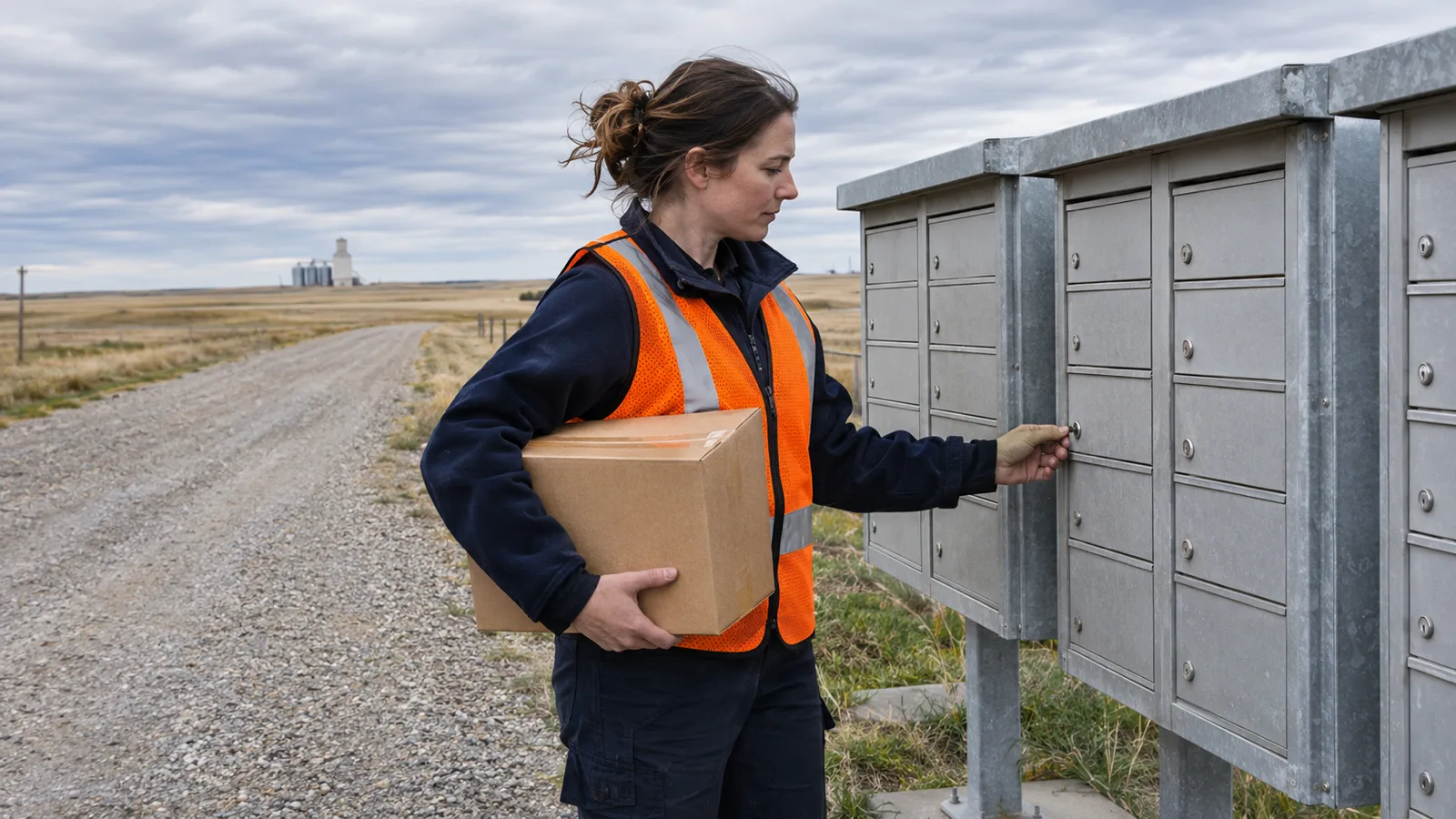
Rural Canada uses addressing formats that urban-focused checkouts often mangle: rural route numbers (RR), site and compartment numbers, lot and concession descriptions, and General Delivery at the local post office. In many rural communities, delivery is to a community mailbox or a post office box rather than to the door. Couriers may not be able to deliver to some of these addresses at all, while Canada Post can.
PO boxes
Some customers enter a PO box because that is where they receive mail. Several courier services cannot deliver to PO boxes, so the checkout either needs to ask for a physical address as well or route the shipment to a service that can deliver to the box.
French addresses in Quebec
Quebec addresses typically place the street type before the street name, as in 123 rue Principale or 45 boulevard Saint-Laurent, and use accented characters. Systems that strip accents or force English street types can create mismatches. Address tools should handle both formats.
Northern and remote communities
Many communities in the territories, northern provinces and First Nations communities have limited civic addressing, and deliveries often go to the local post office or a designated pickup point. Phone numbers are especially important here, because the local agent may need to contact the recipient.
Business addresses with receiving rules
Orders shipped to offices, shops and industrial units have their own failure modes. A business may be closed on the day of delivery, may only receive at a rear dock, or may sit in a multi-tenant building where the courier needs a company name and suite number to find the right door. Encourage B2B customers to include the company name, a contact person and receiving hours. For pallet deliveries, details such as dock availability and whether a liftgate is needed should be captured at order entry, since a failed freight delivery can mean redelivery and storage charges.
Where to validate: a layered approach
No single check catches everything. The most reliable setups validate at several points.
At checkout
- Address autocomplete. Suggesting verified addresses as the customer types is the single most effective check. Several services, including one offered by Canada Post, provide Canadian address lookup that can be built into checkout.
- Format validation. Enforce the postal code pattern and match it against the province chosen.
- Unit prompts. If the address is a known multi-unit building, ask for the unit number before allowing checkout.
- Phone number requirement. Make a phone number mandatory, with a note explaining it is used only for delivery issues.
- Delivery instructions field. Give customers room to add buzzer codes, side-door notes and rural directions.
Before the label prints
Your order management system or shipping platform can run a second check when the order arrives at the warehouse. Orders that fail validation, or that show warning signs such as a PO box combined with a courier-only service, can be placed on hold for review instead of shipping automatically. A few minutes spent confirming an address by email is far cheaper than a return trip across the country.
At carrier selection
Use address type to pick the right service. PO boxes, General Delivery and many remote addresses may be better served by Canada Post, while urban residential and commercial addresses have more options. Our article on qualities to look for in a courier company covers how to compare carriers on coverage.
After shipping
Monitor tracking for exceptions such as "address incomplete" or "unable to deliver" and act within hours, not days. Many carriers allow address corrections or redirects while a parcel is still in their network, often for a fee, which is still cheaper than a return.
Handling the cost of address errors
Carriers commonly charge an address correction fee when they have to fix an address in transit, and return-to-sender shipments are generally billed as well. These charges can show up weeks later on an invoice, which makes them easy to overlook. Track them by order so you can see how much address errors are costing and which checkout fields are causing them. Our guide to types of shipping surcharges explains how these fees typically appear.
Your shipping policy should also explain who pays when a parcel is returned because of an incorrect address. Being clear up front makes those conversations easier.
Giving customer service a playbook
When an address problem does slip through, speed matters. Support teams handle these cases better with a short, written playbook:
- Contact the customer by phone and email as soon as an exception appears, and ask them to confirm the full address, including unit, buzzer code and postal code.
- Check whether the carrier allows a correction or redirect while the parcel is still in its network, and request it immediately.
- If the parcel is being held at a depot or post office, give the customer the location, hours and what identification they need.
- If the parcel is already returning, decide whether to reship on arrival or refund, following your shipping policy.
- Correct the address in the customer's account so the next order does not repeat the problem.
- Tag the order with the cause so you can see which address issues are most common.
That last step is what turns individual fixes into better checkout design. If most of your exceptions are missing unit numbers in a handful of urban areas, you know exactly which prompt to add.
Address validation checklist
- Autocomplete with verified Canadian address data at checkout
- Postal code format check, matched to the province
- Unit number prompt for multi-unit buildings
- Mandatory phone number for delivery contact
- Delivery instructions field with a sensible character limit
- Support for French street formats and accented characters
- Rules that route PO boxes and General Delivery to services that can deliver them
- Warehouse-side validation before label creation, with an exception queue
- Daily monitoring of delivery exceptions
- Monthly review of address correction and return-to-sender charges
Why it matters more this year
With more Canadians ordering online for the first time this year, many checkouts are seeing customers who are not used to filling in delivery details carefully, and more parcels are going to homes and rural addresses than to workplaces. At the same time, carriers handling heavy volumes have less capacity to chase incomplete addresses. Cleaning up address data is one of the easiest ways to keep delivery performance steady.
Get addresses right the first time
Good address validation is a combination of checkout design, software rules and quick exception handling. ShipCarte's small parcel shipping and carrier management services help businesses across Canada choose the right carrier for each address and catch delivery issues early. Request a quote to learn more.